

Real-Time Solution for Unauthorized Drone Activity Awareness
The rapid development of commercial drone technology has created new opportunities in industries such as infrastructure inspection, logistics, agriculture, photography, and surveying. At the same time, organizations operating sensitive or large-scale facilities are facing increasing challenges in managing low altitude airspace.
Traditional security systems are mainly designed for ground-level protection. However, unauthorized drone activities can occur above facilities, beyond the effective monitoring range of conventional surveillance equipment. For airports, industrial sites, energy facilities, ports, and public infrastructure, having timely awareness of nearby drone activity is becoming an important part of modern security management.
A Drone Detection and Monitoring System provides a comprehensive solution for identifying, observing, and managing drone activities in designated areas. By combining detection technologies, intelligent analysis, and centralized monitoring platforms, the system helps organizations improve airspace visibility and make more informed operational decisions.
Designed for civilian applications, this solution supports industries that require reliable low altitude airspace monitoring without relying on traditional security methods alone.

Challenges in Low Altitude Airspace Monitoring
The increasing availability of commercial drones has changed the way organizations think about facility security and operational management.
While drones bring many benefits, unauthorized drone activities may create challenges for:
- Industrial facilities
- Energy infrastructure
- Transportation hubs
- Large outdoor sites
- Public venues
Organizations may encounter several difficulties:
Limited Visibility Beyond Ground-Level Security
Traditional cameras and security patrols mainly monitor areas close to the ground. Small aerial objects can approach from different directions and may not always be visible to operators.
Lack of Real-Time Airspace Information
Without dedicated drone monitoring technology, security teams may only become aware of drone activity after it appears visually or creates an operational concern.
Difficulty Managing Large Areas
Large industrial facilities, ports, and energy sites often cover extensive areas where continuous manual monitoring is difficult.
Need for Intelligent Security Management
Modern facilities require security solutions that can provide useful information, reduce manual workload, and integrate with existing management systems.
A drone detection and monitoring system addresses these challenges by providing continuous awareness of surrounding airspace.
What Is a Drone Detection and Monitoring System?
A Drone Detection and Monitoring System is an integrated solution designed to identify and observe drone activities within a specific area.
Unlike a simple detection device that only provides an alert, a monitoring system focuses on continuous observation, data analysis, and operational awareness.
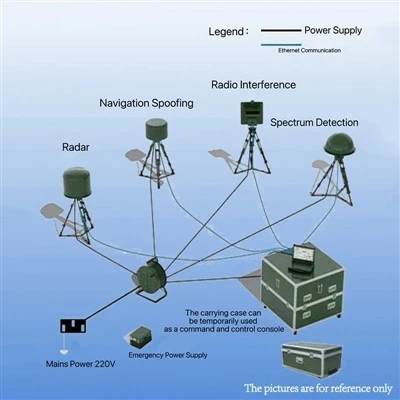
The system may include:
- RF detection sensors
- Radar detection equipment
- Optical or thermal cameras
- Data processing units
- Centralized monitoring software
By combining different technologies, the system can help operators understand:
- Whether drone activity is present
- Where activity is occurring
- When activity appears
- How the activity changes over time
This makes it suitable for organizations that require a more complete view of low altitude airspace conditions.
How Drone Detection and Monitoring Systems Work
Detection Layer
The first step is identifying possible drone activity.
Different detection technologies can be used depending on the application:
- RF signal analysis for identifying communication signals
- Radar sensors for object detection
- Optical systems for visual confirmation
Multiple detection methods can work together to improve monitoring reliability.
Identification and Analysis
After detecting possible drone activity, the system analyzes available information to help operators understand the situation.
Intelligent analysis may include:
- Signal recognition
- Object classification
- Activity assessment
- Event recording
This reduces unnecessary alerts and improves monitoring efficiency.
Centralized Monitoring
Detected information can be displayed through a management platform, allowing operators to view airspace activity from a centralized location.
Typical functions include:
- Real-time status display
- Event notifications
- Historical data records
- Multi-device integration
This helps security teams manage airspace information more efficiently.
Key Features of Drone Detection and Monitoring Systems
Real-Time Airspace Awareness
A major advantage of drone monitoring systems is providing continuous visibility of nearby low altitude activities.
Operators can receive timely information about possible drone presence and better understand surrounding airspace conditions.
Multi-Sensor Integration
Different environments require different monitoring approaches.
A drone detection and monitoring system can combine:
- RF sensors
- Radar systems
- Cameras
- Thermal imaging devices
- Software platforms
This flexible architecture allows organizations to select suitable technologies according to their operational requirements.
Intelligent Data Management
Modern monitoring platforms can collect and organize detection information for easier management.
Functions may include:
- Activity logs
- Alarm records
- Data analysis
- Remote monitoring
These capabilities support long-term security planning.
Flexible Deployment Options
Depending on application requirements, drone monitoring systems can be configured for:
- Fixed installation
- Temporary deployment
- Remote locations
- Large facility environments
This makes them suitable for various civilian industries.
Applications of Drone Detection and Monitoring Systems
Oil and Gas Facilities
Oil and gas infrastructure often includes refineries, storage areas, pipelines, and remote operating sites.
A drone detection and monitoring system can help operators improve awareness around:
- Processing facilities
- Storage terminals
- Pipeline areas
- Remote energy sites
Continuous monitoring supports better facility management and operational awareness.
Power Plants and Energy Infrastructure
Energy facilities require reliable monitoring due to their large operating areas and important role in infrastructure networks.
Applications include:
- Power generation facilities
- Renewable energy sites
- Utility infrastructure
Airports and Transportation Facilities
Airports, logistics centers, and transportation hubs require effective monitoring of surrounding airspace.
Drone monitoring solutions can complement existing security systems by providing additional visibility of nearby aerial activities.
Industrial Parks and Manufacturing Sites
Large manufacturing areas often include valuable equipment, restricted zones, and outdoor production areas.
A monitoring system helps industrial operators establish a more intelligent security environment.
Smart Cities and Public Infrastructure
As urban drone applications continue to grow, cities need better ways to understand and manage low altitude activities.
Drone monitoring technology can support:
- Smart city management
- Public infrastructure monitoring
- Urban airspace awareness
Benefits of Drone Detection and Monitoring Systems
Improved Situational Awareness
Organizations gain better visibility of surrounding airspace and can make more informed decisions.
Reduced Manual Monitoring Workload
Automated detection and centralized monitoring reduce dependence on continuous human observation.
Scalable Security Architecture
Systems can start with basic detection functions and expand with additional sensors and software capabilities.
Suitable for Multiple Industries
From energy and transportation to industrial facilities, drone monitoring technology provides flexible support for different environments.

Why Choose a Drone Detection and Monitoring System?
As drone applications continue to expand, low altitude airspace management is becoming an important consideration for many industries.
A drone detection and monitoring system provides organizations with:
- Continuous airspace visibility
- Intelligent activity analysis
- Flexible deployment options
- Integration with existing security infrastructure
- Support for modern facility management
For companies looking to improve operational awareness and strengthen civilian airspace security, drone detection and monitoring technology provides a practical and scalable solution.
FAQ
Hot Tags: drone detection and monitoring system for intelligent low altitude airspace management, China drone detection and monitoring system for intelligent low altitude airspace management manufacturers, suppliers, factory