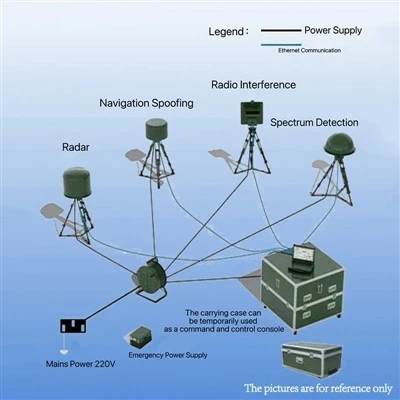


Smart Identification Technology for More Accurate Low Altitude Security
The rapid expansion of commercial drone applications has brought significant benefits to industries such as inspection, surveying, logistics, agriculture, and infrastructure management.
However, as drone activities increase, organizations are also facing greater challenges in understanding and managing low altitude airspace.
Traditional security monitoring methods often rely on manual observation or basic detection technologies. These approaches may provide limited information when dealing with small aerial objects, especially in environments where birds, balloons, or other flying objects may create unnecessary alerts.
An AI-Based Drone Recognition System provides a smarter approach by combining intelligent algorithms with advanced detection technologies to identify and classify aerial objects more effectively.
By analyzing collected data and recognizing different flight characteristics, the system helps organizations improve monitoring accuracy and reduce unnecessary alarms.
Designed for civilian applications, AI-based drone recognition technology supports airports, industrial facilities, energy companies, transportation infrastructure, and other organizations that require intelligent low altitude airspace management.

Challenges of Traditional Drone Monitoring
As drone usage becomes more widespread, many organizations are looking for more intelligent ways to manage surrounding airspace.
Traditional monitoring approaches may face several challenges:
Difficulty Distinguishing Drones from Other Flying Objects
Outdoor environments often contain different types of moving objects, including:
- Birds
- Balloons
- Weather-related objects
- Small aircraft
Without intelligent classification technology, security teams may receive frequent false alerts.
Limited Ability to Analyze Drone Characteristics
Simply detecting an object in the air may not provide enough information.
Organizations may need to understand:
- What type of object is detected
- Whether it matches drone characteristics
- Whether the activity requires attention
AI-based recognition technology helps improve the quality of monitoring information.
Increasing Demand for Automated Security Management
Large facilities cannot rely entirely on manual monitoring. Industrial operators and infrastructure managers need solutions that can automatically analyze information and provide meaningful alerts.
AI-based drone recognition systems help transform basic detection into intelligent airspace awareness.
What Is an AI-Based Drone Recognition System?
An AI-Based Drone Recognition System is an intelligent monitoring solution that uses artificial intelligence algorithms to identify and classify drone-related activities.
The system analyzes information collected from different sensors, such as:
- RF detection equipment
- Radar systems
- Optical cameras
- Thermal imaging devices
Through AI-based data processing, the system can recognize patterns associated with drone activities and help operators distinguish drones from other airborne objects.
Compared with traditional monitoring methods, AI recognition technology focuses not only on detecting movement but also on understanding the characteristics of detected objects.
How AI Drone Recognition Technology Works
Data Collection from Multiple Sensors
AI recognition systems can receive information from different monitoring sources, including:
- Radio frequency signals
- Radar detection data
- Video images
- Thermal images
Multiple data sources provide more information for intelligent analysis.
Intelligent Object Classification
After collecting data, AI algorithms analyze object characteristics and compare them with existing recognition models.
The system may evaluate:
- Movement patterns
- Signal characteristics
- Flight behavior
- Visual features
This helps improve classification accuracy and reduce unnecessary alerts.
Automated Alert Management
When suspicious drone activity is identified, the system can provide notifications through monitoring platforms.
Operators can view:
- Detection information
- Object classification results
- Activity records
- Monitoring status
This enables faster understanding of surrounding airspace conditions.
Key Features of AI-Based Drone Recognition Systems
Intelligent Drone Identification
AI algorithms help distinguish drone-related activities from other flying objects.
This capability is especially useful in outdoor environments where different objects may appear in monitored airspace.
Reduced False Alarms
One of the major advantages of AI recognition is improving monitoring efficiency by reducing unnecessary alerts.
By analyzing multiple characteristics, AI technology can help operators focus on more relevant events.
Multi-Sensor Data Fusion
AI-based recognition systems can combine information from different sensors.
Possible integration includes:
- RF detection systems
- Radar monitoring equipment
- Security cameras
- Thermal imaging solutions
This creates a more complete airspace monitoring platform.
Real-Time Analysis
AI processing allows monitoring systems to analyze incoming information continuously.
This supports:
- Real-time object recognition
- Automated event classification
- Intelligent monitoring workflows
Applications of AI-Based Drone Recognition Systems
Airports and Transportation Infrastructure
Airports require accurate awareness of surrounding airspace activities.
AI recognition technology can support airport security management by helping identify potential drone-related activities while reducing unnecessary alerts from other flying objects.
Oil and Gas Facilities
Energy facilities often include large outdoor areas where manual monitoring is challenging.
AI-based drone recognition systems can support:
- Refinery monitoring
- Storage facility management
- Remote infrastructure observation
Power Plants and Utility Facilities
Power generation and utility sites require reliable monitoring due to their large operational areas.
AI recognition technology can provide additional intelligence for surrounding airspace management.
Industrial Parks and Manufacturing Facilities
Industrial sites can use AI-based monitoring solutions to improve awareness around production areas, warehouses, and outdoor equipment zones.
Smart City Infrastructure
As cities introduce more drone-related services, intelligent airspace management becomes increasingly important.
AI recognition systems can support:
- Urban airspace monitoring
- Public infrastructure management
- Intelligent security platforms
AI-Based Drone Recognition System vs Traditional Detection Methods
AI technology does not replace all other detection methods. Instead, it improves the ability to analyze information collected by different sensors.

Benefits of AI-Based Drone Recognition Systems
Improved Monitoring Accuracy
AI classification helps organizations better understand detected objects and reduce unnecessary attention on non-relevant targets.
Smarter Security Operations
Automated analysis reduces the workload of security personnel and improves operational efficiency.
Better Decision Support
By providing more detailed monitoring information, AI recognition systems help operators make better-informed decisions.
Flexible Integration
AI recognition technology can be integrated with existing airspace monitoring solutions, including RF sensors, radar, and camera systems.
Why Choose an AI-Based Drone Recognition System?
As low altitude airspace becomes increasingly active, organizations need more than simple detection capability. They need intelligent systems that can analyze information and provide meaningful insights.
An AI-Based Drone Recognition System provides:
- Intelligent object classification
- Reduced false alarms
- Real-time monitoring support
- Integration with multiple sensors
- Improved airspace awareness
For civilian industries such as energy, transportation, manufacturing, and infrastructure management, AI recognition technology provides a smarter way to manage modern low altitude airspace.
FAQ
Hot Tags: ai-based drone recognition system for intelligent airspace monitoring, China ai-based drone recognition system for intelligent airspace monitoring manufacturers, suppliers, factory