Advanced Radio Frequency Technology for Low Altitude Airspace Monitoring
With the increasing use of commercial drones in industries such as inspection, surveying, photography, and logistics, organizations need more effective ways to understand activities in surrounding low altitude airspace.
A traditional security system mainly focuses on ground-level monitoring, while small drones can operate in open airspace beyond the coverage of conventional cameras. For industrial facilities, airports, energy sites, and large outdoor areas, identifying unauthorized drone activity at an early stage has become an important part of modern security management.
An RF-Based Drone Detection System uses radio frequency signal analysis technology to identify communication links between drones and their controllers. By analyzing wireless signals, the system can provide early awareness of nearby drone activities and support intelligent airspace monitoring.
Designed for civilian applications, RF-based drone detection technology provides a practical solution for organizations that require reliable, passive, and continuous low altitude airspace awareness.

Challenges of Modern Drone Detection
Commercial drones have become easier to access and operate, creating new challenges for many facilities.
Many conventional monitoring methods have limitations when dealing with small aerial devices:
- Cameras require visual visibility and suitable lighting conditions
- Manual observation cannot provide continuous monitoring
- Ground security systems cannot cover low altitude airspace effectively
- Large facilities require more intelligent monitoring approaches
For industries such as energy, transportation, manufacturing, and logistics, simply knowing that a drone is nearby is often not enough. Operators need more information about the activity, including possible drone presence, signal characteristics, and operational patterns.
This is where RF-based detection technology provides additional value.
What Is an RF-Based Drone Detection System?
An RF-Based Drone Detection System is a monitoring solution that identifies drone activity by analyzing radio frequency signals generated during communication between drones and their remote controllers.
Most commercial drones rely on wireless communication technologies for:
- Flight control
- Video transmission
- Data exchange
- Remote operation
The RF detection system captures and analyzes these signals to identify potential drone activities within the monitoring area.
Unlike technologies that rely only on visual confirmation, RF-based detection can provide earlier awareness by detecting wireless communication characteristics associated with drone operations.
How RF Drone Detection Technology Works
RF-based drone detection typically involves several key processes:
Signal Collection
The system uses RF sensors or antennas to collect wireless signals within a designated monitoring area.
These signals may contain information related to:
- Drone communication links
- Controller signals
- Frequency characteristics
- Signal patterns
Signal Analysis
After collecting RF data, intelligent algorithms analyze signal characteristics to distinguish possible drone-related activities.
The analysis process may include:
- Frequency identification
- Signal pattern recognition
- Communication analysis
- Classification algorithms
This helps improve detection accuracy and reduce unnecessary alerts.
Real-Time Monitoring and Notification
When potential drone activity is identified, the system can provide alerts through monitoring software.
Operators can receive information such as:
- Detection time
- Signal information
- Activity status
- Monitoring location
This enables security teams to better understand nearby airspace conditions.
Key Features of RF-Based Drone Detection Systems
Passive Detection Without Active Emission
One important advantage of RF detection technology is passive operation.
The system mainly receives and analyzes existing radio signals rather than actively transmitting detection signals.
Benefits include:
- Reduced interference with surrounding environments
- Suitable for sensitive facilities
- Continuous monitoring capability
- Flexible deployment options
Early Drone Activity Awareness
RF technology can help identify drone-related signals before visual confirmation is available.
This is valuable for:
- Large industrial sites
- Remote facilities
- Outdoor infrastructure
- Security monitoring applications
Early awareness allows operators to evaluate situations more effectively.
Intelligent Signal Identification
Modern RF detection systems can use software algorithms to analyze different signal characteristics.
Possible functions include:
- Drone signal recognition
- Signal classification
- Activity tracking
- Data recording
This supports more efficient airspace management.
Integration with Other Monitoring Technologies
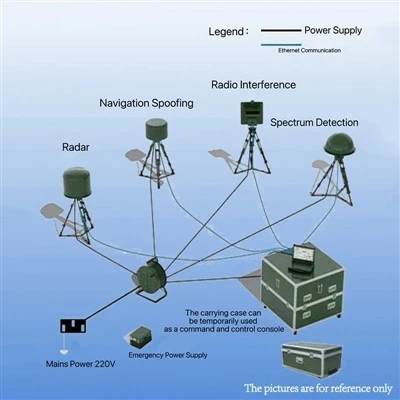
RF-based drone detection systems can work together with other security technologies, including:
- Optical cameras
- Thermal imaging systems
- Radar sensors
- Central monitoring platforms
A multi-sensor approach can provide more comprehensive low altitude airspace monitoring.
Applications of RF-Based Drone Detection Systems
Industrial Facilities
Manufacturing plants and industrial zones often contain valuable assets and restricted operational areas.
RF-based drone detection systems can help facility operators improve awareness of nearby drone activities and support industrial security management.
Oil and Gas Infrastructure
Oil and gas facilities frequently include large outdoor areas such as refineries, storage terminals, and remote operating locations.
RF detection technology can support:
- Facility perimeter monitoring
- Remote site awareness
- Infrastructure security management
Power Generation Facilities
Power plants and utility infrastructure require reliable monitoring solutions due to their large operational areas.
RF-based systems can provide additional visibility of nearby low altitude activities.
Applications include:
- Power plant surroundings
- Renewable energy facilities
- Utility infrastructure
Airports and Transportation Areas
Transportation facilities require effective management of surrounding airspace.
RF drone detection technology can complement existing airport security systems by providing additional information about nearby drone activity.
Smart Cities and Public Infrastructure
As cities adopt more drone-related services, low altitude airspace management becomes increasingly important.
RF-based monitoring solutions can support:
- Urban infrastructure management
- Public facility monitoring
- Smart city security systems

Benefits of RF-Based Drone Detection Systems
Organizations choosing RF-based drone detection technology can benefit from:
Passive Monitoring Capability
RF detection provides a non-intrusive method for identifying drone activity through signal analysis.
Flexible Deployment
Systems can be deployed in different environments, including fixed installations and mobile monitoring applications.
Improved Situational Awareness
Operators gain additional information about nearby drone activities.
Easy System Expansion
RF detection can be integrated with cameras, radar, and software platforms to create a scalable airspace security solution.
RF-Based Drone Detection System vs Other Detection Technologies
Different detection technologies provide different advantages.
In many applications, combining multiple technologies can provide stronger airspace monitoring capability.
Why Choose an RF-Based Drone Detection System?
As drone usage continues to expand, organizations need more intelligent methods to manage low altitude airspace.
An RF-based drone detection system provides:
- Passive signal-based monitoring
- Early awareness of drone activities
- Flexible deployment options
- Integration with existing security systems
- Support for civilian infrastructure protection
For companies operating industrial facilities, energy infrastructure, transportation hubs, and other important locations, RF-based drone detection technology provides a reliable foundation for modern airspace security management.
FAQ
Hot Tags: rf-based drone detection system for signal identification, China rf-based drone detection system for signal identification manufacturers, suppliers, factory