Intro
Reducing occupational radiation exposure has always been one of the core priorities of nuclear power plant operations. From plant commissioning to routine operation, maintenance outages, and eventual decommissioning, every activity inside a nuclear facility is designed around one central principle: protecting workers while maintaining operational efficiency.
Over the past decades, nuclear plants have made remarkable progress in reducing average worker doses. However, as facilities age, maintenance complexity increases, and regulatory expectations become more stringent, exposure management is becoming more challenging-not less.
Today, radiation protection is no longer just a compliance function. It has evolved into a highly engineered system that combines planning, technology, monitoring, and real-time decision-making.
This article explores how modern nuclear plants reduce worker radiation exposure, the limitations of traditional approaches, and why advanced real-time monitoring systems are becoming essential in achieving ALARA goals.
The Core Principle: ALARA in Modern Nuclear Operations
At the heart of all radiation protection programs is the ALARA principle-"As Low As Reasonably Achievable."
This principle requires nuclear operators to continuously minimize occupational exposure by balancing:
Operational necessity
Engineering feasibility
Economic practicality
Safety optimization
While ALARA has been a regulatory cornerstone for decades, its implementation has become significantly more sophisticated in modern nuclear facilities.
Today, ALARA is not just a guideline-it is embedded into:
Plant design
Maintenance planning
Work authorization systems
Radiation monitoring programs
Worker behavior and training
However, achieving ALARA in real-world conditions is far more complex than in theory, especially during high-intensity maintenance activities.
Strategy 1: Engineering Controls and Shielding Optimization
One of the most effective ways nuclear plants reduce worker exposure is through engineered shielding and facility design.
Modern plants incorporate:
Permanent shielding walls in high-radiation zones
Removable modular shielding during maintenance
Optimized reactor containment layouts
Remote handling systems for fuel and activated components
Improved material selection to reduce activation products
These engineering controls significantly reduce baseline radiation levels in controlled areas.
However, shielding alone cannot eliminate exposure risk, especially during maintenance when components must be accessed directly.
This is where operational radiation protection strategies become critical.
Strategy 2: Detailed Pre-Job Radiation Planning
Before any maintenance activity begins, nuclear plants conduct extensive radiation work planning.
Which includes:
Radiation field mapping
Dose rate predictions
Task-based exposure estimation
Time-motion studies
Work sequencing optimization
Identification of high-risk zones
The goal is to minimize the time workers spend in radiation areas and ensure that exposure is distributed efficiently across teams.
However, pre-job planning has a fundamental limitation:
It is based on predicted conditions, not real-time changes.
Once maintenance begins, radiation environments can shift due to:
Equipment removal
Shielding changes
Unexpected contamination
Adjacent work activities
This gap between planning and reality is one of the most persistent challenges in exposure control.
Strategy 3: Time, Distance, and Shielding Optimization
Radiation protection fundamentals still play a major role in exposure reduction:
Time: reducing duration of exposure
Distance: increasing separation from radiation sources
Shielding: inserting barriers between workers and sources
Nuclear plants carefully structure maintenance tasks to optimize these three variables.
Examples include:
Pre-assembling components outside radiation zones
Using remote tools for hot-area operations
Rotating workers to reduce individual dose accumulation
Scheduling high-radiation tasks during low-activity periods
While highly effective, these methods still rely heavily on accurate radiation awareness in the field.
Strategy 4: Advanced Radiation Monitoring Systems
One of the most significant advancements in modern nuclear safety is the transition from passive monitoring to real-time radiation monitoring systems.
Traditional systems like film badges and TLDs provide valuable dose records but only after exposure has occurred.
In contrast, modern electronic dosimetry systems enable:
Continuous dose tracking
Instant exposure alarms
Real-time dose rate visibility
Immediate worker feedback
This shift has fundamentally changed how nuclear plants manage exposure risk.
Real-time monitoring allows:
Immediate evacuation from high-dose areas
Faster response to unexpected radiation spikes
Better supervision during complex maintenance tasks
Reduced cumulative dose accumulation
For Radiation Safety Officers (RSOs), this provides operational visibility that was previously impossible.
Strategy 5: Neutron Radiation Awareness and Control
While gamma radiation has historically been the primary focus of exposure management, neutron radiation is increasingly recognized as a critical component of worker dose in nuclear facilities.
Neutron exposure is particularly relevant in:
Reactor core maintenance
Fuel handling operations
Spent fuel storage areas
High-energy physics and research environments
Because neutron radiation has a higher biological effectiveness, even small exposures can significantly contribute to total dose.
Modern nuclear plants are therefore expanding their monitoring programs to include neutron dosimetry as part of comprehensive exposure tracking.
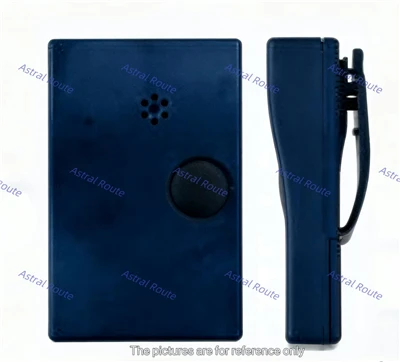
Advanced personal neutron dosimeters-such as those developed by Astral Route-help provide a more complete understanding of worker exposure in mixed radiation fields.
Strategy 6: Work Authorization and Radiation Control Zones
Nuclear plants use strict administrative controls to manage exposure risks.
These include:
Controlled area zoning
Radiation work permits (RWP)
Access restrictions based on dose limits
Mandatory pre-job briefings
Continuous supervisor oversight
Radiation work permits are particularly important because they define:
Expected dose rates
Protective measures required
Maximum allowable exposure
Required monitoring equipment
Emergency response procedures
These administrative systems help ensure that radiation exposure is systematically controlled across all maintenance activities.
Strategy 7: Worker Training and Behavioral Safety
Human behavior plays a critical role in radiation exposure reduction.
Even the most advanced systems cannot compensate for poor operational discipline.
Modern nuclear plants invest heavily in:
Radiation safety training programs
Simulation-based maintenance drills
ALARA culture development
Continuous safety reinforcement
Field supervision practices
Workers are trained to recognize radiation hazards, follow procedures strictly, and respond quickly to alarm conditions.
A strong safety culture significantly reduces unnecessary exposure events.
Strategy 8: Digitalization and Integrated Safety Systems
The nuclear industry is undergoing a broader digital transformation.
Modern exposure management systems increasingly integrate:
Personal dosimeters
Area radiation monitors
Access control systems
Centralized dose databases
Real-time analytics dashboards
This integration allows safety teams to:
Track exposure trends across the plant
Identify high-risk work patterns
Improve outage planning efficiency
Optimize workforce allocation
Digital systems are making radiation protection more predictive rather than purely reactive.
Operational Reality: Why Exposure Still Cannot Be Fully Eliminated
Despite decades of improvement, worker exposure cannot be completely eliminated in nuclear operations.
This is due to:
The nature of radioactive materials
Necessity of maintenance in controlled zones
Reactor activation products
Aging infrastructure in many plants
Therefore, the goal is not zero exposure, but optimized and controlled exposure under strict safety frameworks.
This is why continuous improvement in monitoring and protection systems remains essential.
The Growing Importance of Real-Time Personal Dosimetry
One of the most impactful developments in radiation protection is the widespread adoption of real-time personal dosimetry.
These devices provide immediate feedback to workers and supervisors, enabling:
Faster decision-making
Reduced exposure accumulation
Improved emergency response
Better compliance with ALARA principles
In dynamic environments such as reactor maintenance outages, real-time awareness can significantly reduce the risk of overexposure incidents.
Advanced solutions like personal neutron dosimeters are becoming increasingly important in this context, especially in mixed radiation fields where traditional monitoring may underestimate total dose.
How Modern Nuclear Plants Achieve Exposure Reduction Goals
When all strategies are combined, nuclear plants reduce worker exposure through a multi-layered approach:
Engineering controls
Pre-job planning
Time-distance-shielding optimization
Real-time monitoring
Neutron dose awareness
Administrative controls
Training and safety culture
Digital integration
This layered defense system ensures that even if one control fails, others remain in place to protect workers.
Conclusion
Reducing worker radiation exposure in nuclear plants is a continuously evolving challenge that requires both technological innovation and strong operational discipline. Astral Route is actively participating in this domain.
While traditional methods such as shielding and procedural controls remain essential, modern nuclear facilities are increasingly relying on real-time monitoring systems, digital integration, and advanced personal dosimetry to enhance radiation protection effectiveness.
As nuclear operations become more complex and regulatory expectations continue to rise, exposure management will increasingly depend on continuous awareness rather than retrospective analysis.
Advanced monitoring technologies, including real-time personal neutron dosimeters like those developed by Astral Route Personal Neutron Dosimeter, are becoming an important part of this transformation.
For Radiation Safety Officers, Nuclear Engineers, and industrial safety managers, investing in modern exposure reduction systems is not only a compliance requirement-it is a long-term commitment to worker safety and operational excellence.
FAQ
1. What is the main goal of radiation protection in nuclear plants?
The primary goal is to minimize worker exposure while maintaining safe and efficient plant operation, following the ALARA principle.
2. What are the most common methods used to reduce radiation exposure?
They include shielding, time optimization, distance control, pre-job planning, and real-time monitoring systems.
3. Why is real-time monitoring important for exposure reduction?
Because it allows immediate response to changing radiation conditions, helping prevent unexpected overexposure.
4. Do nuclear plants still use passive dosimeters?
Yes. Passive dosimeters are still widely used for regulatory dose recording, but they are increasingly supplemented by real-time electronic systems.
5. Why is neutron radiation monitoring important?
Neutron radiation has high biological effectiveness and may contribute significantly to total worker dose in reactor-related environments.
6. How does ALARA reduce exposure?
ALARA ensures exposure is continuously optimized by combining engineering, administrative, and operational controls.
7. Can exposure in nuclear plants be eliminated completely?
No. Exposure can be minimized but not fully eliminated due to the nature of nuclear materials and maintenance requirements.
8. What is the future of radiation protection in nuclear facilities?
The future is moving toward digital, integrated, real-time radiation safety systems that provide continuous exposure awareness and predictive safety management.