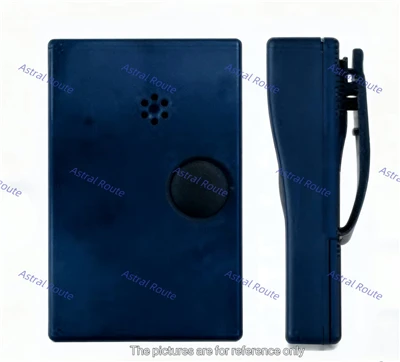
Many industrial facilities have invested in radiation dosimeters and portable survey meters to protect workers from radiation exposure. Yet an important safety gap often remains: radioactive contamination on people, equipment, and working surfaces.
A worker may complete a maintenance task without exceeding their external radiation dose limit, but radioactive material could still be present on their gloves, protective clothing, tools, or footwear. If this contamination goes undetected, it can spread into clean areas, affect other workers, and create additional decontamination costs.
For organizations handling radioactive materials, operating nuclear facilities, or conducting radiation-related industrial activities, surface contamination monitoring is not an optional extra. It is an essential part of a comprehensive radiation protection program.
1. Why External Radiation Monitoring Is Not Enough
Radiation exposure and radioactive contamination are two different problems.
Personal dosimeters measure an individual's external radiation exposure. Portable radiation survey meters help assess radiation levels in an environment. However, neither function should be confused with dedicated surface contamination monitoring.
Radioactive contamination occurs when radioactive substances are deposited on surfaces, equipment, clothing, or skin.
Common contamination sources include:
Radioactive liquids and accidental spills
Contaminated pipes, valves, and industrial components
Radioactive dust and particles
Laboratory materials and equipment
Nuclear maintenance and decommissioning activities
Radioactive waste handling
Without appropriate contamination checks, radioactive material may be transferred from one location to another without workers realizing it.
This creates risks that ordinary personal dosimetry alone cannot address.
2. How Undetected Contamination Affects Worker Safety
The biggest concern with uncontrolled contamination is that it can spread through routine workplace activities.
Consider a maintenance technician handling a potentially contaminated component. After completing the task, the technician removes their gloves and moves to another work area. If contamination has transferred to their hands or clothing, radioactive material may be carried into areas that were previously clean.
Potential consequences include:
Unnecessary contact with radioactive materials
Internal exposure through inhalation or ingestion
Contamination of shared tools and equipment
Increased decontamination requirements
Additional personnel monitoring
Work interruptions and regulatory investigations
The risk is particularly important when radioactive materials are handled repeatedly throughout a shift.
Early detection helps prevent a localized contamination problem from becoming a facility-wide issue.
3. How Surface Contamination Monitoring Works
A surface contamination monitor is designed to detect radioactive material deposited on surfaces.
Depending on its detector configuration, the instrument can be used to check:
Workers' hands and clothing
Protective equipment
Industrial tools
Floors and workbenches
Pipes and mechanical components
Waste containers
Laboratory surfaces
Portable contamination monitors allow radiation protection personnel to conduct checks at different locations without relying entirely on fixed monitoring stations.
The measurement approach depends on the radionuclide involved and the instrument's detector characteristics.
Alpha, beta, and gamma contamination may require different detection configurations. Not every contamination monitor can detect all radiation types with equal effectiveness.
For procurement teams, confirming the required radionuclide coverage is therefore one of the first steps when selecting equipment.
4. Where Surface Contamination Monitoring Is Most Important
Nuclear Power Plants and Nuclear Maintenance
During maintenance outages, workers may remove or inspect components that have been exposed to radioactive systems.
Pipes, valves, filters, and internal equipment may require contamination checks before being transferred, repaired, or handled outside controlled areas.
Reliable monitoring helps identify contaminated items and supports controlled-area management.
Nuclear Medicine and Medical Isotope Facilities
Hospitals and medical isotope facilities handle radioactive materials for diagnostic and therapeutic applications.
Contamination may occur on preparation surfaces, handling equipment, protective clothing, and laboratory workstations.
Regular monitoring helps staff identify affected areas and respond before contamination spreads.
Research Laboratories
Research institutions working with radioactive tracers and experimental materials need reliable contamination control.
Portable monitoring instruments are particularly useful when laboratories have multiple workstations and frequently changing experimental setups.
Radioactive Waste Management
Waste collection, sorting, storage, and transportation all require appropriate contamination assessment.
Monitoring helps personnel identify potentially contaminated materials and maintain separation between controlled and uncontrolled waste streams.
Industrial Maintenance and Inspection
In industries involving radioactive materials, specialized inspection activities, or contaminated equipment, surface monitoring provides an additional layer of protection for maintenance personnel and contractors.
5. Why Delayed Contamination Detection Creates Operational Costs
Radiation safety problems are not only about worker health. They can also affect project schedules and operating budgets.
When contamination is discovered late, organizations may need to:
Stop ongoing maintenance work
Restrict access to affected areas
Identify the source of contamination
Conduct additional personnel checks
Decontaminate tools and equipment
Complete incident documentation
During refinery shutdowns, nuclear maintenance outages, and other time-sensitive projects, these activities can cause avoidable delays.
Portable surface contamination monitors allow safety teams to conduct timely checks at critical points, helping identify problems before they spread.
For facility operators, the value lies in better control over both safety risks and operational interruptions.
6. What Buyers Should Consider When Selecting a Contamination Monitor
Choosing the right instrument requires more than comparing prices or looking at detector sensitivity.
Procurement teams and radiation safety officers should evaluate several factors.
Detection capability: Confirm whether the instrument supports the alpha, beta, or gamma radiation types relevant to the application.
Measurement range and sensitivity: The instrument should be suitable for the expected contamination levels and applicable monitoring procedures.
Probe design: Consider whether the detector is appropriate for checking large surfaces, small components, tools, or personnel.
Portability: Field maintenance teams may need lightweight instruments that can be moved easily between work areas.
Display and alarms: Clear readings and suitable warning functions help operators identify abnormal conditions.
Calibration and maintenance: Confirm calibration requirements, service availability, and long-term maintenance arrangements.
Environmental suitability: Industrial facilities may involve dust, humidity, vibration, and temperature variations.
A well-matched instrument is more valuable than a technically advanced model that does not fit the actual monitoring application.
7. Building a More Complete Radiation Protection System
Surface contamination monitoring should work alongside other radiation detection technologies rather than replace them.
A comprehensive equipment configuration may include:
Electronic personal dosimeters for individual exposure tracking
Portable radiation survey meters for environmental dose-rate measurements
Surface contamination monitors for detecting radioactive material on surfaces
Neutron dosimeters for neutron exposure monitoring
Portable tritium monitors for applications involving tritium
Area radiation monitors for continuous workplace monitoring
Each instrument addresses a different radiation safety requirement.
For example, a nuclear maintenance contractor may need personal dosimeters for its workforce, survey meters for field measurements, and contamination monitors for checking equipment before it leaves controlled areas.
Identifying these requirements early helps procurement teams avoid gaps in their radiation protection equipment inventory.
8. Radiation Detection Solutions from Astral Route
For organizations looking to improve radiation protection across different industrial and nuclear applications, Astral Route provides a range of radiation detection and monitoring equipment.
Our product range covers electronic personal radiation dosimeters, neutron dosimeters, surface contamination monitors, portable tritium monitors, and other radiation safety solutions.
Rather than treating every application as a standard equipment purchase, Astral Route helps buyers identify suitable product options based on their monitoring requirements, working environments, and intended applications.
Whether you are upgrading an existing radiation monitoring program, equipping a maintenance team, or sourcing instruments for a new facility, selecting the appropriate detection technology is an important first step.
FAQ
What is a surface contamination monitor used for?
It detects radioactive material deposited on surfaces, equipment, tools, clothing, and other objects to help prevent contamination from spreading.
What is the difference between a radiation survey meter and a contamination monitor?
A survey meter is generally used to measure radiation dose rate or related radiation levels in an environment. A contamination monitor is specifically designed to identify radioactive material deposited on surfaces or personnel.
Can a personal dosimeter detect surface contamination?
No. Personal dosimeters primarily measure an individual's external radiation exposure. Dedicated contamination monitoring instruments are needed to assess radioactive material on surfaces.
Which radiation types can a surface contamination monitor detect?
Depending on detector design, instruments may detect alpha, beta, and/or gamma radiation. Buyers should confirm the required detection capability against the radionuclides present in their facility.
Which industries need surface contamination monitoring equipment?
Typical applications include nuclear power, nuclear medicine, medical isotope production, research laboratories, radioactive waste management, and facilities handling radioactive materials.
How often should surface contamination checks be performed?
Monitoring frequency depends on the radionuclides involved, contamination risks, facility procedures, and applicable regulations. High-risk operations may require checks at defined work stages and controlled-area exit points.
Final Thoughts
Radiation protection does not end with measuring individual dose rates. Controlling radioactive material on surfaces, equipment, and personnel is equally important for preventing contamination from spreading throughout a facility.
For nuclear operators, medical isotope facilities, research institutions, and industrial maintenance contractors, surface contamination monitoring helps close an important gap in workplace radiation safety.
Investing in the right monitoring equipment can improve contamination control, reduce unnecessary operational interruptions, and support a more comprehensive radiation protection strategy.
If your organization is reviewing its radiation detection equipment requirements, Astral Route can help you explore suitable monitoring options for your specific application.