Choosing an electronic personal dosimeter is not simply a matter of comparing prices or selecting a device with the widest measurement range.
For NDT contractors, nuclear facility operators, and radiation safety managers, the wrong choice can create monitoring gaps, complicate compliance, and increase the cost of managing worker exposure.
Consider a radiography team working through a refinery shutdown. Several inspections may take place across different areas, with changing radiation conditions and tight deadlines. A dosimeter that provides only delayed exposure records offers limited help when workers need immediate warnings. Similarly, a device designed for gamma radiation alone may not be suitable for a workplace where neutron exposure is also possible.
Before purchasing electronic personal dosimeters, buyers need to understand which features matter in their actual operating environment.
1. Identify the Types of Radiation You Need to Monitor
This should be the first question in any procurement process.
Many industrial radiography applications involve X-rays or gamma rays. Nuclear facilities, research reactors, and certain specialized workplaces may also involve neutron radiation.
Not every personal dosimeter can measure all these radiation types. A gamma-only instrument should not be assumed to provide neutron monitoring simply because it is marketed as a radiation dosimeter.
Before requesting a quotation, clarify whether your application involves:
X-ray or gamma radiation
Beta radiation, where relevant
Neutron radiation
Mixed radiation fields
For pipeline radiography and refinery inspection, an X-ray or gamma dosimeter may meet the operational requirement, depending on the radiation source and safety program. For nuclear maintenance or research environments involving neutron exposure, a specifically configured neutron dosimeter may be necessary.
Astral Route offers electronic personal dosimetry solutions with X-ray and gamma monitoring, as well as neutron-capable configurations for applications requiring broader radiation coverage.
The important point is to match the detector to the actual hazard, rather than paying for unnecessary features or overlooking a critical radiation type.
2. Prioritize Real-Time Dose and Dose-Rate Monitoring
Traditional passive badges remain useful for recording occupational exposure over a monitoring period. However, they do not normally provide immediate feedback to the wearer during a task.
Electronic personal dosimeters offer a different advantage: they can display dose information as work progresses.
When comparing models, check whether the instrument measures both:
Cumulative dose: the radiation dose accumulated over time.
Dose rate: the rate at which exposure is occurring at a particular moment.
Both measurements matter. Cumulative dose supports exposure management, while dose-rate information helps workers recognize changing radiation conditions.
For RT contractors, this is particularly valuable during shutdown inspections, pipeline weld testing, and offshore maintenance, where working conditions can change from one inspection location to another.
A device with real-time measurement can help workers and supervisors respond more promptly to unexpected conditions, provided it is used alongside established radiation protection procedures.
3. Check the Alarm Functions Before Comparing Prices
An electronic dosimeter is more useful when it can alert the wearer to potentially unsafe conditions.
Look for configurable alarm thresholds for cumulative dose and dose rate. Depending on the model, alerts may include audible warnings, visual indicators, and vibration.
Before purchasing, ask:
Can dose and dose-rate alarms be configured separately?
Are the alarm thresholds adjustable?
Can workers recognize alarms in noisy industrial environments?
Can the alarm functions be tested before deployment?
Are alarm settings compatible with the site's radiation protection procedures?
These questions are especially relevant to night-shift radiography and large shutdown projects, where fatigue, poor visibility, and multiple work teams can make it harder to recognize changing conditions.
Astral Route's published dosimeter specifications include dual-level alarm thresholds for cumulative dose and dose rate, configurable within the instrument's measurement range.
Alarm settings should always be established by qualified radiation safety personnel. An alarm is an additional safeguard, not a substitute for source control, exclusion zones, survey instruments, or emergency procedures.
4. Make Sure the Measurement Range Fits Your Application
A wide measurement range may look attractive on a specification sheet, but the highest range is not automatically the best choice.
Buyers should consider the expected radiation field, the dose rates that may occur, the required sensitivity, and the instrument's response across the relevant energy range.
For example, a dosimeter intended for routine industrial radiography may have different requirements from one used in a nuclear research environment with mixed radiation fields.
Astral Route publishes the following measurement ranges for its featured radiation dosimeter:
Cumulative dose: 1 μSv to 10 Sv
X-ray/gamma dose rate: 1 μSv/h to 1 Sv/h, with an optional range up to 10 Sv/h
Neutron dose rate: 10 μSv/h to 1 Sv/h
These are published product specifications, not a recommendation that every configuration is suitable for every workplace. Buyers should confirm the selected model's response, measurement range, and performance against the intended application before ordering.
5. Consider Accuracy, Calibration, and Documentation
A digital display does not guarantee accurate measurements. The instrument must be appropriate for the radiation field and maintained according to the manufacturer's requirements.
When evaluating a supplier, request information about:
Measurement accuracy across the specified range
Calibration procedures and recommended intervals
Calibration certificates and traceability
Functional checks before use
Repair and maintenance arrangements
Replacement availability and technical support
This is important for contractors serving refineries, offshore facilities, and nuclear clients, where equipment documentation may be reviewed during site qualification or safety audits.
Calibration requirements vary by jurisdiction, application, and instrument. Buyers should confirm the applicable requirements with their radiation protection officer or regulator rather than assuming one interval applies everywhere.
6. Evaluate Battery Life, Durability, and Wearability
A dosimeter that is uncomfortable to wear or cannot last through a full shift may be poorly suited to daily field operations.
For mobile inspection teams, consider the instrument's weight, dimensions, battery performance, ingress protection, and resistance to normal workplace conditions.
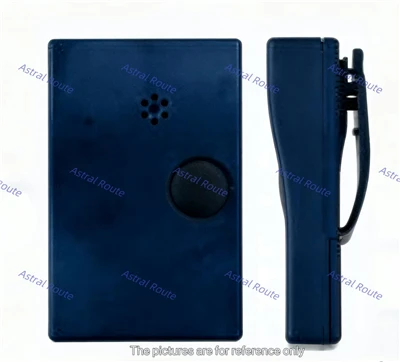
Astral Route lists a compact dosimeter measuring approximately 93 × 60 × 33 mm, weighing less than 100 g excluding batteries, with an IP55 protection rating. Its published specifications also state a battery life of at least 80 hours for the watch-type configuration.
These details can help buyers assess portability and day-to-day practicality. However, IP55 does not mean the device is waterproof under all conditions, so environmental limitations should be checked before use in wet, dusty, or coastal locations.
7. Decide How Exposure Data Will Be Managed
For an organization with a small team, standalone operation may be sufficient. Larger contractors may need a more structured approach to exposure records across multiple workers or project sites.
Consider whether you need:
Automatic measurement data storage
Non-contact data readout
Networked operation
Centralized exposure records
Optional wireless connectivity
Integration with existing safety procedures
Astral Route lists standalone and networked operating modes, automatic measurement data storage, infrared non-contact data readout, and optional 4G, Wi-Fi, or GPS modules, subject to configuration.
Before buying, confirm which features are included in the quoted model. Optional connectivity should not be assumed to be standard, and the availability of a feature does not necessarily mean it integrates with your existing software.
8. Choose a Supplier That Understands Your Application
The lowest unit price may not deliver the best long-term value if the equipment does not meet the site's monitoring requirements.
A useful supplier should be able to discuss your application, explain the available configurations, provide technical documentation, and clarify calibration and after-sales support.
Astral Route supplies radiation monitoring equipment for industrial and nuclear applications, including electronic personal dosimeters, neutron dosimeters, surface contamination monitors, and portable tritium monitors.
For buyers managing several types of radiation hazard, this broader product range can help simplify the process of evaluating complementary monitoring equipment.
Check customized solutions for you here https://www.astralroutetech.com/radiation-dosimeter/
FAQ
What is the difference between an electronic personal dosimeter and a passive badge?
An electronic personal dosimeter provides real-time dose information and may offer dose-rate displays and alarms. A passive badge generally records accumulated exposure for later processing or assessment. Some radiation protection programs use both for complementary purposes.
Do all electronic personal dosimeters detect neutron radiation?
No. Neutron monitoring requires a device specifically designed and configured for neutron radiation. Confirm the detector type and specifications before purchasing.
Which features are most important for industrial radiography?
Real-time dose and dose-rate monitoring, configurable alarms, an appropriate measurement range, reliable battery performance, and valid calibration are key considerations. The final specification should reflect the site's radiation protection procedures.
How long should an electronic dosimeter's battery last?
Battery life depends on the model, operating mode, alarm use, and communication features. Compare the manufacturer's stated battery performance with the length of your shifts and confirm how batteries are replaced or recharged.
How can buyers obtain the right configuration?
Provide the supplier with your application, radiation types, expected operating conditions, required alarm functions, data-management needs, and applicable compliance requirements. This allows the supplier to recommend a configuration for technical review.
Choose a Dosimeter That Fits Your Actual Working Conditions
The right electronic personal dosimeter should do more than display a radiation reading. It should match the radiation hazards, operating environment, alarm requirements, and documentation practices of the organization using it.
For NDT contractors, oil and gas operators, nuclear facilities, and research laboratories, a careful evaluation before purchase can help prevent specification mismatches and avoidable equipment replacement.
Astral Route offers electronic personal dosimeters with real-time monitoring, configurable alarms, data storage, and options for neutron and gamma monitoring. If you are sourcing dosimeters for a new project or replacing aging equipment, visit the Astral Route Radiation Dosimeter range to review the available solutions or contact the team with your application requirements for a suitable configuration.