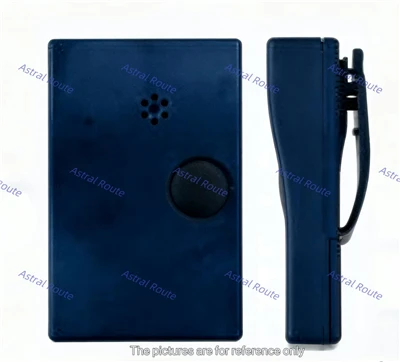
When firefighters enter a damaged building, police investigate a suspicious package, or emergency teams respond to an industrial accident, they cannot rely on visual inspection alone to identify radiation hazards. Ionizing radiation cannot be seen, smelled, or felt. Without suitable detection equipment, responders may enter a potentially hazardous area without realizing that radiation is present.
For public safety agencies, this creates a difficult operational challenge. Teams must assess unfamiliar environments, protect personnel, make timely decisions, and prevent unnecessary public exposure-all while working under pressure.
Radiation detection equipment helps bridge this gap. But choosing the right instruments is just as important as having them available. A personal dosimeter, a portable survey meter, and a contamination monitor serve different purposes. Agencies that understand these differences can build a more effective radiation safety program.
Why Radiation Detection Matters in Public Safety
Radiological hazards can arise in several situations, including industrial accidents, damaged radioactive sources, incidents involving medical or research materials, and suspicious packages containing potentially radioactive substances.
Public safety personnel may also encounter radioactive materials during cargo inspections, infrastructure emergencies, or hazardous-material response operations.
The first challenge is recognizing the hazard before it leads to unnecessary exposure. The second is determining how to respond without creating additional risks for emergency crews or the public.
Without appropriate monitoring equipment, responders may struggle to establish safe working boundaries, assess changing conditions, or determine whether personnel have received significant exposure.
Radiation detection therefore supports three critical objectives: early warning, informed decision-making, and personnel protection.
The Problem With Relying on Visual Assessment Alone
Traditional emergency assessments often begin with visible indicators such as smoke, structural damage, chemical spills, or damaged containers. Radiation presents a different challenge because its presence may not produce any obvious physical sign.
A package can appear undamaged while containing radioactive material. A work area may look safe even when radiation levels require further assessment.
This makes suitable radiation detectors particularly valuable for firefighters, police officers, hazardous-material teams, customs personnel, and emergency management organizations.
The equipment must match the intended task. A wearable radiation detector may alert an individual to an unexpected radiation field, while a survey meter can help trained personnel measure radiation levels at specific locations. Specialized identification instruments may be needed when responders must determine which radionuclide is present.
No single instrument can perform every radiation detection task.
Real-Time Personal Dosimetry Helps Protect Responders
Emergency response conditions can change rapidly. A responder may approach a suspected source, move through a damaged facility, or remain in an area longer than initially planned.
An electronic personal dosimeter (EPD) helps address this challenge by tracking accumulated dose and, depending on the model, dose rate. Configurable alarms can alert the wearer when predefined thresholds are reached.
For public safety teams, useful features may include:
Real-time dose and dose-rate display
Audible, visual, or vibration alarms
Cumulative exposure tracking
Automatic data storage
Readable displays in demanding field conditions
These features give personnel timely information that can support decisions to withdraw, reassess conditions, or follow established response procedures.
An alarm is not a substitute for incident command or radiation safety protocols. Agencies should establish alarm thresholds and response actions in advance, and ensure that personnel understand what to do when an alarm activates.
Portable Survey Meters Support On-Site Decisions
Personal dosimeters primarily monitor the wearer's exposure. They do not replace portable survey instruments used to assess radiation conditions in an area.
A suitable radiation survey meter can help trained responders measure dose rates, assess boundaries, and check locations that may require access restrictions.
This capability is useful in scenarios such as:
Fire and rescue operations at industrial facilities
Emergency inspections following equipment damage
Assessment of suspected radioactive sources
Monitoring around controlled areas
Follow-up surveys after a radiological incident
Instrument selection matters. Detection capability, measurement range, radiation type, response characteristics, and calibration status should all match the intended application.
A device designed for low-level screening may not be suitable for measuring high radiation fields. Procurement teams should verify the instrument's intended use before including it in an emergency response equipment package.
Contamination Monitoring Prevents Secondary Risks
Radiation exposure and radioactive contamination are different problems.
External exposure occurs when radiation reaches a person from a source outside the body. Contamination occurs when radioactive material is deposited on skin, clothing, equipment, or surfaces.
After an incident involving radioactive material, responders may need to assess whether personnel or equipment have become contaminated. A dedicated contamination monitor can help identify radioactive material on surfaces and support decisions about isolation and decontamination.
This is especially important when teams leave a controlled area. Without appropriate checks, contaminated clothing or equipment could transfer radioactive material to vehicles, medical facilities, or other locations.
Personal dosimeters alone cannot establish whether a person or object is contaminated.
Selecting Equipment for Different Response Scenarios
For procurement managers and emergency service leaders, the most effective approach is to begin with operational requirements rather than a product catalogue.
Consider the following equipment categories:
Electronic personal dosimeters: Monitor individual exposure and provide alarms when supported by the model.
Portable radiation survey meters: Measure radiation levels at specific locations and help assess controlled-area boundaries.
Surface contamination monitors: Detect radioactive material deposited on personnel, tools, and surfaces.
Neutron dosimeters: Support personal monitoring in environments where neutron exposure is a credible hazard.
Specialized tritium monitors: Support applications involving tritium, subject to the instrument's specified measurement method and intended use.
Before purchasing, agencies should review detector capabilities, measurement ranges, calibration requirements, environmental suitability, battery life, alarm settings, data-recording functions, and maintenance support.
Training and response procedures should be considered part of the investment. Detection equipment is most useful when personnel know its limitations and can interpret readings correctly.
Why Equipment Reliability and Readiness Matter
Emergency equipment cannot be evaluated only by its performance on the day it is purchased. It must also remain ready for deployment months or years later.
Common procurement concerns include overdue calibration, depleted batteries, unclear maintenance histories, inconsistent equipment configurations, and difficulty obtaining replacement units.
These problems can undermine confidence in field readings and complicate incident response.
Public safety organizations should establish routine functional checks, calibration tracking, battery management, user training, and clear procedures for removing faulty instruments from service.
For agencies operating across multiple stations or regions, standardizing equipment where practical can also simplify training and maintenance.
Radiation Detection Solutions for Public Safety Agencies
Astral Route offers radiation monitoring products for professional applications, including electronic personal dosimeters, real-time radiation dosimeters, neutron dosimeters, surface contamination monitors, and portable tritium monitors.
These product categories may be relevant to emergency services, industrial safety teams, public infrastructure operators, and organizations responsible for radioactive material handling.
For public safety procurement, the key is to match the selected instrument to the actual mission. A device intended for personal dose monitoring should not be treated as a substitute for a survey meter or radionuclide identification system.
Agencies can review the Astral Route radiation detection equipment range and share their intended applications, required radiation types, operating conditions, and documentation requirements when requesting a quotation.
Check customized solutions here https://www.astralroutetech.com/radiation-dosimeter/
FAQ
What radiation detection equipment should first responders carry?
The appropriate equipment depends on the team's role and expected hazards. Options may include personal radiation detectors, electronic dosimeters, portable survey meters, and specialized identification or contamination monitoring instruments.
Can an electronic personal dosimeter identify radioactive materials?
Generally, no. Its primary function is to monitor personal dose and, where supported, dose rate. Identifying a radionuclide typically requires specialized instrumentation.
Why are real-time alarms important?
They provide immediate warning when configured dose or dose-rate thresholds are exceeded, allowing responders to follow predefined protective actions.
Can one radiation detector measure alpha, beta, gamma, and neutron radiation?
Not necessarily. Detection capabilities vary by instrument and detector configuration. Buyers should verify that the selected model covers the radiation types relevant to their operations.
What should agencies check before purchasing radiation monitoring equipment?
Key considerations include detection capability, measurement range, alarm functions, calibration, durability, battery life, data storage, maintenance, and compatibility with the agency's response procedures.
Does radiation detection equipment replace emergency response training?
No. Instruments support trained decision-making but do not replace radiation safety procedures, incident command, appropriate protective measures, or specialist support.
Final Thoughts
Public safety teams need more than a detector that simply switches on and displays a reading. They need equipment suited to their mission, reliable information in the field, and clear procedures for responding to alarms and abnormal measurements.
By combining personal dosimetry, appropriate survey instruments, contamination monitoring where required, and regular equipment readiness
checks, agencies can strengthen responder protection and make better-informed decisions during radiological incidents.
For organizations reviewing their radiation monitoring capabilities, the next step is to define the operational requirements first-and then select equipment that can meet them reliably.