
Radiation safety is often associated with dose rates and external exposure. In many industrial and nuclear environments, however, another risk can be just as important: radioactive contamination.
A worker may leave a controlled area with little external radiation exposure but still carry radioactive material on their hands, clothing, footwear, tools, or equipment.
This creates a different type of safety problem.
Unlike an elevated dose rate near a radiation source, contamination may not be immediately visible. It can spread from one work area to another, move through equipment and protective clothing, or become an internal exposure hazard if radioactive material is inhaled or ingested.
For nuclear facilities, radioactive material handling operations, laboratories, and maintenance teams, contamination monitoring provides an essential layer of protection.
What Is Radioactive Contamination?
Radioactive contamination occurs when radioactive material is deposited on a person, surface, object, or work area.
It is different from external radiation exposure.
A person standing near a gamma source may receive external radiation without becoming contaminated. By contrast, a contaminated worker may carry radioactive material away from the original work zone even after the source of external radiation has been removed.
Contamination can involve different types of radioactive material, including alpha-, beta-, and gamma-emitting radionuclides.
Depending on the material involved, contamination may be found on:
Hands and skin
Protective clothing
Safety footwear
Tools and equipment
Work surfaces
Vehicles and containers
Waste materials
This is why contamination control requires dedicated monitoring rather than relying solely on conventional dose-rate measurements.
Why Contamination Can Be Difficult to Detect
One of the biggest challenges is that radioactive contamination does not necessarily produce obvious physical signs.
There may be no visible residue, unusual smell, or immediate indication that a surface has become contaminated.
A worker could unknowingly touch a contaminated component and then handle:
A personal device
A tool
A vehicle
A door handle
Protective equipment
The contamination can then spread beyond the original work area.
This is particularly concerning during maintenance activities where workers move frequently between controlled and potentially clean areas.
Without systematic monitoring, contamination can remain undetected until much later.
Surface Contamination Monitoring as a First Line of Defense
Surface contamination monitors are designed to detect radioactive material deposited on surfaces.
They can be used to survey:
Work areas
Equipment
Tools
Components
Protective clothing
Personnel
Depending on the instrument and detector configuration, monitoring can target different types of radioactive emissions.
The objective is straightforward: identify contamination before it spreads or creates an additional exposure pathway.
For radiation protection teams, this information is essential for deciding whether an area or object can be released for further use.
Personnel Contamination Monitoring
Workers are one of the most important monitoring points.
Before leaving a controlled area, personnel may need to be checked for contamination according to site procedures.
Typical monitoring points include:
Hands
Shoes
Clothing
Body surfaces
Personal equipment
Personnel contamination monitoring can identify radioactive material before a worker enters a clean area.
This creates an important barrier between controlled operations and the rest of the facility.
For organizations handling radioactive materials, this type of monitoring can significantly reduce the possibility of uncontrolled contamination spreading through the workplace.
Why Maintenance Activities Create Additional Risk
Routine maintenance can create unexpected contamination pathways.
When workers open equipment, remove components, repair piping, or access previously enclosed systems, radioactive material that was contained inside may become accessible.
This can occur in:
Nuclear power plants
Research reactors
Radioactive waste facilities
Nuclear laboratories
Fuel-cycle facilities
A component that appeared safe from an external dose-rate perspective may still contain radioactive contamination.
Before and after maintenance activities, contamination surveys can therefore provide valuable information about changing conditions.
Contamination Monitoring During Nuclear Outages
Nuclear outages are particularly demanding periods for radiation protection teams.
Large numbers of workers may enter controlled areas to perform:
Equipment maintenance
Inspection
Component replacement
Decontamination
Repair work
Work conditions can change rapidly as systems are opened and components are moved.
Contamination monitoring helps radiation protection teams identify areas where additional controls may be necessary.
It can also support decisions about:
Protective clothing
Controlled access
Decontamination
Waste handling
Equipment release
The faster contamination is identified, the easier it is to control.
Preventing Cross-Contamination
One of the biggest benefits of contamination monitoring is preventing radioactive material from moving between zones.
A facility may have several levels of control, such as:
Contaminated Area → Controlled Area → Clean Area
Monitoring at transition points helps verify that radioactive material is not being carried across these boundaries.
This can involve checking personnel, tools, containers, and equipment before they leave designated areas.
Effective monitoring therefore supports the broader contamination-control strategy rather than functioning as an isolated measurement activity.
Contamination Monitoring and Worker Protection
The connection between contamination monitoring and worker safety is particularly important because contamination can create internal exposure pathways.
If radioactive material enters the body through inhalation, ingestion, or an open wound, the resulting exposure may continue after the worker has left the original work area.
Early detection allows workers and radiation protection personnel to take appropriate action according to established site procedures.
This may include:
Removing contaminated protective clothing
Washing affected areas
Isolating contaminated equipment
Restricting movement
Conducting additional assessments
The purpose is not simply to identify contamination. It is to interrupt the pathway before the situation becomes more serious.
Portable Monitoring for Changing Work Areas
Fixed monitoring stations are useful, but they cannot cover every temporary work location.
Maintenance teams frequently work in areas that change from one shift to another.
Portable contamination monitors provide flexibility for these situations.
They can be deployed for:
Temporary maintenance zones
Equipment inspection
Decommissioning work
Waste handling
Emergency surveys
Field contamination investigations
This mobility allows radiation protection personnel to respond to actual work conditions rather than relying solely on permanent monitoring points.
The Importance of Reliable Detection Equipment
Contamination monitoring is only effective when the detection equipment is reliable.
Instruments should be appropriately selected for the radionuclides and contamination types expected in the work environment.
Important considerations include:
Detector sensitivity
Measurement range
Response time
Portability
Battery performance
Alarm capability
Calibration status
Older or poorly maintained instruments can create uncertainty at precisely the time when reliable information is most important.
Regular performance checks and calibration should therefore be part of the radiation protection program.
Contamination Monitoring Is Different From Dose Monitoring
A common misunderstanding is that a personal dosimeter or radiation survey meter can replace contamination monitoring.
They serve different purposes.
A personal dosimeter measures an individual's radiation exposure.
A survey meter measures radiation levels in an area or around an object.
A contamination monitor is designed to identify radioactive material deposited on surfaces or personnel.
A comprehensive radiation protection program may require all three.
The right combination depends on the facility, radionuclides involved, work activities, and applicable regulations.
Supporting Modern Radiation Protection Programs
As nuclear facilities and radioactive-material operations become more sophisticated, radiation protection programs are becoming increasingly comprehensive.
Organizations are combining:
Electronic personal dosimeters
Portable radiation survey meters
Surface contamination monitors
Neutron dosimeters
Tritium monitoring equipment
Fixed area monitoring systems
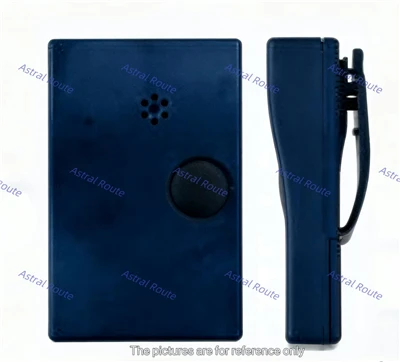
Astral Route provides radiation monitoring solutions covering several of these applications, including surface contamination monitoring, electronic personal dosimetry, neutron radiation monitoring, and portable tritium detection.
The objective is to give radiation protection teams better visibility across different types of radiation hazards rather than relying on a single monitoring technology.
See customized solutions for you at https://www.astralroutetech.com/radiation-dosimeter/
FAQ
What is the purpose of contamination monitoring?
It is used to identify radioactive material on people, equipment, tools, and surfaces so that contamination can be controlled before it spreads or creates additional exposure risks.
Can a normal radiation survey meter detect contamination?
Some survey meters can detect certain contamination conditions, but dedicated contamination monitors may provide better sensitivity and measurement capabilities for specific applications.
Is contamination the same as radiation exposure?
No. Exposure refers to radiation received by a person, while contamination means radioactive material is present on or inside a person, object, or surface.
When should workers be checked for contamination?
The exact procedures depend on the facility and applicable regulations, but monitoring is commonly performed when personnel or equipment move between controlled and clean areas.
Why is contamination monitoring important during nuclear maintenance?
Opening equipment or systems can expose previously contained radioactive material. Monitoring helps identify contamination before it spreads to workers, tools, or other areas.
Final Thoughts
Radiation protection is not only about measuring how much radiation a worker receives.
Controlling radioactive contamination is equally important in environments where radioactive materials may be released from equipment, transferred between surfaces, or carried by personnel.
Effective contamination monitoring provides an early warning mechanism that helps radiation protection teams identify problems, control work areas, and prevent radioactive material from spreading.
For nuclear facilities, maintenance contractors, research organizations, and other users of radioactive materials, combining contamination monitoring with personal dosimetry and area radiation surveys provides a more complete approach to worker protection.
The technology may be simple in concept-detect contamination before it spreads-but its role in maintaining a controlled and safe working environment is substantial.