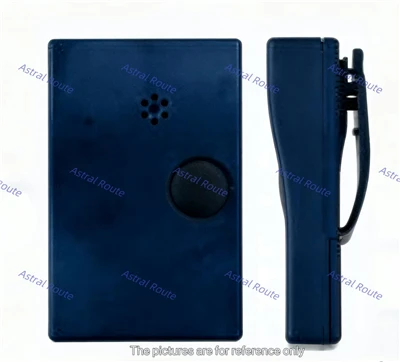

Tritium monitoring has traditionally been associated with highly specialized nuclear facilities and laboratory-based radiation analysis. For many years, reliable tritium measurement often depended on sample collection, laboratory processing, and specialized analytical equipment.
That approach still has an important role. But modern nuclear operations are increasingly demanding something different: faster information at the point of work.
Nuclear power plants are carrying out increasingly complex maintenance programs. Fusion research is moving toward larger-scale tritium handling systems. Radioactive material management is becoming more data-driven, while radiation protection teams are expected to respond quickly to potential contamination events.
These changes are driving interest in portable tritium monitoring technology.
The objective is not simply to make instruments smaller. The more important development is the ability to bring reliable tritium measurement closer to where work is actually taking place.
Why Tritium Monitoring Is Technically Challenging
Tritium is a radioactive isotope of hydrogen that primarily emits low-energy beta radiation.
This creates a fundamental detection challenge.
The beta particles emitted by tritium have limited penetration capability and can be readily absorbed by air, protective materials, and detector components. Conventional gamma radiation survey meters are therefore not suitable for every tritium monitoring application.
Tritium may also be encountered in different physical or chemical forms, including tritiated water and tritium-containing gases.
The monitoring approach therefore needs to match the specific environment and measurement objective.
This is one reason specialized tritium monitoring equipment remains important in nuclear radiation protection.
From Laboratory Analysis to Field Monitoring
Laboratory analysis remains valuable when highly detailed measurements or confirmatory analysis are required.
However, laboratory workflows can introduce delays.
A typical process may involve:
Collecting a sample
Labeling and transporting the sample
Conducting laboratory analysis
Reviewing the result
Making an operational decision
This process may be appropriate for routine environmental assessment, but it is less convenient when a radiation protection team needs immediate information during maintenance.
Portable monitoring technology addresses this gap.
Instead of asking workers to wait for laboratory results before deciding whether a work area is safe, field personnel can use specialized instruments to obtain rapid measurements and determine whether further investigation is necessary.
Smaller Instruments, Greater Mobility
One of the most visible advances in portable radiation monitoring has been the reduction in equipment size and weight.
Earlier generations of specialized radiation instruments could be difficult to transport between work areas.
Modern portable systems are increasingly designed around field usability.
This matters in environments such as:
Nuclear power plants
Research facilities
Fuel-cycle facilities
Fusion research centers
Radioactive waste facilities
Industrial laboratories
A radiation protection technician may need to move between multiple work locations during a single shift.
An instrument that can be carried easily, deployed quickly, and operated without complicated setup provides a practical advantage.
Faster On-Site Decision Making
The biggest benefit of portable tritium monitoring is not portability itself. It is the ability to make decisions closer to the source of the problem.
Consider a maintenance team working inside a controlled area.
A technician notices a potential contamination issue around equipment that has previously been exposed to tritium.
With a portable monitoring instrument available, the radiation protection team can perform an immediate assessment.
The result can help determine whether the area requires:
Additional contamination controls
Restricted access
Further sampling
Decontamination
More detailed laboratory analysis
This does not eliminate laboratory testing. Instead, it creates a faster first layer of information.
Portable Tritium Monitoring During Nuclear Maintenance
Maintenance and outage periods can be particularly demanding for radiation protection teams.
During a nuclear plant outage, workers may open systems and components that are normally isolated during routine operation.
Radiation protection personnel may need to monitor changing conditions around:
Process equipment
Piping systems
Maintenance areas
Waste handling locations
Contaminated components
The radiation environment can change as equipment is opened, drained, cleaned, or dismantled.
Portable monitoring equipment allows radiation protection teams to respond to these changing conditions rather than relying exclusively on fixed monitoring points.
The Role of Portable Monitoring in Fusion Energy
Fusion energy is another major driver of interest in tritium monitoring technology.
Future fusion systems are expected to use tritium as part of their fuel cycle. This creates a need to monitor tritium throughout activities such as:
Fuel handling
Storage
Processing
Recovery
Maintenance
Waste management
As fusion facilities become larger and more operationally complex, tritium monitoring will extend beyond specialized laboratory environments.
Technicians will need instruments that can move with the work.
Portable monitoring therefore has the potential to become an important part of the radiation protection infrastructure supporting commercial fusion development.
Improving Worker Protection
Tritium presents a different occupational monitoring challenge from penetrating gamma radiation.
Because tritium can enter the body through different pathways, contamination control and exposure assessment require appropriate monitoring strategies.
Portable instruments can support radiation protection teams by providing rapid information during:
Maintenance activities
Contamination surveys
Equipment inspections
Leak investigations
Controlled-area assessments
The value lies in identifying potential problems earlier.
Earlier detection gives safety teams more time to control the work environment and determine whether additional protective measures are necessary.
Better Usability for Field Personnel
Technology improvements are also changing how radiation monitoring equipment is used.
Field personnel generally need instruments that are straightforward to operate under demanding conditions.
Useful characteristics can include:
Clear displays
Simple controls
Portable form factors
Rapid measurement response
Audible or visual status indicators
Rechargeable power systems
Rugged construction
Good instrument design reduces the amount of time technicians spend managing the equipment itself.
That matters when monitoring is being performed during a busy maintenance campaign rather than in a controlled laboratory.
Reliability Remains More Important Than Novel Features
There is a tendency to associate technological progress with more features.
For radiation protection equipment, however, reliability remains the priority.
A portable tritium monitor needs to provide dependable performance when used in real industrial environments.
Important considerations include:
Measurement stability
Detector performance
Battery reliability
Calibration requirements
Environmental operating conditions
Serviceability
A technically sophisticated instrument is of limited value if it is difficult to maintain or unreliable in the field.
For procurement teams, lifecycle support can therefore be just as important as the initial specification sheet.
Portable Does Not Mean a Replacement for Every Monitoring System
Portable tritium monitoring should not be viewed as a replacement for fixed radiation monitoring or laboratory analysis.
Each technology serves a different purpose.
Fixed monitoring systems are useful for continuous surveillance of defined locations.
Portable instruments provide flexibility for changing work environments.
Laboratory analysis provides more detailed analytical capabilities when confirmatory or specialized measurements are required.
A mature radiation protection program may use all three.
The trend toward portable monitoring is therefore better understood as an expansion of measurement capability rather than a complete replacement of existing systems.
What Buyers Should Consider
Organizations evaluating portable tritium monitoring equipment should look beyond the headline detection specification.
Important questions include:
What type of tritium environment will be monitored?
The intended application should be clearly defined before selecting an instrument.
How quickly are measurements required?
Maintenance and emergency response applications may place greater emphasis on rapid field assessment.
Will the equipment be used indoors or outdoors?
Environmental conditions can affect equipment selection and operational reliability.
How will calibration be managed?
A clear calibration and maintenance program is essential for dependable radiation measurements.
Does the instrument fit existing radiation protection procedures?
Equipment should complement the organization's established monitoring and reporting processes.
Where the Market Is Heading
The development of portable tritium monitoring technology reflects a broader trend in radiation protection.
Facilities increasingly want monitoring systems that are:
Mobile
Digitally enabled
Easy to deploy
Reliable in the field
Suitable for rapid decision-making
This trend is likely to continue as nuclear power expands and fusion research progresses.
For equipment suppliers, the challenge will be balancing improved sensitivity and functionality with practical field requirements such as portability, reliability, battery life, and ease of operation.
Astral Route's Portable Tritium Monitoring Solutions
Astral Route provides radiation monitoring equipment for organizations working in nuclear, industrial, and radioactive-material environments.
Its product portfolio includes portable tritium monitoring solutions alongside electronic personal dosimeters, neutron dosimeters, surface contamination monitors, and other radiation detection equipment.
For facilities that need to assess tritium conditions outside the laboratory, portable monitoring can provide an additional layer of operational visibility and support faster radiation protection decisions.
The right solution ultimately depends on the radiation source, working environment, measurement requirements, and applicable regulatory framework.
See customized solutions for you at https://www.astralroutetech.com/radiation-dosimeter/
FAQ
What makes tritium difficult to detect?
Tritium emits low-energy beta radiation with limited penetration, making it difficult for conventional gamma radiation survey meters to detect effectively.
Why are portable tritium monitors becoming more important?
They allow radiation protection teams to obtain field measurements quickly without relying exclusively on laboratory analysis.
Are portable tritium monitors suitable for nuclear power plants?
They can support appropriate nuclear maintenance, contamination assessment, and radiation protection applications when the instrument is selected and used according to its specifications and applicable procedures.
Will portable monitoring replace laboratory tritium analysis?
No. Portable monitoring and laboratory analysis serve different purposes and can complement each other.
Will fusion energy increase demand for tritium monitoring?
The development of tritium-based fusion fuel cycles is expected to create additional monitoring requirements across fuel handling, processing, storage, maintenance, and waste management activities.
Final Thoughts
Advances in portable tritium monitoring technology are changing how radiation protection teams approach field measurements.
The biggest development is not simply smaller equipment. It is the ability to bring specialized detection capabilities closer to the point where decisions need to be made.
As nuclear maintenance becomes more complex and fusion technology moves toward larger-scale deployment, the demand for flexible, reliable, and field-ready tritium monitoring is likely to continue growing.
For radiation protection teams, having the right portable monitoring capability can mean faster assessment, better situational awareness, and more informed decisions when working around tritium-containing systems.