The Mixed Radiation Reality Nobody Talks About
If you read radiation protection manuals, the world looks neat and organized: Gamma radiation here. Neutron radiation there.
Everything categorized, labeled, predictable.
But if you've actually worked inside a nuclear power plant - especially during outages - you know reality is messier.
Radiation fields are rarely pure.
Instead, what workers encounter most of the time are mixed radiation environments: Gamma radiation from activated components. X-ray radiation from inspection equipment. Neutron radiation from reactor systems or spent fuel.
All at the same time. Which leads to a simple but surprisingly important question:
If workers are exposed to mixed radiation, why are we still using single-type dosimeters in some cases?
The Problem with Single-Radiation Monitoring
Historically, many nuclear facilities deployed multiple monitoring systems:
• one dosimeter for gamma
• one passive badge
• sometimes a separate neutron detector
From an engineering standpoint, that approach technically works.
From a human standpoint?
It's messy. Workers forget devices. Devices get swapped. Data must be merged manually.
And sometimes - let's be honest - the neutron dosimeter ends up sitting in a drawer because it's "only needed occasionally."
Which defeats the purpose of having it.
Mixed Radiation Fields in VVER Reactors
Facilities operating VVER nuclear reactors frequently experience mixed radiation environments during several operations.
Reactor maintenance
Activated materials produce strong gamma radiation fields.
Fuel handling
Neutron emission becomes more relevant.
Reactor cavity work
Dose composition changes depending on shielding configuration.
Non-destructive testing
X-ray equipment introduces additional radiation sources.
For radiation protection engineers, this creates a challenge:
Tracking total dose accurately requires monitoring multiple radiation types simultaneously.
Why Multi-Radiation Personal Dosimeters Are Becoming Standard
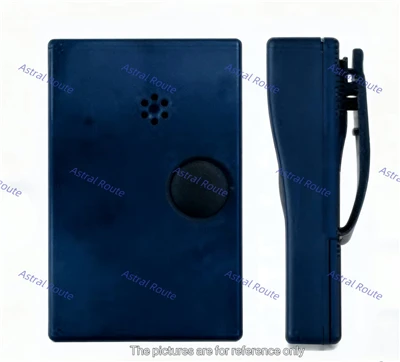
Modern X / Gamma / Neutron personal dosimeters solve this problem by integrating multiple detectors into a single device.
Instead of juggling multiple instruments, workers wear one dosimeter capable of measuring:
• X-ray radiation
• gamma radiation
• neutron radiation
This simplifies everything: Dose tracking becomes easier. Radiation protection teams get cleaner data. Workers carry fewer devices.
And perhaps most importantly - compliance improves. Because the simpler the system is, the more likely people are to actually use it properly.
Data Integration: A Hidden Advantage
One underrated advantage of modern dosimeters is digital data integration.
Electronic dosimeters can store exposure records, allowing radiation protection departments to:
• track worker exposure history
• analyze radiation trends
• optimize work planning
For large nuclear operators such as Rosatom, this kind of data-driven safety management is increasingly important.
Radiation protection is gradually becoming more analytical.
Better monitoring equipment simply makes that process easier.
The Engineering Perspective: Simplicity Wins
Here's something engineers know from experience. The best system is usually the one people actually use.
A complex monitoring setup with multiple devices might be theoretically perfect.
But if workers find it inconvenient, compliance drops.
A well-designed multi-radiation dosimeter solves this by combining multiple detection functions into a single wearable device.
Simple. Reliable. Harder to ignore.
Conclusion
Nuclear radiation environments are rarely simple. Workers encounter gamma radiation, X-rays, and neutrons depending on the task and location.
Using separate monitoring devices for each radiation type worked in the past, but modern nuclear safety programs increasingly favor integrated personal dosimetry solutions.
Especially in VVER nuclear power plants across Russia and CIS countries, where mixed radiation environments are common during maintenance operations.
The goal isn't to add more equipment. It's to make radiation monitoring smarter.
FAQ
What is a multi-radiation dosimeter?
A multi-radiation dosimeter is a personal monitoring device capable of measuring multiple radiation types such as X-rays, gamma rays, and neutrons.
Why are mixed radiation fields common in nuclear plants?
Because multiple radiation sources exist simultaneously, including activated materials, reactor systems, and inspection equipment.