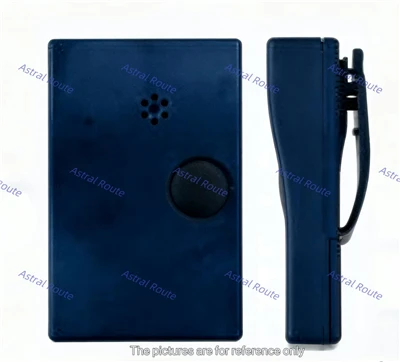
The Most Dangerous Radiation Is Often the One You Don't Notice
Let's do a quick thought experiment.
Imagine you're a radiation protection engineer preparing a maintenance team for work inside reactor containment.
You check the area monitoring system.
Gamma levels look reasonable.
Portable survey meter readings? Also fine.
Everything seems under control.
But here's the uncomfortable question that doesn't always get asked:
What about neutrons?
Because neutron radiation doesn't behave like gamma radiation. It's harder to detect, harder to model, and in some cases… easier to ignore until someone specifically measures it.
And in nuclear power plants operating VVER reactors across Russia and CIS countries, neutron radiation is not theoretical.
It's part of the working environment. Which is exactly why personal neutron dosimeters are becoming an increasingly important tool for nuclear worker protection.
The Real Problem with Neutron Radiation: It Doesn't Behave Like Gamma
Most radiation protection programs were historically designed around gamma radiation.
That's understandable. Gamma radiation is relatively easy to measure and monitor.
Detectors for gamma radiation are widely available, reliable, and relatively inexpensive.
Neutrons, however, introduce a completely different set of challenges.
First, neutrons carry no electrical charge.
Which means they don't directly ionize atoms the way gamma photons do.
Instead, neutrons interact with matter through nuclear reactions and collisions.
In practical detector terms, this means neutron detection typically relies on indirect processes such as:
• neutron capture reactions
• recoil proton interactions
• specialized converter materials
So a neutron dosimeter is essentially detecting secondary effects of neutron interactions, not the neutrons themselves. And yes, that makes instrument design more complicated.
But ignoring neutrons simply because they are harder to measure is not exactly a great radiation safety strategy.
Where Nuclear Workers Encounter Neutron Radiation
When people hear the term neutron radiation, they often imagine the reactor core. Which is fair.
But neutron radiation fields can appear in several operational areas within nuclear power plants.
Across many Rosatom-operated facilities and VVER nuclear reactors, neutron exposure may occur during specific activities.
Reactor Maintenance Operations
During reactor shutdown and maintenance periods, shielding configurations change and neutron leakage paths may become more noticeable.
Fuel Handling and Refueling
Handling fuel assemblies can produce measurable neutron radiation fields.
Spent Fuel Storage Areas
Even after removal from the reactor core, spent fuel continues to emit neutrons through spontaneous fission.
Instrument Calibration Facilities
Neutron calibration labs intentionally generate neutron radiation fields for instrument testing.
Reactor Vessel Head Activities
Maintenance tasks around the reactor vessel head can occasionally expose workers to neutron fields.
Now, are neutron dose rates always high?
No. But the key issue is uncertainty. Without dedicated neutron monitoring, workers may not fully understand their radiation exposure.
Why Passive Dosimeters Alone Are Not Enough
Many nuclear facilities still rely heavily on passive dosimetry systems.
These include devices such as:
• thermoluminescent dosimeters (TLDs)
• film badges
• neutron track detectors
Passive dosimeters certainly have their place. They provide reliable cumulative dose records over time.
But they also have a major limitation. They don't provide real-time information.
Which means workers often learn about their neutron exposure hours, days, or even weeks later when the dosimeter is analyzed.
From a radiation protection perspective, that's not ideal.
Because by the time you discover the exposure, the worker has already received it.
Electronic personal neutron dosimeters solve this problem by providing real-time monitoring and alarms.
Electronic Neutron Dosimeters: A Major Step Forward
Electronic neutron dosimeters represent a significant advancement in radiation protection technology.
Instead of passively recording radiation exposure, these devices actively measure neutron dose in real time.
This allows nuclear workers to see their exposure as it happens.
More importantly, the dosimeter can trigger alarms if neutron dose rates exceed predefined thresholds.
Typical features include:
• real-time neutron dose rate display
• cumulative neutron dose tracking
• audible and vibration alarms
• data logging for exposure records
• combined X / gamma / neutron monitoring
This last feature is particularly useful.
Because in real reactor environments, radiation fields are rarely composed of only one radiation type.
Mixed radiation fields are the norm.
Why Multi-Radiation Dosimeters Make More Sense
Think about what nuclear workers typically carry during maintenance operations.
Helmet.
Protective clothing.
Respiratory equipment.
Tools.
Portable detectors.
Communication devices.
The last thing most workers want is to carry multiple radiation dosimeters.
That's why X / Gamma / Neutron personal dosimeters have become increasingly popular.
These devices integrate multiple detection technologies into a single wearable instrument capable of monitoring:
• X-ray radiation
• gamma radiation
• neutron radiation
For radiation protection engineers, this integration offers several advantages.
It simplifies dose management.
It reduces equipment complexity.
And it improves worker compliance - because workers are far more likely to wear one device than three.
How Neutron Dosimeters Improve ALARA Programs
The ALARA principle - As Low As Reasonably Achievable - is the foundation of radiation protection in nuclear facilities.
But implementing ALARA effectively requires accurate radiation monitoring.
If neutron radiation is present but not measured, then ALARA optimization becomes incomplete.
Electronic personal neutron dosimeters provide radiation protection teams with better data about neutron exposure during various tasks.
This allows engineers to:
• adjust work procedures
• modify shielding strategies
• optimize worker rotation schedules
• improve maintenance planning
In other words, neutron monitoring helps turn ALARA from a theoretical principle into a practical operational strategy.
Neutron Monitoring in VVER Reactor Environments
VVER reactors, widely used in Russia and many CIS countries, are among the most successful pressurized water reactor designs in the world.
But like all nuclear reactors, VVER systems produce neutron radiation as part of the fission process.
During normal reactor operation, most neutron radiation is contained within the reactor vessel and shielding structures.
However, during outages, maintenance operations, and fuel handling activities, neutron fields can appear in areas where workers operate.
This is why modern Rosatom nuclear safety programs increasingly emphasize comprehensive radiation monitoring, including neutron detection.
The Human Factor: Why Worker Awareness Matters
Here's something interesting that many radiation protection engineers have noticed.
When workers can see their radiation exposure in real time, they behave differently.
They become more aware of radiation fields.
They move more efficiently.
They avoid unnecessary time in higher dose areas.
Electronic personal neutron dosimeters provide that immediate feedback.
And in many cases, this simple awareness can significantly reduce unnecessary radiation exposure.
Conclusion: Neutron Dosimetry Is Becoming Standard Practice
For many years, neutron dosimetry in nuclear power plants was treated as a specialized technical niche.
Important in certain situations, but not necessarily part of everyday radiation monitoring.
That perception is changing.
As nuclear safety standards evolve and radiation protection programs become more data-driven, personal neutron dosimeters are increasingly recognized as essential safety tools.
Especially in nuclear facilities operating VVER reactors across Russia and CIS countries, where mixed radiation fields may occur during maintenance and fuel handling operations.
Better monitoring leads to better understanding.
And better understanding leads to safer nuclear operations.
FAQ
What is an electronic neutron dosimeter?
An electronic neutron dosimeter is a wearable radiation monitoring device that measures neutron radiation exposure in real time and alerts workers if dose rates exceed safety thresholds.
Why are neutron dosimeters important in VVER reactors?
VVER nuclear reactors produce neutron radiation as part of the fission process. During certain operations such as fuel handling or maintenance outages, workers may encounter measurable neutron fields.
Can one dosimeter measure X, gamma, and neutron radiation?
Yes. Modern multi-radiation personal dosimeters can measure X-ray, gamma, and neutron radiation simultaneously, simplifying radiation monitoring for nuclear workers.
Do nuclear workers in Russia use neutron dosimeters?
Many nuclear facilities operated by Rosatom and other CIS nuclear organizations incorporate neutron monitoring as part of their radiation protection programs.
What is the advantage of real-time neutron monitoring?
Real-time neutron monitoring allows workers to see their radiation exposure instantly and respond immediately if dose rates increase.