
Shipbuilding is one of the world's most demanding manufacturing industries. Every vessel contains thousands of welded joints across hull structures, cargo tanks, pressure systems, and critical piping networks. Before a ship leaves the dock, many of these welds must undergo non-destructive testing (NDT) to verify their integrity.
Radiographic Testing (RT) remains one of the most trusted inspection methods for detecting internal weld defects that cannot be identified through visual inspection alone. Whether building LNG carriers, offshore support vessels, naval ships, or large container vessels, shipyards continue to rely on gamma radiography to ensure quality and compliance.
However, performing RT inside an active shipyard presents unique radiation safety challenges. Hundreds or even thousands of workers may be operating in close proximity, while inspections take place in confined spaces, steel compartments, and around-the-clock production schedules.
For shipyard inspection teams, effective radiation protection is not simply about meeting regulations-it is essential for maintaining safe, uninterrupted construction.
Why Shipyards Present Unique Radiation Safety Challenges?
Unlike pipeline projects or refinery maintenance, shipyards are constantly changing environments.
Construction progresses block by block, meaning inspection locations shift daily. At the same time, welding, painting, electrical installation, insulation work, and mechanical assembly often occur simultaneously.
This creates several safety challenges:
Large numbers of subcontractors working nearby
Multiple enclosed compartments
Constant movement of personnel and equipment
Temporary access routes
Limited visibility inside vessel sections
Continuous day and night operations
Without careful planning, workers who are not involved in radiography may accidentally approach active radiation areas.
Gamma Radiography Remains Essential for Shipbuilding
Although ultrasonic testing has become more common for certain applications, gamma radiography continues to play an important role where permanent inspection records are required.
Typical applications include:
Hull weld inspection
LNG cargo tank construction
Pressure vessel fabrication
Engine room piping systems
Ballast and fuel tank welds
Offshore module fabrication
Radiographic images provide documented evidence of weld quality, allowing shipbuilders to satisfy customer specifications and classification society requirements.
Confined Spaces Increase Exposure Risk
Many shipyard RT inspections take place inside confined areas such as:
Double-bottom tanks
Cargo holds
Ballast tanks
Engine rooms
Pipe tunnels
Machinery spaces
These enclosed environments create additional challenges.
Steel structures can block visibility, making it difficult to determine whether an area has been fully cleared before exposure begins.
Access points are often limited, requiring careful coordination between RT crews and other construction teams.
Because evacuation routes may be narrow or indirect, every exposure should be planned carefully before radioactive sources are deployed.
Controlling Radiation Zones in Busy Shipyards
One of the biggest challenges during ship construction is establishing effective radiation-controlled areas.
Unlike permanent inspection facilities, shipyards rely on temporary exclusion zones that must be adjusted as construction progresses.
Best practices include:
Clearly marking radiation boundaries
Installing temporary barriers
Posting multilingual warning signs
Using flashing warning lights at entry points
Assigning dedicated radiation safety personnel
Confirming area clearance before every exposure
Since vessel layouts become more complex as construction advances, radiation boundaries should be reviewed continuously throughout the project.
Why Electronic Personal Dosimeters Are Becoming Standard?
Traditional passive dosimeters remain valuable for recording cumulative occupational exposure.
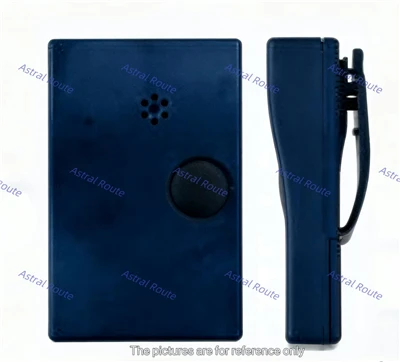
However, shipyards increasingly require Electronic Personal Dosimeters (EPDs) because they provide immediate awareness during active RT operations.
Real-time dosimeters offer:
Continuous dose monitoring
Instant audible alarms
Vibration alerts for noisy environments
Live dose-rate display
Automatic exposure recording
In busy shipyards where workers frequently move between compartments, these alarms provide an additional layer of protection if someone unknowingly approaches an active radiation area.
Portable Survey Meters Support Daily RT Operations
Radiation survey meters are used throughout every stage of radiographic inspection.
They help technicians:
Verify exclusion zone boundaries
Measure radiation levels around vessel compartments
Confirm radioactive source return
Ensure safe re-entry after exposure
Investigate unexpected radiation alarms
Reliable survey meters are especially important in steel ship structures where scattered radiation patterns may differ from open work environments.
Routine surveys help maintain confidence that work areas remain safe before construction resumes.
Coordinating RT With Other Construction Activities
Radiography rarely occurs in isolation.
At the same time RT crews are inspecting welds, nearby teams may be:
Installing piping
Performing electrical work
Painting compartments
Operating cranes
Conducting pressure tests
Moving fabrication materials
Without proper coordination, conflicting work activities can increase the risk of unauthorized entry into controlled areas.
Successful shipyards typically schedule RT work through centralized permit-to-work systems and daily coordination meetings involving construction supervisors, HSE personnel, and NDT contractors.
Night Shift Inspections Require Additional Controls
Many large shipyards operate 24 hours a day to meet delivery schedules.
Night-shift radiography introduces additional safety concerns:
Reduced visibility inside compartments
Worker fatigue
Smaller supervision teams
Increased dependence on communication systems
To maintain safety standards, inspection teams often implement:
Additional lighting around access points
More frequent radiation surveys
Electronic dosimeters with alarm functions
Radio confirmation before each exposure
Strict shift handover procedures
These measures help reduce the likelihood of exposure incidents during overnight operations.
Equipment Reliability Is Critical
Radiation monitoring equipment used in shipyards is exposed to demanding industrial conditions, including:
Mechanical vibration
Humidity
Dust
Temperature fluctuations
Frequent transportation between inspection areas
Before every project, RT contractors should verify that:
Survey meters have valid calibration certificates
Electronic dosimeters are fully functional
Alarm systems operate correctly
Batteries are fully charged
Backup equipment is available
Reliable equipment helps prevent unnecessary inspection delays while supporting safe operations.
Building a Strong Radiation Safety Culture
Technology alone cannot eliminate radiation risks.
Successful shipyard inspection programs combine modern monitoring equipment with strong safety management.
Effective practices include:
Daily toolbox safety meetings
Regular refresher training
Clear communication procedures
Prompt reporting of near misses
Continuous review of exclusion zone effectiveness
When every worker understands the importance of radiation protection, the entire project benefits from improved safety and operational efficiency.
Supporting Shipyard RT Operations
As shipbuilding projects become larger and more technically demanding, inspection teams require radiation monitoring solutions that deliver both accuracy and real-time awareness.
Astral Route provides radiation protection equipment designed for industrial radiography applications, including:
Electronic personal dosimeters
Portable radiation survey meters
Neutron dosimeters
Surface contamination monitors
Area radiation monitoring systems
These solutions help shipyards strengthen worker protection, simplify compliance, and support efficient RT operations throughout vessel construction and repair projects.
FAQ
Why is radiographic testing widely used in shipyards?
RT provides detailed internal images of welds, helping verify structural integrity and producing permanent inspection records for quality assurance.
What are the main radiation risks during shipyard RT?
The primary risks include unauthorized entry into controlled areas, confined-space inspections, communication failures, and multiple contractors working nearby.
Why are electronic personal dosimeters recommended?
They provide real-time dose monitoring and immediate alarms, allowing workers to respond quickly if radiation levels increase unexpectedly.
How are radiation-controlled areas managed inside ships?
Temporary barriers, warning signs, access control procedures, and portable survey meters are used to establish and verify safe exclusion zones.
What radiation monitoring equipment is commonly used during shipyard RT?
Electronic personal dosimeters, portable radiation survey meters, area radiation monitors, and contamination monitors are commonly deployed to support safe inspection activities.
Final Thoughts
Radiographic testing remains an indispensable inspection method for modern shipbuilding, but it also requires disciplined radiation protection practices. The combination of confined spaces, simultaneous construction activities, and demanding production schedules makes shipyards one of the most challenging environments for RT operations.
By integrating real-time personal dosimetry, reliable survey instruments, well-managed exclusion zones, and strong communication procedures, shipyard inspection teams can minimize radiation risks while maintaining inspection quality and project efficiency.
As the shipbuilding industry continues to adopt higher safety standards, modern radiation monitoring solutions will play an increasingly important role in supporting safe, compliant, and productive RT operations.