Radiation Protection Challenges During Nuclear Maintenance: Why Real-Time Monitoring Is Becoming Essential in Modern Nuclear Operations?
Nuclear maintenance activities represent one of the most complex and high-risk phases in the entire lifecycle of a nuclear facility. Whether it is a scheduled reactor outage, fuel handling operation, system inspection, or emergency repair, maintenance work introduces a level of operational uncertainty that is significantly higher than normal steady-state operation.
During these periods, radiation fields can change rapidly, shielding configurations may be temporarily removed, and workers often need to operate in confined or partially activated environments. As a result, radiation protection during nuclear maintenance has become a central focus for Radiation Safety Officers (RSOs), Nuclear Safety Engineers, and operational managers across the global nuclear industry.
Despite decades of regulatory development, maintaining effective radiation protection during maintenance activities remains a persistent challenge.
This article explores the key radiation protection challenges during nuclear maintenance, why traditional monitoring approaches are increasingly insufficient, and how modern real-time radiation monitoring technologies are reshaping safety strategies in nuclear facilities.
The Unique Risk Profile of Nuclear Maintenance Activities
Unlike routine plant operation, nuclear maintenance introduces a dynamic and often unpredictable radiation environment.
Several factors contribute to this increased risk:
Temporary removal or adjustment of shielding structures
Opening of reactor systems or primary loops
Presence of activated corrosion products and contaminated components
Movement of irradiated fuel or equipment
Confined working spaces with limited evacuation routes
Simultaneous involvement of multiple contractor teams
Time pressure to minimize plant downtime
These conditions create an environment where radiation levels may fluctuate significantly within short time periods.
In many cases, workers rely on pre-job radiation surveys that may no longer reflect real-time conditions once work begins. This gap between predicted and actual radiation fields is one of the most critical safety challenges in nuclear maintenance.
Challenge 1: Rapidly Changing Radiation Fields
One of the biggest difficulties in nuclear maintenance is the dynamic nature of radiation fields.
Even when a work area is carefully surveyed beforehand, radiation levels can change due to:
Movement of contaminated materials
Disturbance of activated deposits
Changes in system configuration
Nearby maintenance activities
Ventilation and airflow variations
These changes can occur without warning and may not be immediately visible to workers or supervisors.
As a result, reliance on static radiation maps can lead to underestimation of actual exposure conditions.
For Radiation Safety Officers, this introduces a significant operational risk: decisions are made based on outdated information.
Challenge 2: Limitations of Passive Dosimetry Systems
Many nuclear facilities still rely heavily on passive dosimetry systems such as TLDs (Thermoluminescent Dosimeters) or film badges.
While these systems are valuable for regulatory compliance and long-term dose tracking, they have a critical limitation:
They do not provide real-time information.
This means:
Workers may only discover overexposure after the job is completed
Supervisors cannot intervene during exposure events
Emergency response is delayed
Short-term high dose events may go undetected in time
In nuclear maintenance environments where conditions change quickly, this delay can significantly reduce the effectiveness of radiation protection programs.
Modern nuclear safety expectations increasingly require continuous awareness rather than retrospective measurement.
Challenge 3: Mixed Radiation Environments
Another major challenge during nuclear maintenance is the presence of mixed radiation fields, typically including:
Gamma radiation
Neutron radiation
Beta radiation
Secondary scattered radiation
Neutron radiation is particularly concerning due to its high biological impact and difficulty of detection.
In reactor-related maintenance activities, neutron exposure may occur in:
Reactor containment areas
Fuel handling zones
Steam generator regions
Spent fuel storage interfaces
Because neutron radiation is not easily detectable without specialized instrumentation, it is often underestimated in traditional safety planning.
This makes accurate neutron monitoring an essential component of modern nuclear maintenance safety strategies.
Challenge 4: Human Factors and Operational Pressure
Nuclear maintenance operations are often performed under strict time constraints.
Plant downtime is extremely costly, and maintenance schedules are typically tightly controlled. This creates operational pressure that can influence worker behavior.
Common human-factor challenges include:
Rushing to complete tasks within outage windows
Reduced attention to radiation boundaries
Increased reliance on experience rather than instrumentation
Communication gaps between teams
Fatigue during extended maintenance shifts
Even highly trained personnel can be affected by operational pressure.
In such environments, relying solely on procedural compliance is not sufficient. Real-time radiation awareness becomes a critical safety layer that supports human decision-making.
Challenge 5: Confined Spaces and Limited Escape Time
Many nuclear maintenance tasks take place in confined or restricted-access environments, such as:
Reactor vessels
Containment buildings
Pipe tunnels
Hot cells
Shielded work chambers
In these environments, workers may have limited mobility and restricted evacuation routes.
If radiation levels increase unexpectedly, the available response time can be extremely short.
This makes immediate warning systems essential for preventing excessive exposure.
Without real-time alerts, workers may not be able to respond quickly enough to changing conditions.
The Role of Real-Time Radiation Monitoring in Maintenance Safety
To address these challenges, nuclear facilities are increasingly adopting real-time radiation monitoring systems, including advanced personal dosimeters capable of continuous dose tracking and immediate alarm functionality.
Modern personal dosimeters provide:
Continuous radiation dose measurement
Instant audible and visual alarms
Real-time dose rate tracking
Cumulative exposure monitoring
Immediate feedback to workers in the field
This represents a major shift from traditional retrospective dosimetry toward proactive radiation protection.
In nuclear maintenance environments, this shift is particularly important because it allows:
Immediate response to unexpected radiation changes
Faster evacuation from hazardous areas
Improved situational awareness for workers and supervisors
Reduced cumulative occupational exposure
Why Neutron Monitoring Is Becoming Increasingly Important
Historically, neutron radiation was often considered a secondary concern in many industrial applications.
However, in nuclear maintenance environments, neutron exposure can no longer be ignored.
Several factors are driving this change:
Increased focus on reactor lifecycle extension projects
More frequent maintenance in aging nuclear facilities
Expanded fuel handling operations
Higher awareness of neutron biological effectiveness
Stricter regulatory expectations for comprehensive dose assessment
As a result, nuclear operators are placing greater emphasis on personal neutron dosimetry as part of integrated radiation protection programs.
Modern neutron dosimeters play a critical role in ensuring that neutron exposure is accurately tracked alongside gamma exposure, providing a more complete picture of worker radiation dose.
Regulatory Trends Driving Change in Radiation Protection
Global radiation safety frameworks continue to evolve toward more stringent and proactive protection standards.
Organizations such as:
International Atomic Energy Agency (IAEA)
International Commission on Radiological Protection (ICRP)
National nuclear regulatory authorities
have increasingly emphasized:
Real-time dose monitoring
Optimization of occupational exposure (ALARA principle)
Improved worker feedback mechanisms
Enhanced traceability of radiation exposure data
These regulatory expectations are pushing nuclear facilities to adopt more advanced monitoring technologies during maintenance operations.
In many regions, reliance on passive dosimetry alone is no longer considered sufficient for high-risk maintenance environments.
What Nuclear Facilities Look for in Radiation Monitoring Equipment
When selecting radiation monitoring systems for maintenance applications, procurement teams typically prioritize:
Reliability in Harsh Environments
Equipment must remain stable under high-radiation, high-temperature, and mechanically demanding conditions.
Real-Time Alarm Capability
Immediate warning functions are essential for preventing overexposure during dynamic work activities.
Accuracy in Mixed Radiation Fields
Especially important in reactor maintenance where gamma and neutron fields coexist.
Ease of Use for Field Workers
Devices must be simple enough to operate under PPE constraints and time pressure.
Long Operational Endurance
Maintenance shifts can be long and unpredictable.
Data Traceability and Compliance Support
Accurate recordkeeping is essential for regulatory reporting and audits.
These requirements reflect a broader shift in the nuclear industry toward proactive safety management rather than reactive compliance.
How Modern Personal Dosimeters Improve Maintenance Safety Outcomes
Advanced personal radiation monitoring systems, such as those developed by Astral Route, are designed to support these evolving operational needs.
In nuclear maintenance scenarios, modern personal dosimeters help:
Reduce unexpected exposure incidents
Improve worker confidence in high-risk zones
Enhance supervisory oversight
Support ALARA implementation
Enable faster emergency response decisions
By providing continuous, real-time radiation awareness, these systems help bridge the gap between planned safety procedures and real-world operational conditions.
Building a Safer Maintenance Culture in Nuclear Facilities
Technology alone cannot solve all radiation protection challenges.
However, when combined with strong safety culture and proper training, real-time monitoring systems significantly enhance overall protection outcomes.
Facilities that integrate continuous radiation monitoring into maintenance operations often see improvements in:
Safety awareness among workers
Compliance consistency
Incident prevention capability
Operational transparency
Regulatory inspection readiness
Over time, this leads to a more resilient and safety-conscious operational environment.
Conclusion
Radiation protection during nuclear maintenance remains one of the most challenging aspects of nuclear facility operation. The combination of dynamic radiation fields, mixed exposure environments, human factors, and time-sensitive operational constraints creates a complex safety landscape.
Traditional monitoring approaches, while still important for compliance, are no longer sufficient on their own to ensure optimal worker protection in modern nuclear maintenance environments.
The growing adoption of real-time radiation monitoring and advanced personal dosimetry represents a critical evolution in nuclear safety practice. These technologies enable faster response times, improved situational awareness, and more accurate exposure tracking during high-risk maintenance activities.
As nuclear facilities continue to modernize, the demand for reliable, real-time, and neutron-capable radiation monitoring solutions will only increase.
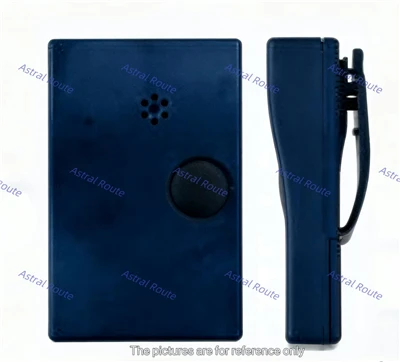
For organizations seeking to strengthen their radiation protection strategy during nuclear maintenance operations, exploring advanced solutions such as the Astral Route Personal Neutron Dosimeter can be a key step toward improving both safety performance and regulatory compliance.
FAQ
1. Why is radiation protection more difficult during nuclear maintenance?
Because radiation fields become dynamic and unpredictable due to equipment opening, shielding changes, and active maintenance operations.
2. What is the main limitation of passive dosimeters in maintenance environments?
They do not provide real-time information, meaning workers may only learn about exposure after the job is completed.
3. Why is real-time monitoring important during maintenance work?
It allows immediate response to unexpected radiation changes, reducing the risk of overexposure.
4. Are neutron radiation risks significant during nuclear maintenance?
Yes. Neutron exposure can occur in reactor-related environments and is often underestimated without proper monitoring.
5. What is ALARA and how does it relate to maintenance?
ALARA (As Low As Reasonably Achievable) is a radiation safety principle that requires minimizing exposure, especially critical during maintenance operations.
6. How do personal dosimeters improve safety culture?
They provide immediate feedback to workers, increasing awareness and encouraging safer behavior in real time.
7. Who benefits most from advanced radiation monitoring during maintenance?
Radiation Safety Officers, Nuclear Safety Engineers, maintenance contractors, and industrial radiography teams all benefit significantly.
8. What is the future direction of radiation protection in nuclear maintenance?
A shift toward integrated, real-time, digital radiation monitoring systems that provide continuous situational awareness and improved regulatory compliance.