

Handling medical isotopes is a routine part of modern nuclear medicine, but routine does not mean risk-free.
Hospitals, nuclear medicine departments, radiopharmacies, research facilities, and isotope suppliers may handle radioactive materials every day for diagnostic imaging, therapy, preparation, transport, and research. The quantities involved may be carefully controlled, yet workers can still encounter changing radiation fields, contamination risks, and exposure during routine handling.
The challenge for many facilities is not simply having radiation protection procedures on paper. It is having the right monitoring equipment available at the point where radioactive materials are actually handled.
A fixed radiation monitor may cover a room. A passive badge may provide a record of accumulated exposure. But neither necessarily tells a technician what is happening around a radioactive source at a particular moment.
This is where portable radiation detection becomes valuable.
Why Medical Isotope Handling Requires More Than Personal Dosimetry
Personal dosimetry is an important component of occupational radiation protection, but it answers a specific question: how much radiation exposure has the worker received?
Medical isotope handling often requires additional information.
Radiation protection personnel may need to check:
Work surfaces
Containers and packages
Handling areas
Equipment
Personnel
Temporary work locations
Areas around radioactive materials
The radiation environment can also change as isotopes are received, prepared, transferred, administered, stored, or disposed of.
A worker moving a radioactive container from one location to another may encounter a very different dose rate from the one measured earlier in the day.
Portable monitoring provides a way to assess these changing conditions directly.
The Operational Problem: Radiation Is Not Always in One Place
One of the biggest limitations of fixed monitoring systems is location.
A permanently installed detector can continuously monitor a designated area, but medical isotope workflows are rarely confined to a single point.
Radioactive materials may move between:
Receiving areas
Shielded storage
Radiopharmacy preparation rooms
Hot laboratories
Injection areas
Nuclear medicine imaging rooms
Waste storage areas
Each transfer creates another opportunity for radiation monitoring.
Portable instruments allow radiation protection teams to follow the workflow instead of relying entirely on fixed monitoring points.
Portable Radiation Detection Helps Identify Unexpected Exposure
In a busy nuclear medicine department, workers may already know the expected radiation levels associated with routine procedures.
The problem is what happens when conditions differ from expectations.
A package may arrive with unexpected radiation levels. A container may be positioned incorrectly. A handling procedure may take longer than planned.
A portable radiation detector can provide immediate information before workers continue with the task.
This is particularly useful when radiation protection personnel need to make quick decisions without waiting for laboratory analysis or retrospective dose records.
Contamination Is a Separate Safety Concern
External radiation exposure is only part of the problem.
Medical isotope handling can also create radioactive contamination risks through spills, leakage, handling errors, or transfer from gloves and equipment.
A worker may receive relatively little external dose but still transfer radioactive material onto:
Gloves
Clothing
Work surfaces
Tools
Floors
Transport containers
This is why a complete radiation monitoring program may combine personal dosimetry with surface contamination monitoring.
Portable contamination detection can help identify affected areas before radioactive material spreads further through a department.
Why Portable Equipment Matters During Incident Response
When a suspected contamination event occurs, speed matters.
A radiation protection officer may need to determine:
Where contamination is present
How far it has spread
Which equipment is affected
Whether personnel require additional checks
Whether an area needs to be restricted
Portable detection equipment allows measurements to be performed directly at the suspected location.
This can help the facility move from uncertainty to a defined response more quickly.
For hospitals and radiopharmacies, that can be particularly important because unnecessary restrictions on clinical areas may interfere with patient workflows.
Choosing Equipment for Medical Isotope Applications
For buyers, the key question should not simply be "Which radiation detector is most sensitive?"
The more useful question is:
What radiation risks do we actually need to monitor?
Depending on the facility, a radiation monitoring program may require different instruments for different tasks.
For example:
Electronic personal dosimeters for individual exposure monitoring
Portable radiation survey meters for checking radiation fields
Surface contamination monitors for contamination control
Specialized monitors for particular radionuclides or radiation types
Fixed area monitors for continuous monitoring of designated locations
Trying to make one device perform every monitoring task can create unnecessary compromises.
Why Real-Time Monitoring Can Improve Daily Operations
Real-time monitoring is particularly useful when radiation conditions can change quickly.
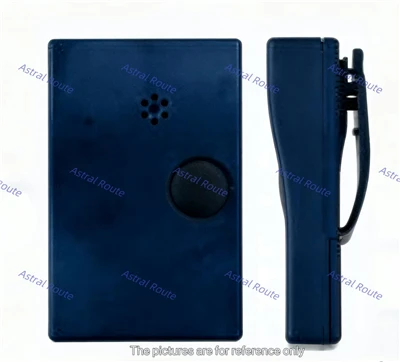
Electronic personal dosimeters can provide ongoing exposure information and alarm functions, allowing workers to respond when preset thresholds are reached.
For medical isotope handling personnel, this can provide an additional layer of awareness during:
Source preparation
Isotope transfer
Maintenance
Waste handling
Work near radioactive materials
The purpose is not to replace established radiation protection procedures. It is to give workers another source of immediate information while those procedures are being followed.
What Buyers Should Check Before Purchasing
For procurement teams, equipment selection should start with the actual workflow rather than the product catalogue.
Important questions include:
What radiation types are present?
Gamma-emitting isotopes are common in nuclear medicine, but the exact radionuclides and applications should determine detector selection.
Is the instrument for personal or area monitoring?
A wearable dosimeter and a portable survey meter serve different purposes.
Is contamination monitoring required?
If the facility handles unsealed radioactive materials, contamination control may require dedicated equipment rather than relying on dose-rate measurements alone.
How portable does the equipment need to be?
A device used across multiple rooms or workstations should be easy to carry and operate.
How will calibration be managed?
Calibration intervals, documentation, service support, and local regulatory requirements should be considered before purchase.
Does the system provide useful data?
For larger facilities, automatic data storage, digital records, and communication options can simplify exposure management and compliance documentation.
A Broader Radiation Monitoring Portfolio
This is where having access to multiple types of radiation detection equipment can be useful.
Astral Route's radiation monitoring range includes electronic personal dosimeters, real-time radiation dosimeters, neutron dosimeters, surface contamination monitoring solutions, and portable tritium monitoring equipment. The company's radiation dosimeter portfolio is designed to support applications including medical facilities, research laboratories, nuclear facilities, and industrial radiation environments.
For buyers, the advantage is not simply having more products to choose from. It is being able to match the monitoring method to the actual radiation risk.
A hospital nuclear medicine department, for example, may have very different requirements from an industrial radiography contractor or a nuclear maintenance team.
Why Portable Monitoring Can Reduce Operational Disruption
Radiation safety should not unnecessarily slow down medical or laboratory operations.
If every uncertainty requires a lengthy investigation, routine isotope handling can become inefficient.
Portable radiation detection provides a practical middle ground.
Instead of treating an entire room as potentially affected, personnel can perform targeted measurements and determine where additional controls are actually needed.
That can help radiation protection teams make more informed decisions about:
Access restrictions
Equipment use
Decontamination
Personnel checks
Work continuation
The result can be better control without automatically creating unnecessary operational disruption.
See customized solutions for you here https://www.astralroutetech.com/radiation-dosimeter/
FAQ
Why is portable radiation detection important in medical isotope handling?
Radioactive materials can move between different areas during preparation, transport, administration, storage, and waste handling. Portable instruments allow radiation protection personnel to check conditions wherever the material is being handled.
Is a personal dosimeter enough for nuclear medicine workers?
A personal dosimeter is important for tracking occupational external exposure, but it does not replace portable radiation surveys or contamination monitoring where those controls are required.
What is the difference between a survey meter and a contamination monitor?
A survey meter is generally used to assess radiation fields and dose rates, while a contamination monitor is designed to identify radioactive material deposited on surfaces or personnel.
Why are electronic dosimeters useful in medical isotope facilities?
They provide immediate information about an individual's radiation exposure and can provide alarms when configured thresholds are reached.
What should hospitals consider when buying portable radiation detectors?
Hospitals should consider the radionuclides involved, radiation types, measurement requirements, portability, alarm functions, calibration, data management, service support, and the specific workflows where the equipment will be used.
Can portable radiation detection equipment support compliance?
Yes. Properly selected and maintained monitoring equipment can support radiation protection procedures, exposure management, documentation, and applicable regulatory requirements. The exact compliance requirements depend on the jurisdiction and application.
A Practical Approach to Medical Radiation Safety
Medical isotope handling requires a balance between worker protection and operational efficiency.
The most effective monitoring strategy is rarely based on one instrument. Personal dosimetry, portable radiation surveys, contamination monitoring, and fixed monitoring can each address different parts of the radiation safety picture.
For hospitals, radiopharmacies, research institutions, and isotope-handling organizations evaluating new equipment, the starting point should be the workflow: where radioactive materials are handled, who handles them, what radiation types are present, and where exposure or contamination could occur.
Astral Route can support this assessment with a range of radiation detection solutions and help buyers identify equipment suited to their specific application.
If your facility is reviewing radiation monitoring equipment for nuclear medicine, medical isotope handling, or research applications, sharing the radionuclides, working environment, and monitoring objectives can be a practical first step toward selecting the appropriate configuration.