

When a radiological incident occurs, emergency response teams rarely have the luxury of time.
A suspected radioactive source may be discovered at an industrial site. A damaged container may raise concerns about contamination. A nuclear facility may report an abnormal radiation reading. An emergency crew may be sent into an unfamiliar area where nobody knows exactly what radiation hazards are present.
In these situations, waiting for a laboratory analysis or relying on a single conventional radiation meter is not enough.
Emergency teams need to know three things quickly:
Where is the radiation? What type of hazard may be present? And can personnel safely enter, work, or leave the area?
That is why portable radiation detection equipment has become an important part of modern emergency response capability.
For emergency response managers, HSE teams, nuclear facilities, industrial operators, and radiation safety organizations, the purchasing decision is not simply about detector specifications. The equipment needs to work when conditions are uncertain, deployment time is short, and the consequences of a wrong decision can be serious.
The First Challenge: Radiation Cannot Be Seen
One of the biggest difficulties in a radiological emergency is that radiation provides no reliable visual warning.
A damaged package may look completely normal.
A contaminated tool may appear clean.
An area with elevated radiation levels may look no different from a safe area. Emergency personnel therefore cannot rely on normal visual inspection.
Portable radiation detectors provide the information needed to turn an invisible hazard into measurable data. A response team can survey an area, identify changes in radiation levels, establish safer working boundaries, and determine where additional investigation is required.
This capability is particularly important during the first few minutes of an incident, when information may be incomplete.
Why Emergency Teams Need More Than One Radiation Detector
A common mistake when building an emergency radiation response kit is assuming that one general-purpose survey meter can cover every situation.
Different radiation hazards require different monitoring approaches.
For example:
Gamma and X-ray radiation require appropriate external radiation monitoring.
Neutron fields require specialized neutron detection.
Surface contamination requires contamination monitoring.
Airborne tritium requires specialized tritium monitoring equipment.
These are different safety questions.
A personal dosimeter tells a responder about individual radiation exposure. A survey meter helps assess radiation fields. A contamination monitor can identify radioactive material on surfaces or personnel. A portable tritium monitor can assess airborne tritium where applicable.
A layered equipment strategy gives emergency teams much better situational awareness than relying on a single instrument.
Real-Time Monitoring Matters During Emergency Operations
Emergency response is not a normal inspection activity. Conditions can change quickly.
A responder may initially enter an area with relatively low radiation levels and then encounter a higher-dose-rate zone. A source may be moved. A damaged container may be opened. A contamination plume may spread.
This is where real-time monitoring becomes particularly valuable.
Electronic personal dosimeters can continuously track individual exposure and provide immediate alarms when preset thresholds are reached.
Astral Route's electronic radiation monitoring solutions are designed around real-time exposure awareness, cumulative dose tracking, and alarm functions.
For emergency response teams, the practical benefit is straightforward: personnel receive information while the operation is happening, rather than discovering an exposure problem afterward.
Personal Protection Starts With the Responder
Emergency personnel are often focused on helping others, controlling an incident, or securing a site.
That can create a dangerous tendency to prioritize the mission over personal radiation exposure. A wearable electronic dosimeter provides an independent safety layer.
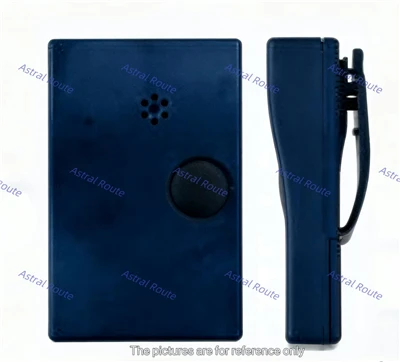
When dose or dose rate reaches a preset threshold, the device can provide audible, visual, and vibration alerts. Astral Route's personal neutron and gamma dosimeter, for example, is designed to provide real-time measurement and alarm functions for neutron, X-ray, and gamma radiation.
This becomes particularly relevant when the radiation field is mixed.
A gamma-only instrument may not provide adequate information in environments where neutron radiation is also present.
Why Neutron Detection Can Matter in Emergency Response
Not every radiological emergency involves neutron radiation.
But when neutron exposure is possible, conventional gamma-only monitoring may leave an important gap.
Neutron radiation behaves differently from gamma radiation and requires specialized detection technology. This is particularly relevant around nuclear facilities, research reactors, fuel-related operations, and certain high-energy radiation environments.
For buyers responsible for emergency preparedness, the question is therefore not simply whether a detector has a high measurement range.
The more important question is:
Does the equipment detect the radiation types that responders may realistically encounter?
Where mixed neutron and gamma fields are possible, multi-radiation personal dosimetry can provide a broader layer of protection.
Contamination Is a Different Emergency Problem
Radiation exposure and radioactive contamination should not be treated as the same thing.
A responder can leave an area with a relatively limited external dose while radioactive material remains on:
Clothing
Gloves
Footwear
Tools
Equipment
Surfaces
If contamination is not identified, it can spread beyond the original incident area.
This is why surface contamination monitoring may be required as part of a wider emergency response kit.
Contamination monitoring can help teams determine whether personnel or equipment require further assessment before leaving a controlled area.
Airborne Tritium Requires Specialized Monitoring
Some emergency scenarios involve radioactive materials that ordinary survey meters cannot adequately detect.
Tritium is a good example.
Tritium emits very low-energy beta radiation, making conventional radiation survey instruments unsuitable for many tritium monitoring applications. Astral Route's portable tritium monitor is designed for airborne tritium measurement, leak assessment, workplace monitoring, and radiological emergency response.
This distinction matters for emergency procurement.
A buyer should not assume that a high-specification gamma survey meter automatically provides adequate monitoring for every radioactive isotope.
The instrument has to match the hazard.
Rapid Deployment Is a Procurement Requirement
During an emergency, equipment may need to move quickly from a storage location to the incident site.
That makes portability more than a convenience.
Emergency response equipment should ideally be:
Easy to carry
Fast to deploy
Simple to operate
Clearly readable
Battery powered
Suitable for field conditions
Ready for repeated measurements
Astral Route's radiation monitoring range includes wearable, handheld, and portable configurations intended for field deployment and emergency response applications.
For emergency teams, the best instrument is not necessarily the one with the longest specification sheet. It is the one that trained personnel can deploy quickly and use correctly under pressure.
Calibration and Readiness Cannot Be an Afterthought
Emergency equipment that has been sitting unused for months still needs to be operationally ready.
Before deployment, organizations should have procedures covering:
Calibration status
Battery condition
Alarm testing
Detector performance checks
Physical inspection
Data storage
Spare equipment
Cleaning and decontamination procedures
This is particularly important for portable instruments that may be stored for long periods and then suddenly required in an emergency.
A response team should not discover that a detector needs calibration when an incident is already underway.
What Buyers Should Consider Before Purchasing
For procurement teams, several questions are worth asking before selecting portable radiation detection equipment.
What radiation types need to be detected?
Gamma-only monitoring may be sufficient for some applications. Nuclear environments may require neutron and gamma monitoring. Specialized situations may require contamination or tritium detection.
Is real-time alarming required?
If personnel may enter potentially hazardous areas, real-time dose and dose-rate alarms can provide an additional safety layer.
How quickly can the equipment be deployed?
Emergency equipment should be practical for field use rather than designed solely for controlled laboratory environments.
How will calibration be managed?
Consider calibration intervals, service availability, documentation, and the process for keeping equipment ready for deployment.
Does the equipment support the organization's emergency procedures?
The detector should fit into existing radiation protection plans, training programs, reporting procedures, and incident command structures.
Building a Practical Emergency Radiation Monitoring Kit
There is no single equipment package that fits every emergency response organization.
A nuclear facility may require a different configuration from an industrial fire and rescue team. A medical facility may have different requirements from an NDT contractor.
Depending on the risk profile, a response team may consider combining:
Electronic personal radiation dosimeters
Personal neutron dosimeters
Portable radiation survey meters
Surface contamination monitors
Portable tritium monitors
Area radiation monitoring equipment
Each instrument addresses a different part of the radiation safety problem.
This layered approach can help emergency managers avoid the common mistake of purchasing one general-purpose instrument and expecting it to cover every scenario.
Why Portable Radiation Detection Is Becoming More Important
Emergency preparedness is increasingly being treated as an operational capability rather than a document on a shelf.
Organizations need equipment that can provide actionable information when normal procedures are disrupted.
For radiation-related emergencies, that means knowing:
Where radiation is present
How radiation levels are changing
Whether responders are accumulating dose
Whether radioactive contamination is spreading
Whether specialized hazards such as neutron or tritium radiation may be involved
Portable detection equipment provides the field-level information needed to make those decisions.
Astral Route offers radiation monitoring solutions covering electronic personal dosimetry, neutron and gamma detection, surface contamination monitoring, and portable tritium monitoring. Its product range is positioned for nuclear facilities, laboratories, industrial sites, and emergency response applications.
For buyers evaluating equipment, the right starting point is the actual emergency scenario: identify the radiation hazards responders may encounter, then select instruments that provide the necessary coverage.
Check customized solutions for you at https://www.astralroutetech.com/radiation-dosimeter/
FAQ
What radiation detection equipment does an emergency response team need?
The appropriate equipment depends on the hazard. A typical radiation safety package may include electronic personal dosimeters, portable survey meters, contamination monitors, and specialized neutron or tritium monitors where relevant.
Why are electronic dosimeters useful during emergencies?
They provide real-time information about individual radiation exposure and can issue alarms when configured dose or dose-rate thresholds are reached.
Can a standard radiation meter detect neutron radiation?
Not necessarily. Neutron radiation requires specialized detection technology, so teams working in environments where neutron exposure is possible should select equipment specifically designed for neutron monitoring.
Can normal gamma survey meters detect tritium?
They may not be suitable for effective tritium monitoring because tritium emits low-energy beta radiation. Specialized airborne tritium monitoring equipment may be required for leak assessment and workplace monitoring.
What should buyers prioritize when selecting emergency radiation detectors?
Beyond detector specifications, buyers should consider radiation type coverage, portability, alarm functions, battery performance, calibration, environmental conditions, ease of operation, data recording, and after-sales technical support.
Are portable radiation detectors suitable for industrial emergency response?
Yes. Portable radiation monitoring equipment can support emergency assessment in industrial facilities, nuclear sites, laboratories, radioactive material handling areas, and other environments where rapid field measurements may be required.
Final Thoughts
For emergency response teams, radiation detection is ultimately about making better decisions under pressure.
A detector cannot eliminate a radiological hazard, but it can give responders the information they need to understand the environment, control access, monitor personal exposure, and respond appropriately as conditions change.
The key is matching the equipment to the actual hazard. Gamma, neutron, surface contamination, and airborne tritium risks require different monitoring approaches.
For organizations reviewing their emergency radiation preparedness, Astral Route's range of electronic dosimeters, neutron monitoring equipment, contamination monitors, and portable tritium monitoring solutions provides a starting point for building a monitoring system around specific operational requirements.
If you are evaluating equipment for an emergency response team, industrial facility, nuclear site, or hazardous-material operation, the most useful next step is to define the radiation scenarios your responders may face and then select the appropriate combination of portable monitoring instruments.