

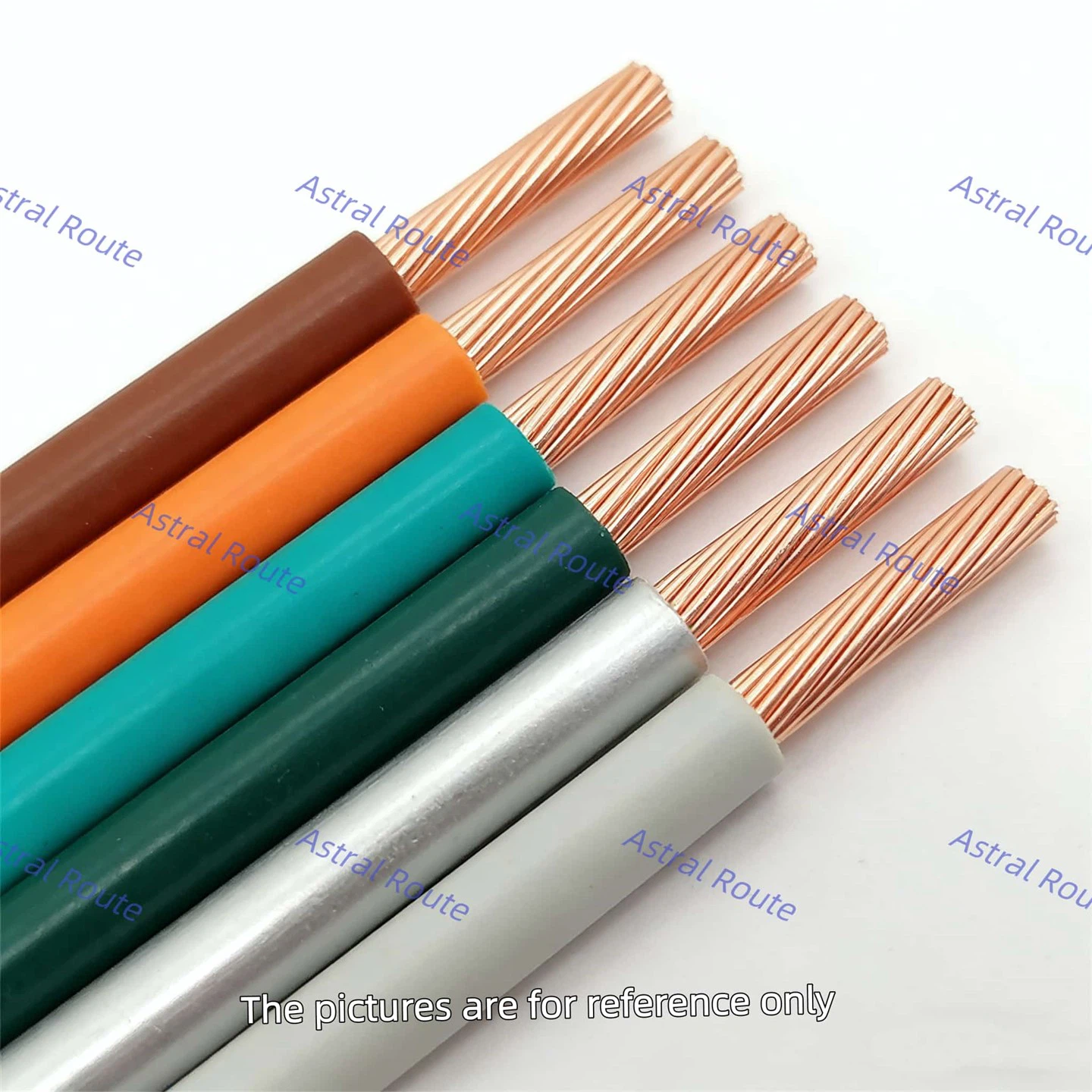
The WDZB1 flame-retardant power cable complies with B1-class flame-retardant combustion performance. The cable adopts metal hydroxides such as magnesium hydroxide (Mg(OH)₂) and aluminum hydroxide (Al(OH)₃) to replace traditional fillers. During combustion, these metal hydrates release crystallization water, which reduces the flame temperature of the cable and effectively suppresses the heat required to sustain flame propagation.
This structural design not only controls flame spread height, but also significantly reduces total heat release, smoke generation, and burning rate, keeping fire hazards at a minimum.
The B1-class flame-retardant cable is an energy-efficient, environmentally friendly fire-resistant product, mainly applied in locations with high population density and stringent fire safety requirements, with rated voltages up to 35 kV, such as:
Metro and railway systems
Airports
Hospitals
Super high-rise buildings
Large shopping malls
Hotels
Exhibition and convention centers
Data centers
Transportation hubs
Applicable Standards
GB 31247-2014
GB/T 31248-2014
GB/T 12706.1-2008
GB/T 12706.2-2008
GB/T 12706.3-2008
GB/T 19666-2005
Rated Voltage Levels
750 V, 0.6/1 kV, 1.8/3 kV, 3.6/6 kV, 6/6 kV, 6/10 kV, 8.7/10 kV, 8.7/15 kV, 12/20 kV, 18/30 kV, 21/35 kV, 26/35 kV
Thermal Performance
Maximum continuous conductor operating temperature: 90 °C
Maximum conductor temperature under short circuit conditions
(maximum duration 5 s): ≤ 250 °C
Conductors comply with GB/T 3956
Flame-Retardant Performance
The combustion performance of this cable meets B1-class flame-retardant criteria, which mainly evaluate the following parameters:
Flame Spread (FS ≤ 1.5 m)
Measures the maximum charred distance on bundled cable surfaces, simulating flame propagation after fire ignition.
Peak Heat Release Rate (HRR ≤ 30 kW)
Measures the maximum heat released per unit time under specified conditions, reflecting flame spread risk and impact on adjacent areas.
Total Heat Release within 1200 s (THR₁₂₀₀ ≤ 15 MJ)
Integral of heat release rate over 1200 seconds, indicating total heat contribution during fire exposure.
Fire Growth Rate Index (FIGRA ≤ 150 W/s)
The maximum ratio of heat release rate to time, used for combustion performance classification.
Peak Smoke Production Rate (SPR ≤ 0.25 m²/s)
Measures smoke generation per unit time.
Total Smoke Production within 1200 s (TSP₁₂₀₀ ≤ 50 m²)
Measures cumulative smoke production over 1200 seconds.
Smoke Density (Minimum Light Transmittance ≥ 60%)
Indicates visibility in fire conditions and smoke-related safety risks.
Vertical Flame Spread (H ≤ 425 mm)
Measures the distance between the upper and lower ignition points of the charred section on a single cable.
Flame-Retardant Mechanism
The key structural difference between B1-class flame-retardant cables and conventional flame-retardant cables lies in the use of inorganic mineral metal hydrates, such as Al(OH)₃ and Mg(OH)₂, instead of traditional polypropylene tear-film ropes or glass fiber fillers.
A non-toxic, halogen-free, bromine-free inorganic metal hydroxide compound is filled between the cable insulation and outer sheath. When exposed to fire, the increasing temperature causes these materials to decompose into metal oxides and water vapor, which significantly reduces the surface temperature of the cable and suppresses combustion reactions in the outer sheath.
After combustion, the mixture of Al(OH)₃ and Mg(OH)₂ forms a hard, ceramic-like protective layer around the cable core. This layer effectively isolates oxygen from the internal insulation materials, acting as a thermal and oxygen barrier, thereby preventing further combustion and enhancing flame-retardant and fire-resistance performance.
Thanks to the specialized flame-retardant formulation and structural design, the cable demonstrates effective temperature reduction and combustion isolation during fire testing. As a result, the non-metallic content limitation, traditionally a major constraint in bundled flame-retardant cable design, is no longer a critical concern.
Even when the non-metallic content far exceeds 14 L per meter, the charred height during testing remains well below the standard limit of 2.5 m.
Furthermore, because combustion is significantly suppressed, outer sheath ablation is minimal, and the cable core remains largely unaffected due to the protective barrier. Consequently, both heat release and smoke generation are kept at very low levels, allowing the cable to pass the stringent GB 31247-2014 B1-class fire test with relative ease.
The application of B1-class flame-retardant power cables effectively suppresses combustion of internal combustible materials while significantly reducing non-metallic content in the sheath. In large-scale projects with dense cable installations, using B1-class flame-retardant cables instead of conventional flame-retardant cables ensures higher fire safety performance while also offering better overall cost efficiency.

Limited-Time Offer!
✅ Free Technical Consultation with our cable engineers
✅ Volume Discounts on all series
✅ 24-Hour Quote Turnaround
Hot Tags: wdzb1 flame-retardant power cable (b1 class), China wdzb1 flame-retardant power cable (b1 class) manufacturers, suppliers, factory


