

Short Description
Healthcare Professionals Need More Support - Not More Administrative Burden
Advanced robotic system for hospital assistance, medical workflow support, autonomous logistics, and smart healthcare operations.
Autonomous Medical Assistance For Smart Healthcare Environments
AI-powered robotic platform designed for hospital assistance, healthcare support workflows, medical logistics, and real-time operational awareness.
Healthcare Systems Face Growing Operational Pressure
Healthcare providers increasingly face challenges involving:
Nursing shortages
Rising patient volumes
Staff burnout
Repetitive operational tasks
Increasing healthcare costs
Aging populations
Hospitals and healthcare facilities are increasingly adopting robotics and AI-assisted systems to improve operational efficiency and reduce repetitive workloads for medical professionals.
Traditional hospital workflows often require healthcare staff to spend significant time on:
Transport tasks
Environmental inspection
Repetitive operational support
Internal logistics
Non-clinical workflows
The Solution: AI-Assisted Healthcare Support
Astral Route robotic systems support:
Hospital assistance workflows
Medical logistics
Healthcare operational support
Autonomous navigation
Environmental monitoring
Smart healthcare infrastructure
Built for Smart Healthcare Operations
Hospital Assistance & Workflow Support
Supports:
Internal hospital transport
Medical supply delivery
Environmental patrol workflows
Operational assistance tasks
AI-Assisted Healthcare Awareness
Supports:
Environmental monitoring
Patient area awareness
Emergency alert workflows
Real-time operational feedback
Autonomous Navigation in Complex Medical Environments
Supports:
Corridor navigation
Elevator integration
Obstacle avoidance
Dynamic hospital routing
Reduce Repetitive Staff Workloads
Help reduce repetitive operational tasks so healthcare professionals can focus more on patient care.
Suitable for Smart Hospitals & Modern Healthcare Facilities
Applicable for:
Hospitals
Emergency departments
Rehabilitation centers
Elderly care facilities
Smart medical campuses
Flexible Healthcare Deployment
Supports:
Temporary deployment
Rapid operational adaptation
Multi-department workflows
Scalable healthcare automation
Why Healthcare Facilities Are Adopting Robotics?
Healthcare systems globally face:
Increasing labor shortages
Growing operational workloads
Rising patient demand
Pressure to improve efficiency
Healthcare robotics can help:
Reduce repetitive operational tasks
Improve logistics workflows
Support healthcare staff
Enhance operational responsiveness
Improve healthcare automation capability
Designed to Support Healthcare Professionals - Not Replace Them
Healthcare robotics are most effective when used to support medical professionals rather than replace human care.
Robotic systems can assist with:
Repetitive transport workflows
Operational support tasks
Environmental awareness
Non-clinical logistics
while healthcare professionals remain focused on:
Patient care
Clinical decision-making
Human interaction
Medical treatment
Traditional Healthcare Support vs Autonomous Healthcare Robotics
| Traditional Workflow | Autonomous Healthcare Robotics |
|---|---|
| High repetitive workload | Autonomous operational support |
| Staff-intensive logistics | AI-assisted transport workflows |
| Limited operational scalability | Flexible healthcare deployment |
| Manual environmental patrols | Continuous operational awareness |
| Increased staff fatigue | Reduced repetitive operational tasks |
Future Hospitals Will Combine Human Expertise With Autonomous Support Systems
Why Choose Astral Route
Designed for Smart Healthcare Environments
Built for hospitals, rehabilitation centers, emergency departments, and healthcare operational support.
AI-Assisted Operational Awareness
Supports autonomous navigation, environmental monitoring, and healthcare workflow assistance.
Reduce Repetitive Operational Workloads
Help healthcare teams improve operational efficiency and reduce repetitive support tasks.
Flexible Deployment Across Healthcare Facilities
Suitable for dynamic healthcare environments and scalable smart hospital workflows.
Support Healthcare Digital Transformation
Enable smarter healthcare operations and AI-assisted medical infrastructure modernization.
Improve Efficiency. Support Healthcare Staff. Enable Smarter Medical Operations.
PRODUCT DETAIL

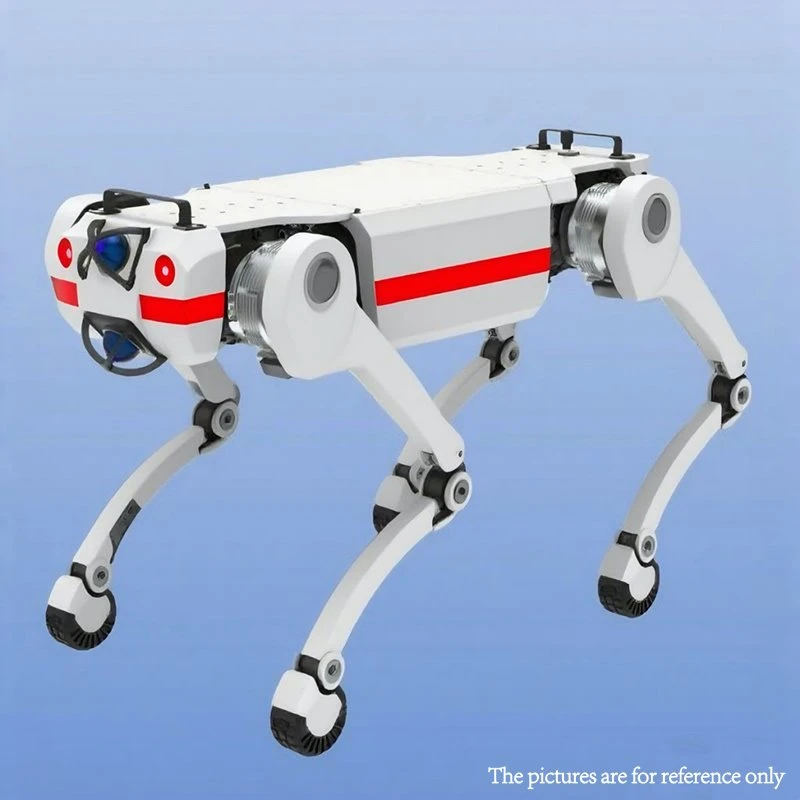
Autonomous Healthcare Assistance Robot For Smart Medical Environments is a quadruped robot designed for various applications, featuring full-terrain adaptability for unstructured environments. It is capable of navigating stairs, slopes, mountains, ruins, and gravel surfaces, and operates reliably within a wide temperature range of -40°C to +55°C and at altitudes up to 5,000 meters. It can enter pipeline systems that are difficult for humans to access, performing various detection and mapping tasks efficiently while ensuring personnel safety.
This product is designed for emergency medical response and public health crises. It can autonomously navigate complex terrains and access restricted or hazardous zones to deliver medicines and first-aid supplies. Equipped with vital signs monitoring systems and remote communication modules, it can assist medical personnel with preliminary diagnostics and emergency care. With its high mobility and intelligence, it greatly improves rescue efficiency while minimizing risk to healthcare workers, making it ideal for medical support in scenarios such as earthquakes, floods, and epidemics.
Equipped with a binocular camera and an optical sighting system, it enables both day and night reconnaissance as well as target identification. The platform integrates a comprehensive perception system, combining LiDAR and surround-view cameras to deliver 360-degree detailed situational awareness.
With powerful computing capabilities and standard electrical interfaces, the robot supports the modular integration of mission-specific payloads, allowing for deep customization based on operational requirements.
Technical Specifications
Total Equipment Weight: ≤75KG (including 20KG payload)
Communication Methods: 4G/5G, radio, or self-organizing network (optional)
Intelligent Functions: 3D mapping, autonomous obstacle avoidance, video transmission, environmental perception, autonomous patrol, etc.
Maximum Mobility Speed: ≥12 km/h (on paved roads)
Cross-Floor Climbing Time: ≤30 seconds (18 steps of 21 cm each + 90° turn)
Climbable Terrain: Standard stairs, 35° slopes, mountainous terrain, ruins, and gravel (all-terrain capable)
Operating Temperature: -40°C to +55°C
Operating Time: ≥2 hours
Day/Night Reconnaissance Capabilities:
Daytime human target recognition distance ≥1000 meters
Daytime vehicle target recognition distance ≥2000 meters
Nighttime human target recognition distance ≥200 meters
Nighttime vehicle target recognition distance ≥1000 meters
Target Recognition Capabilities: ≥2 types (e.g., humans, vehicles),
Target recognition accuracy: ≥80%


Product Features
Mobility in Complex Terrain:
Capable of operating across complex terrains such as plateaus, mountains, and hilly environments.
Safety Capabilities:
Equipped with real-time health status monitoring, encrypted communication protection, anti-hijacking features, and anti-jamming satellite positioning.
Basic Capabilities:
Features quick-change foot modules, rapid battery replacement, autonomous charging, material transport, and close-range situational awareness.
Support Capabilities:
Supports microgrid charging systems powered by methanol-hydrogen stations, municipal electricity, and photovoltaic (solar) generation.
Autonomous Navigation and Obstacle Avoidance:
Provides positioning, autonomous navigation, and obstacle avoidance capabilities based on the BeiDou satellite system, including under satellite-denied conditions.
Adaptability to Harsh Environments:
Operates reliably in slippery, extreme temperature, rainy, and snowy conditions.
Long-Range High-Speed Communication:
Supports high-bandwidth networked communication through multiple methods including LTE, radio, and Wi-Fi.
Human-Machine Interaction:
Can be operated via a portable control terminal or through a backend command and control center for task scheduling and situational monitoring.
All-Weather Surveillance Adaptability:
Capable of 24/7 reconnaissance and monitoring, target recognition, scene comparison, and video recording in all environmental conditions.
Designed for Modern Healthcare Environments
Hospitals
Internal logistics
Medical assistance workflows
Operational support
Emergency Departments
Real-time environmental awareness
Emergency support workflows
Autonomous navigation
Rehabilitation Centers
Patient guidance support
Operational logistics
Smart healthcare assistance
Elderly Care Facilities
Healthcare support workflows
Environmental monitoring
Assistance operations
Smart Medical Campuses
Autonomous logistics
AI-assisted operations
Healthcare infrastructure monitoring
Contact Us--
Improve Hospital Workflow Efficiency
Reduce Repetitive Staff Workloads
FAQ
Q1: What is a robotic dog used for in healthcare environments?
It is used for hospital assistance workflows, medical logistics, environmental monitoring, autonomous navigation, and operational healthcare support.
Q2: Can robotic systems help reduce healthcare staff workload?
Yes. Healthcare robotics can support repetitive operational tasks and logistics workflows, allowing healthcare professionals to focus more on patient care.
Q3: What healthcare environments are suitable for deployment?
Hospitals, emergency departments, rehabilitation centers, elderly care facilities, and smart medical campuses.
Q4: Can the robotic platform navigate autonomously inside hospitals?
Yes. The system supports autonomous navigation, obstacle avoidance, dynamic routing, and complex indoor operational environments.
Q5: Can the robotic system support emergency response workflows?
Yes. The platform can assist with environmental awareness, emergency alerts, and real-time operational support tasks.
Q6: Why are healthcare providers adopting robotics?
Healthcare providers increasingly adopt robotics to improve operational efficiency, reduce repetitive workloads, and support healthcare staff amid growing labor shortages and patient demand.
Q7: Are healthcare robots intended to replace medical professionals?
No. Healthcare robotics are primarily designed to assist healthcare professionals and support operational workflows rather than replace human care.
Q8: Can the platform integrate with smart healthcare systems?
Yes. The system can support integration with digital healthcare infrastructure and smart hospital operational platforms.
Hot Tags: Autonomous Healthcare Assistance Robot For Smart Medical Environments, China Autonomous Healthcare Assistance Robot For Smart Medical Environments manufacturers, suppliers, factory, robotic dog for mediacal and healthcare, Robotic Dog for Medical Assistance

