


What is the detection limit of a Portable Tritium Monitor for tritium in water?
Tritium, a radioactive isotope of hydrogen, is a concern in many fields, especially in environmental monitoring and nuclear industries. The ability to accurately detect tritium in water is crucial for ensuring safety and compliance with regulatory standards. As a supplier of Portable Tritium Monitors, I am often asked about the detection limit of these devices. In this blog post, I will explain what the detection limit is, how it is determined, and what factors can affect it.
Understanding the Detection Limit
The detection limit of a Portable Tritium Monitor refers to the lowest concentration of tritium in water that the device can reliably detect. It is a critical parameter because it determines the monitor's sensitivity and its suitability for different applications. For example, in environmental monitoring, where tritium levels may be very low, a monitor with a low detection limit is required to accurately assess the presence and concentration of tritium.
There are different ways to define the detection limit. One common approach is the limit of detection (LOD), which is typically calculated based on the statistical analysis of the background noise and the signal produced by the monitor. The LOD is often defined as the concentration of tritium that produces a signal that is three times the standard deviation of the background noise. Another approach is the limit of quantification (LOQ), which is the lowest concentration of tritium that can be accurately quantified. The LOQ is usually set at a higher level than the LOD, often ten times the standard deviation of the background noise.
Determining the Detection Limit
The detection limit of a Portable Tritium Monitor is determined through a series of calibration and testing procedures. During calibration, the monitor is exposed to known concentrations of tritium in water, and the response of the monitor is measured. This data is then used to establish a calibration curve, which relates the concentration of tritium to the signal produced by the monitor.
To determine the detection limit, the background noise of the monitor is first measured. This is done by measuring the signal produced by the monitor in the absence of tritium. The standard deviation of the background noise is then calculated. Next, the monitor is exposed to a series of low concentrations of tritium, and the signal produced by the monitor is measured. The LOD is calculated as three times the standard deviation of the background noise, and the LOQ is calculated as ten times the standard deviation of the background noise.

Factors Affecting the Detection Limit
Several factors can affect the detection limit of a Portable Tritium Monitor. One of the most important factors is the type of detector used in the monitor. Different detectors have different sensitivities to tritium, and some detectors are more sensitive than others. For example, liquid scintillation detectors are often used in Portable Tritium Monitors because they are highly sensitive to tritium.
Another factor that can affect the detection limit is the sample volume. The larger the sample volume, the more tritium is present in the sample, and the easier it is to detect. However, increasing the sample volume also increases the analysis time and the cost of the analysis.
The background radiation level in the environment can also affect the detection limit. If the background radiation level is high, it can interfere with the measurement of tritium and increase the detection limit. Therefore, it is important to measure the background radiation level and subtract it from the measured signal to obtain an accurate measurement of tritium.
The temperature and humidity of the environment can also affect the performance of the monitor and the detection limit. Extreme temperatures and humidity can cause the detector to malfunction or reduce its sensitivity. Therefore, it is important to operate the monitor within the recommended temperature and humidity range.
Importance of a Low Detection Limit
A low detection limit is important for several reasons. In environmental monitoring, a low detection limit allows for the early detection of tritium contamination, which can help prevent the spread of contamination and protect the environment and human health. In the nuclear industry, a low detection limit is necessary for ensuring compliance with regulatory standards and for monitoring the release of tritium from nuclear facilities.
In addition, a low detection limit can improve the accuracy and reliability of the measurement. When the detection limit is low, it is possible to detect and quantify even small concentrations of tritium, which can provide more detailed and accurate information about the presence and distribution of tritium in water.
Our Portable Tritium Monitors
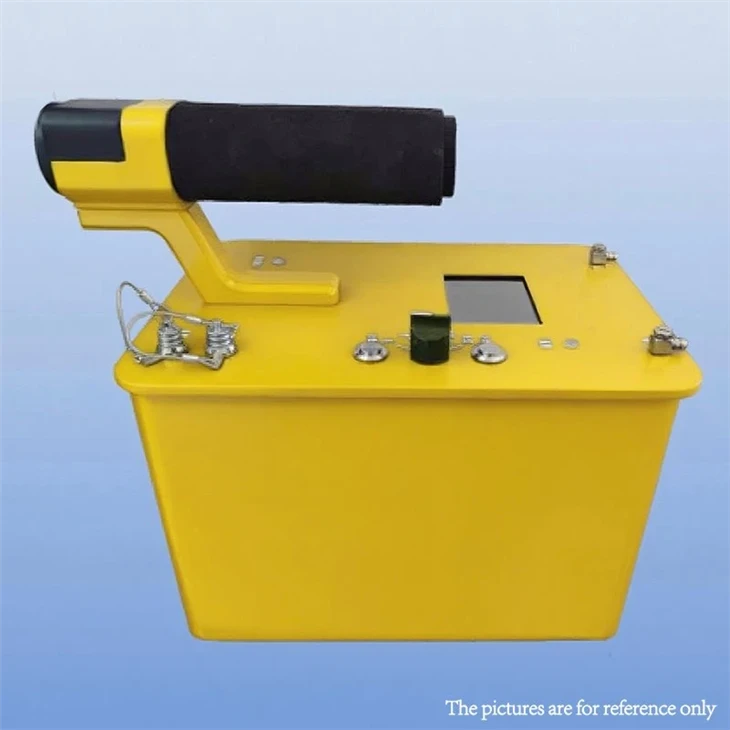
As a supplier of Portable Tritium Monitors, we are committed to providing high-quality products with low detection limits. Our monitors are designed to be easy to use, portable, and reliable. They are equipped with state-of-the-art detectors that provide high sensitivity and accuracy.
In addition to our Portable Tritium Monitors, we also offer a range of other radiation detection products, including Real-Time Electronic Personal Radiation Dosimeter, Radiation Dosimeter For Medical Radiation Workers, Real-Time Radiation Dosimeter, Radiation Dosimeter For NDT Companies, and Electronic Dosimeter Vs Passive Dosimeter. These products are designed to meet the needs of different industries and applications.
Conclusion
The detection limit of a Portable Tritium Monitor is a critical parameter that determines its sensitivity and suitability for different applications. A low detection limit is important for early detection of tritium contamination, ensuring compliance with regulatory standards, and improving the accuracy and reliability of the measurement. As a supplier of Portable Tritium Monitors, we are committed to providing high-quality products with low detection limits. If you are interested in learning more about our products or have any questions about the detection limit of our Portable Tritium Monitors, please contact us for further discussion and potential procurement.
References
- Knoll, Glenn F. Radiation Detection and Measurement. 4th ed., Wiley, 2010.
- IAEA. Tritium: A Guide to Safe Handling and Use. International Atomic Energy Agency, 2003.


