


If you work in a facility that handles radioactive materials, you already know radiation safety isn’t a solo gig. Sure, you’ve got your personal dosimeters, your Geiger counters, and your emergency alarms, but none of these pieces work as well without talking to each other. As someone who’s been part of the surface radiation contamination monitor (SRCM) supplier team for years, I’ve seen firsthand how this often-overlooked device is the glue that ties all your safety gear together—keeping workers safe, preventing cross-contamination, and making sure no small contamination spot turns into a big, costly mess. Let’s break down how an SRCM interacts with other key safety equipment, and why that sync isn’t just a nice-to-have, it’s non-negotiable.
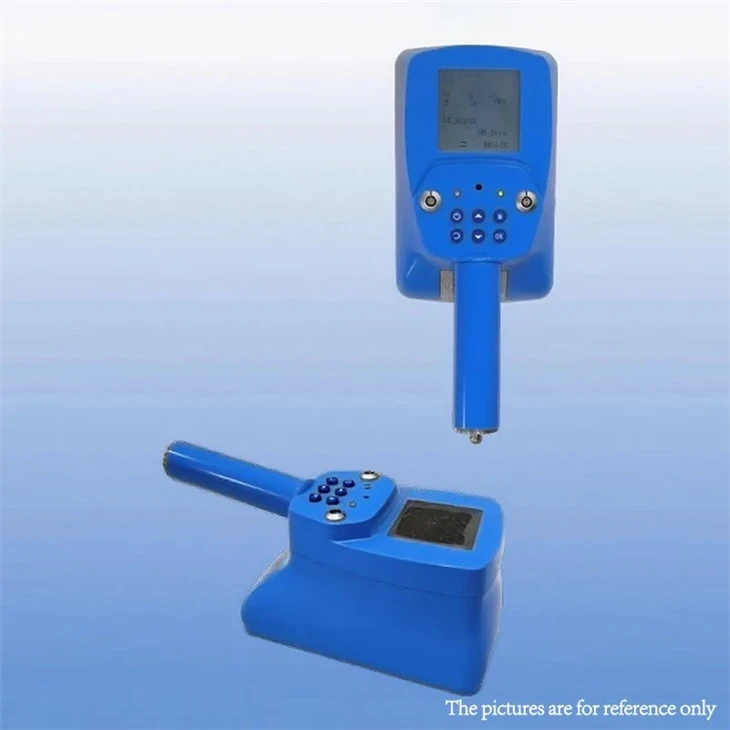

First, let’s get on the same page about what an SRCM actually does, because there’s a lot of confusion between it and other radiation monitors. Unlike air monitors that track airborne particles or personal dosimeters that measure cumulative exposure, an SRCM is built to scan surfaces—workbenches, tools, floor tiles, PPE, even glove boxes—for loose, removable radioactive contamination. Its whole job is to catch hot spots before they get touched, tracked, or inhaled. But to do that well, it needs to “talk” to three main groups of safety gear: personal monitoring devices, area radiation monitors, and facility shutdown/maintenance protocols.
Let’s start with personal radiation monitoring devices (PRMDs) because that’s the front line for every worker. You’d think your PRMD would be enough to catch contamination, right? But PRMDs measure total exposure, not where that exposure came from. If a worker steps on a contaminated floor and picks up a tiny amount of tritium on their boot, their PRMD might show a low dose that doesn’t trigger an alert—until that boot brushes against a workbench, transferring contamination that then builds up over time. That’s where the SRCM fills the gap. Here’s how their interaction works: when an SRCM detects a surface with levels above the regulatory threshold (say, 2,000 dpm for beta contamination, a common limit for many facilities), it can send a signal to the worker’s PRMD to log a “contamination contact” event, not just a general dose. That means if a worker’s PRMD does have a spike, you can pull up a timeline of which surfaces they scanned or walked past, and narrow down exactly where the contamination is—instead of guessing it came from a radioactive source they handled last week. I’ve seen this save teams hours of cleanup time at nuclear labs: a worker’s PRMD flagged a small dose, their SRCM sync showed they brushed a contaminated tool bin 10 minutes earlier, so they didn’t have to decontaminate their whole suit—just the bin. For more on personal monitoring tools, check out the [Personal Radiation Monitoring Device] we offer, which is built specifically to pair with SRCMs for that exact reason.
Next, area radiation monitors (ARMs) that are fixed to walls, ceilings, or equipment in high-risk zones. These are the ones that alert if airborne radioactive particles leak or if a large source breaches containment. But ARMs can’t pick up loose surface contamination as easily as an SRCM—especially in hard-to-reach spots, like the back of a pump or under a workbench drawer. When an SRCM scans a surface and finds a hot spot, it can communicate with the nearest ARM to confirm the contamination isn’t getting into the air. For example, at a research facility handling uranium samples, an SRCM might scan a lab bench and find 12,000 dpm of alpha contamination, which is way above the cleanup limit. Instead of just sounding an alarm for the bench area, the SRCM sends a signal to the ARM on the lab’s back wall to run a quick, targeted air sample—so if the ARM detects airborne particles, you can immediately evacuate; if not, you can just cordon off the bench and start cleaning without panicking. This also works the other way around: if an ARM picks up a small airborne leak, the SRCM can tell workers which surfaces to scan first to find the source of the particles, instead of making them check every single thing in the room. We actually designed our SRCMs to pair seamlessly with lab-area ARMs, and you can see more about lab-specific dosimeter setups here: [Radiation Dosimeter For Research Laboratories].
Now, let’s talk about shutdown maintenance—one of the highest-risk times for radiation contamination, because teams are moving equipment, taking apart parts, and working in spaces they don’t usually access. This is where the SRCM’s role as a coordinator really shines. If you’ve ever done a plant shutdown, you know there’s a ton of protocols to follow: lockout-tagout (LOTO), area clearance checks, PPE changes. But without an SRCM syncing all these steps, things can slip through the cracks. Here’s how it works: before maintenance starts, the SRCM scans all equipment parts, tool bins, and even the temporary workbenches the maintenance team will use. It logs every surface’s contamination level, so when the team is done, it can automatically run a post-maintenance scan to confirm no contamination was moved out of the high-risk zone. If a part that was supposed to be clean (with contamination below 200 dpm, say) is now showing a hot spot, the SRCM flags that, and the team knows to trace that part back to where it was taken from during shutdown. For shutdown-specific guidelines on how monitors work in these scenarios, check out our page: [Radiation Monitoring During Shutdown Maintenance]. I’ve talked to plant managers who used this sync during a recent refueling shutdown—they caught a contamination spot on a turbine blade that would have been missed by an ARM, because the blade was covered by a shield that the ARM couldn’t see. The SRCM scan caught it early, so they only had to decontaminate that one blade instead of the whole turbine, saving thousands in downtime.
Wait, let’s not forget two other key pieces: tritium monitors and neutron dosimeters, because those are common in facilities handling specific types of radioactive material. Tritium is a low-energy beta emitter, which means it’s super easy to transfer from surfaces—even a tiny amount on a gloved hand can get into a worker’s glove or on a tool, and become airborne if the glove tears. Our SRCMs are calibrated to detect tritium contamination, and they can sync with real-time tritium air monitors (like the one we build: [Real-Time Tritium Leak & Airborne Contamination Monitor]) to alert if a surface with tritium is in a zone where air is being circulated. If the tritium monitor picks up a spike in the air, the SRCM can immediately tell which surface is off-gassing tritium, instead of the team having to wait for air samples to come back. For neutron-heavy environments, like nuclear reactors, the SRCM works with neutron dosimeters to separate neutron exposure from surface contamination. Neutron dosimeters measure neutron dose, but they can’t tell if a worker got that dose from a contaminated tool or a stray neutron from a reactor. The SRCM scans the worker’s PPE and tools, so you can confirm if the dose came from a surface hot spot or from normal neutron exposure—super important for accurate worker reporting.
Now, why does this sync matter so much? Let’s be real: radiation safety is expensive. False alarms lead to wasted downtime, over-cleaning costs tens of thousands of dollars, and missing a contamination spot can lead to regulatory fines or, worse, worker exposure. The SRCM is the only device that bridges the gap between personal gear, area monitors, and maintenance protocols—turning isolated alarms into a coordinated system that keeps everyone safe.
If you’re running a facility, you’ve probably got a mix of safety equipment right now, and you might be wondering how to make them all work together. Our team doesn’t just sell SRCMs—we help facilities integrate them with existing gear, whether that’s personal dosimeters, area monitors, or shutdown protocols. We’ve worked with labs, nuclear plants, and research facilities to set up sync systems that cut false alarms by 40% and reduce cleanup time by half.
If you’re ready to upgrade your radiation safety setup, reach out to our team to talk about your specific facility needs. We can walk you through how our SRCMs pair with your existing equipment, and make sure every piece of your safety system is working as hard as it should.
References
- International Atomic Energy Agency. (2018). Radiation Safety in Industrial Applications. IAEA Safety Standards Series No. GS-G-3.1.
- U.S. Nuclear Regulatory Commission. (2021). Surface Contamination Monitoring and Control. NRC Regulatory Guide 8.19.
- Society of Radiation Protection Technologists. (2022). Integration of Monitoring Systems for Radiation Safety Programs. SRPT Journal.


