


The angular response of a Surface Radiation Contamination Monitor is a crucial aspect that can significantly impact its performance and reliability in detecting and measuring surface radiation contamination. As a leading supplier of Surface Radiation Contamination Monitors, we understand the importance of this technical parameter and its implications for various applications. In this blog post, we'll delve into what the angular response of a Surface Radiation Contamination Monitor is, why it matters, and how it affects the overall effectiveness of radiation detection.
Understanding Angular Response
The angular response of a Surface Radiation Contamination Monitor refers to how the detector's sensitivity varies with the angle of incidence of the radiation. In an ideal scenario, a radiation detector would have a uniform sensitivity across all angles, meaning it would detect radiation equally well regardless of whether the radiation is coming directly from the front, the side, or at an oblique angle. However, in reality, most detectors have a non - uniform angular response due to their physical design, the type of detection material used, and the geometry of the detector housing.
The angular response is often characterized by a plot showing the detector's efficiency or sensitivity as a function of the angle of incidence. This plot can give users a clear picture of how well the monitor will perform under different radiation incidence angles. For example, a detector with a narrow angular response may be highly sensitive when the radiation is incident perpendicular to its surface but may have significantly reduced sensitivity when the radiation comes in at an angle. On the other hand, a detector with a wide angular response can detect radiation from a broader range of angles, providing more comprehensive coverage.
Why Angular Response Matters
The angular response of a Surface Radiation Contamination Monitor is of great importance in several real - world applications. In a nuclear power plant, operators need to monitor the surfaces of equipment, pipes, and floors for radiation contamination. Since these surfaces may be irregularly shaped and radiation may be emitted at various angles, a monitor with a good angular response can ensure that no contamination goes undetected. For example, if a pipe has been contaminated and the radiation is being emitted at an oblique angle, a monitor with poor angular response may not detect the contamination, leading to potential safety risks.
In environmental radiation monitoring, where large areas need to be surveyed, the angular response becomes even more critical. Radiation sources in the environment can be located at various positions relative to the monitor, and a monitor with a wide angular response can cover a larger area and detect radiation sources more effectively. This is particularly important in emergency response situations, such as after a nuclear accident, where rapid and accurate detection of radiation contamination across a large area is essential.
Factors Affecting Angular Response
Several factors can influence the angular response of a Surface Radiation Contamination Monitor. One of the main factors is the type of detector material. Different detector materials have different absorption and scattering properties for radiation, which can affect how they respond to radiation incident at different angles. For example, some semiconductor detectors may have a more directional response compared to scintillation detectors due to the way they interact with radiation.
The geometry of the detector housing also plays a significant role. A detector housed in a thick or shielded enclosure may have a more limited angular response because the housing can absorb or block radiation coming in at certain angles. On the other hand, a detector with an open - faced design may have a wider angular response but may also be more susceptible to background radiation.
The energy of the radiation is another important factor. Higher - energy radiation may be more likely to penetrate the detector housing and be detected at larger angles, while lower - energy radiation may be more easily absorbed or scattered, resulting in a more limited angular response.
How Our Surface Radiation Contamination Monitors Address Angular Response
As a supplier, we have put a great deal of effort into designing our Surface Radiation Contamination Monitors to have an optimal angular response. We use advanced detector materials and innovative design techniques to ensure that our monitors can detect radiation from a wide range of angles.
Our Surface Contamination Monitoring Solution is engineered with a detector geometry that maximizes the angular coverage without sacrificing the sensitivity. The detector housing is designed to minimize the absorption and scattering of radiation at different angles, allowing the monitor to detect radiation more effectively.
For industries such as oil & gas, which require reliable radiation detection in challenging environments, our Radiation Dosimeter For Oil & Gas Industry is specifically designed to have a good angular response. The detectors in these monitors are optimized to detect radiation at various angles, ensuring that any potential contamination in pipes, tanks, or other equipment can be detected promptly.
Our Radiation Monitoring For Contractors solution also benefits from our attention to angular response. Contractors often need to monitor a variety of surfaces in different locations, and a monitor with a wide angular response can provide more thorough coverage, reducing the risk of missing any radiation contamination.
The Radiation Dosimeter With Alarm we offer is designed to be sensitive to radiation from different angles. This ensures that when a radiation source is present, regardless of its position relative to the monitor, the alarm will be triggered promptly, providing an early warning to the user.
In the field of industrial inspection, our Radiation Safety Equipment For Industrial Inspection has a well - optimized angular response. Industrial inspection often involves checking complex and irregularly shaped surfaces, and a monitor with a good angular response can help inspectors detect radiation contamination more accurately and efficiently.
Importance of Testing and Calibration
To ensure that our Surface Radiation Contamination Monitors have the expected angular response, we conduct rigorous testing and calibration procedures. During the testing phase, we expose the monitors to radiation from different angles and measure their response. This allows us to verify the angular response characteristics and make any necessary adjustments to the design or settings.

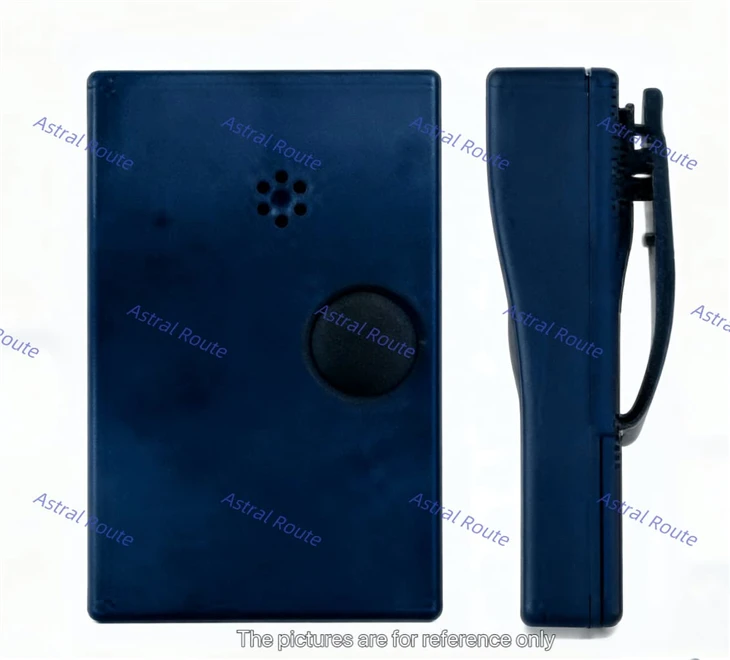
Calibration is also an essential part of maintaining the accuracy of the angular response. Over time, the detector's performance may change due to factors such as aging or exposure to radiation. Regular calibration can ensure that the monitor's sensitivity and angular response remain within the specified limits, providing reliable and consistent results.
Contact for Procurement
If you are in the market for a Surface Radiation Contamination Monitor, we invite you to contact us to discuss your specific requirements. Our team of experts can provide you with detailed information about our products, including their angular response characteristics, and help you choose the right monitor for your application. We are committed to providing high - quality products and excellent customer service, and we look forward to partnering with you to meet your radiation detection needs.
References
- Knoll, G. F. (2010). Radiation Detection and Measurement. John Wiley & Sons.
- Tsoulfanidis, N. (1995). Measurement and Detection of Radiation. Taylor & Francis.


