


If you’ve ever walked past a nuclear power plant (NPP) turbine building or a radiation-controlled substation, you know how tight, hot, and high-risk that space is for humans. As someone who’s been supplying robotic dogs built specifically for those environments for years, I can’t tell you how many clients have asked me the same question: “How long will this dog run before it dies mid-inspection?”
It’s not a trivial question, either. A stalled inspection robot doesn’t just leave your team short on data—it can mean re-closing containment, re-deploying radiation monitors, or even delaying critical maintenance checks that keep the plant safe. Over the years, we’ve tuned our robotic dogs to handle the harsh NPP conditions where standard models fail, and battery life is at the center of that tune-up. Today I’m breaking down the actual battery life indicators you need to watch for, especially when you’re shopping for gear that works in a nuclear facility.

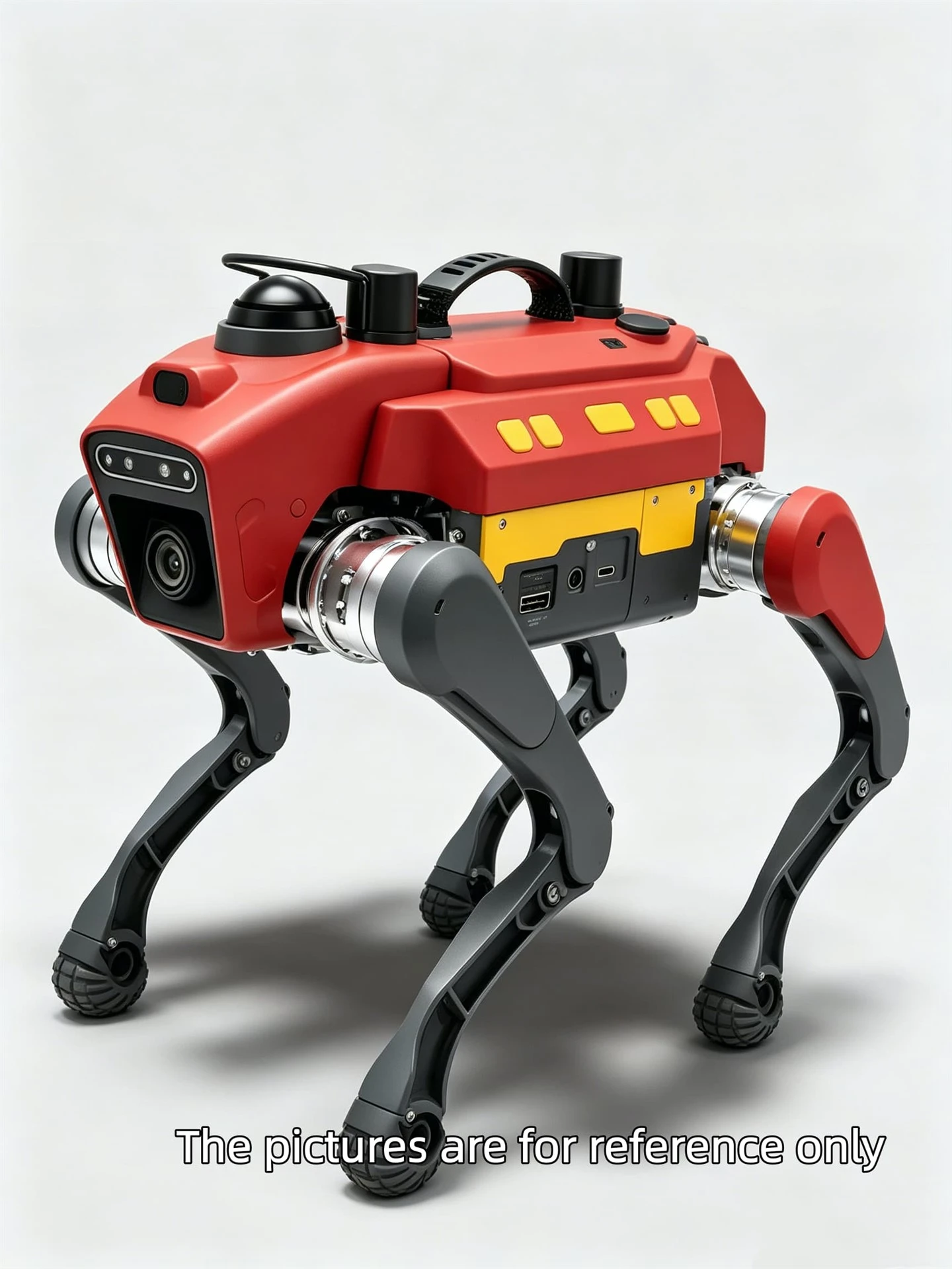
First, let’s get one thing straight: NPP robotic dogs aren’t the same as the ones you see patrolling office parks or construction sites. Those can run for 8 hours on a single charge, but our [Autonomous Robotic Dog for Nuclear Facility Inspection] is built to slog through 12+ hours of tough work, and that’s only if you don’t factor in the specific drains unique to nuclear sites.
Let’s start with the big one: how you use the robot. It’s not just about battery size, though size matters. A lot of manufacturers brag about a high mAh battery, but that’s useless if the robot is power-hungry. For example, if you’re running our quadruped up staircases in a reactor auxiliary building, each step pulls more power than level walking. Or if you’re operating it in “high-sensor mode” where it’s snapping high-res thermal images, radiation readings, and gas samples at every footstep? That chews through juice faster than leaving your phone’s GPS on all day. We recently had a client test one during a routine outage inspection: they ran it through tight equipment corridors and up two flights of stairs, and it hit 8.5 hours of runtime. Another client ran it at a quieter, steady pace in a substation and got 11 hours. The difference? How you deploy the robot, not just the battery’s capacity.
Next up, the environment—something most suppliers gloss over when they talk battery life. Nuclear plants are harsh places, and extreme temps or radiation don’t just damage electronics, they eat through batteries too. If you’re running the robot near a reactor’s spent fuel pool, where the ambient temp is over 100°F, lithium-ion batteries (which are what we use) lose 20-30% of their capacity in that heat. We had a client in the Midwest that told us a generic robot failed during a summer inspection because the battery died after 2 hours, while our model—with a thermal-controlled battery compartment—hit 9 hours in the same spot. On the flip side, if you’re working in a cold climate, like a Canadian nuclear plant in winter, batteries get sluggish, too. Our robots have battery heating elements that kick on when temps drop below freezing, so you don’t lose runtime there. And yes, radiation plays a part: the hardening we do to the robot’s internal components also protects the battery’s electrodes, so it doesn’t degrade faster from gamma or neutron exposure.
Third, the robot’s “brain” and software. A lot of inspection robots run on clunky code that wastes power by over-checking sensors, or by re-computing paths unnecessarily. Our robots are programmed with power-optimized autonomy—when the robot is moving through a corridor where it’s mapped, it doesn’t re-scan the walls every 2 seconds, which cuts power use by 15% right there. Plus, we use edge computing, so the robot processes data on board instead of sending every single image or reading back to a server (that requires constant, power-heavy wireless communication). If you’re looking at other models, check if they use edge processing—slower data transfer might be a tradeoff for way better battery life, especially for long inspections.
Wait, let’s talk about one more big indicator: payload. Our robotic dogs aren’t just for walking around—they’re carrying tools: radiation monitors, gas sensors, thermal cameras, even manipulator arms for small tasks like checking valve positions on pumps. The heavier the payload, the more power the legs have to use to move. A client recently added a small water sampler to their robot, and runtime dropped by 2 hours (from 11 to 9) for the same inspection route. If you know you’ll be adding extra gear, make sure you ask the supplier about payload-related runtime, not just no-payload runtime. We design our batteries to be swappable, too—so if you’re going to add a heavy sensor for a one-off inspection, you can pop in an extra battery before you go, no downtime.
I get it—when you’re shopping for an NPP inspection robot, you’re not just looking for a gadget. You need something that will show up reliably, capture accurate data, and not leave your team hanging mid-check. That’s why our [Intelligent Inspection Quadruped Robot For Security & Industrial Inspection] is built to handle all those specific NPP factors, from payload to temp to sensor use, without sacrificing battery life.
Let me also touch on something that’s easy to overlook: charging time and cycle life. It doesn’t matter if a robot runs 12 hours if it takes 6 hours to charge, and dies after 50 charge cycles. Our batteries charge to 80% in 2 hours, full charge in 3, so you can swap batteries during a shift break and be back up and running fast. And they last for 1,000 full charge cycles before dropping below 80% capacity—meaning a robot will last for years of inspections, no need to replace batteries every few months. That’s a big cost saver for plant operators, who already have tight budgets for maintenance and inspection gear.
I’ve heard a lot of horror stories from plant teams that bought “budget” robotic dogs for NPPs, only to have them die mid-inspection, or take forever to charge, or die from radiation exposure in a few months. That’s why we built our [Autonomous Robotic Dog for Patrol & Inspection] with NPP-specific use cases top of mind—we test every battery in simulated radiation and temp conditions that match what our clients actually face, not just in a lab.
Another thing to consider: modularity. Our robots are built with interchangeable parts, including batteries. If you need a longer runtime for a multi-day inspection, you can add a second battery module without modifying the whole robot. For clients working in oil & gas pipelines (we have a line for that too: [Autonomous Quadruped Robot for Oil & Gas Pipeline Inspection]), the modular battery works great there too, since those inspections can run for days in remote spots. But for NPPs, where space is tight and safety is non-negotiable, modularity means you don’t have to compromise on runtime to fit the robot through a small doorway or up a narrow staircase.
Let’s circle back to the basics, just to make sure I’m not missing anything. If you’re checking a robot’s battery life for NPP use, here’s the quick cheat sheet: 1) How does their power optimization work (no over-scanning, edge computing)? 2) Have they tested runtime in actual NPP conditions, not just a perfect lab? 3) What’s the effect of payload and environment on runtime (extreme temps, radiation)? 4) How fast do they charge, and how long do the batteries last before needing replacement? 5) Can you swap batteries or add extra power for longer jobs?
I’ve been in this industry long enough to know that when it comes to NPP inspection, small details matter. A 1-hour difference in runtime might not sound like a big deal, but if you’re inspecting a reactor’s containment building, that extra hour could mean the difference between finishing the inspection before the end of your shift, or having to call your team back in after hours to redo it. That’s why we focus on those indicators day in and day out—we’re not just selling robots, we’re selling peace of mind for plant teams who rely on these dogs to keep their sites safe.
If you’re in the market for an NPP inspection robotic dog and want to dive deeper into how our models stack up, feel free to reach out to our team to chat through your specific needs. Whether you need a robot for routine patrols, outage inspections, or specialized tasks like radiation mapping, we can walk you through the battery life details, test data, and how our robots are built to handle the unique challenges of your plant.
References
- International Atomic Energy Agency. (2021). Robotic Technologies for Nuclear Facility Inspection and Maintenance. IAEA Nuclear Energy Series No. NW-T-2.2.
- U.S. Nuclear Regulatory Commission. (2022). “Guidelines for Radiation Hardening of Robotic Systems in Nuclear Power Plants.” NRC Regulatory Guide 1.196.
- IEEE Robotics and Automation Society. (2020). Power Optimization for Mobile Robots in Industrial Environments. IEEE Transactions on Robotics, Vol. 36, No. 4, pp. 1123-1138.
- International Organization for Standardization. (2019). ISO 18497:2019 – Robotics for Nuclear Applications – Safety Requirements for Inspection Robots. ISO, Geneva, Switzerland.
- Battery University. (2023). “Lithium-Ion Battery Performance in Extreme Temperatures and Radiation Environments.” Cadex Electronics Inc.


