


Alright, folks! I'm super stoked to chat with you today about how a silicon detector radiation dosimeter actually works. As a supplier of radiation dosimeters, I've seen firsthand how crucial these devices are in a whole bunch of different industries. Whether it's for personal safety or monitoring radiation levels in high - risk areas, silicon detector radiation dosimeters play a vital role.
Let's start with the basics. A radiation dosimeter is essentially a device that measures the amount of ionizing radiation absorbed by an object or a person. Ionizing radiation includes things like alpha particles, beta particles, gamma rays, and X - rays. And a silicon detector radiation dosimeter is a type of dosimeter that uses silicon as the detection material.
So, how does it all work? Well, it's all about the properties of silicon. Silicon is a semiconductor material. When ionizing radiation hits a silicon detector, it creates electron - hole pairs. You can think of these electron - hole pairs like little electrical charges. In a normal state, silicon doesn't conduct electricity very well. But when radiation comes in and knocks electrons loose from their atomic orbits, creating holes in the process, an electric current can be generated.
The silicon detector is usually made up of a thin layer of silicon that's carefully engineered. The detector is connected to a circuit. When those electron - hole pairs are created by the radiation, the circuit can measure the resulting electric current. The strength of this current is directly related to the amount of radiation that hit the detector.

Here's a more detailed breakdown. When a high - energy photon or a charged particle (like an alpha or beta particle) enters the silicon detector, it interacts with the silicon atoms. This interaction transfers energy to the electrons in the silicon. If the energy is high enough, the electrons can break free from their bonds, leaving behind positively charged holes. This is called ionization.
The electrons and holes then move in opposite directions under the influence of an electric field applied to the detector. The electrons move towards the positive electrode, and the holes move towards the negative electrode. As they move, they create a flow of electric charge, which is the current that the circuit measures.
Now, let's talk about some of the advantages of silicon detector radiation dosimeters. First off, they're highly sensitive. They can detect even very low levels of radiation accurately. This is super important in applications where early detection is crucial. For example, in a nuclear power plant, being able to detect the slightest increase in radiation levels can prevent a major accident.
Secondly, they have a fast response time. As soon as the radiation hits the detector, the current is generated and can be measured right away. This makes them great for real - time monitoring.
Silicon detector radiation dosimeters are also relatively small and lightweight. This makes them portable, and they can be easily carried around by workers in industries like radiology, nuclear energy, and the oil & gas industry.
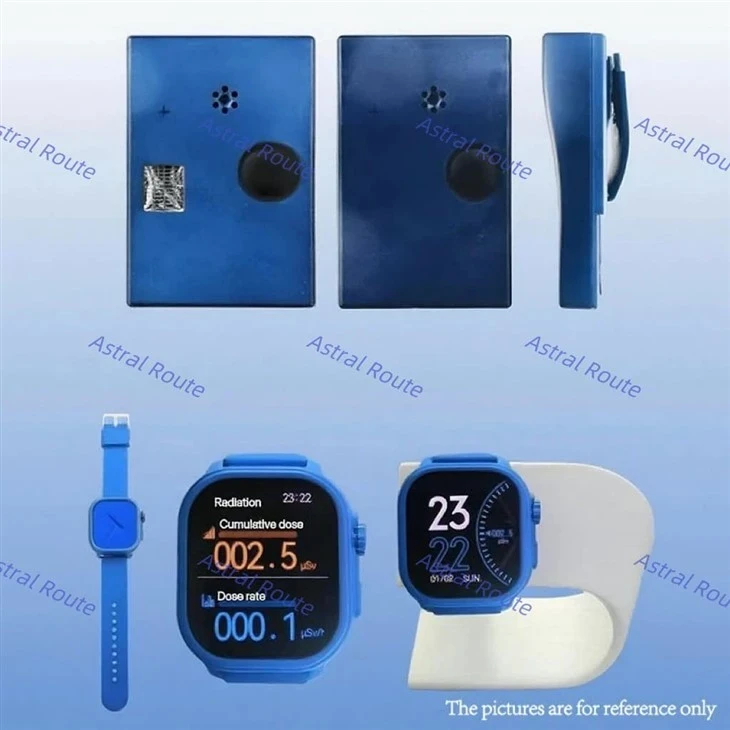
If you're in the market for a radiation dosimeter, we've got some great options. Check out our Portable Radiation Dosimeter. It's perfect for on - the - go monitoring. And if you need an extra layer of safety, our Radiation Dosimeter With Alarm will alert you when radiation levels get too high.
For those in the oil & gas industry, we have the Radiation Dosimeter For Oil & Gas Industry. It's specifically designed to handle the unique radiation risks in this sector. And if you're involved in industrial radiography, our Electronic Personal Dosimeter For Industrial Radiography is a must - have.
We also offer a Real - Time Tritium Leak & Airborne Contamination Monitor, which is essential for detecting tritium leaks and airborne contamination in real time.
When it comes to radiation safety, you can't afford to cut corners. Our silicon detector radiation dosimeters are built to high standards of quality and accuracy. We use the latest technology to ensure that our devices provide reliable results every time.
So, if you're interested in learning more about our radiation dosimeters or if you're ready to make a purchase, don't hesitate to get in touch. We're here to answer all your questions and help you find the right dosimeter for your needs. Whether you're a large corporation or a small business, we've got solutions for you.
In summary, silicon detector radiation dosimeters work by using the unique properties of silicon to detect ionizing radiation. When radiation hits the silicon detector, it creates electron - hole pairs, which generate an electric current that can be measured. This current is proportional to the amount of radiation, allowing us to accurately measure radiation levels. They're highly sensitive, have a fast response time, and are portable, making them an ideal choice for a wide range of applications.
So, come on and explore our range of radiation dosimeters. We're confident that you'll find the perfect fit for your requirements. Let's work together to keep you and your team safe from radiation hazards.
References
- Knoll, Glenn F. Radiation Detection and Measurement. 4th ed., Wiley, 2010.
- Tsoulfanidis, Nicolas. Measured Gamma - Ray Spectrum of Environmental Radiation: A Short Guidebook. 2nd ed., Nuclear Regulatory Commission, 2011.


