


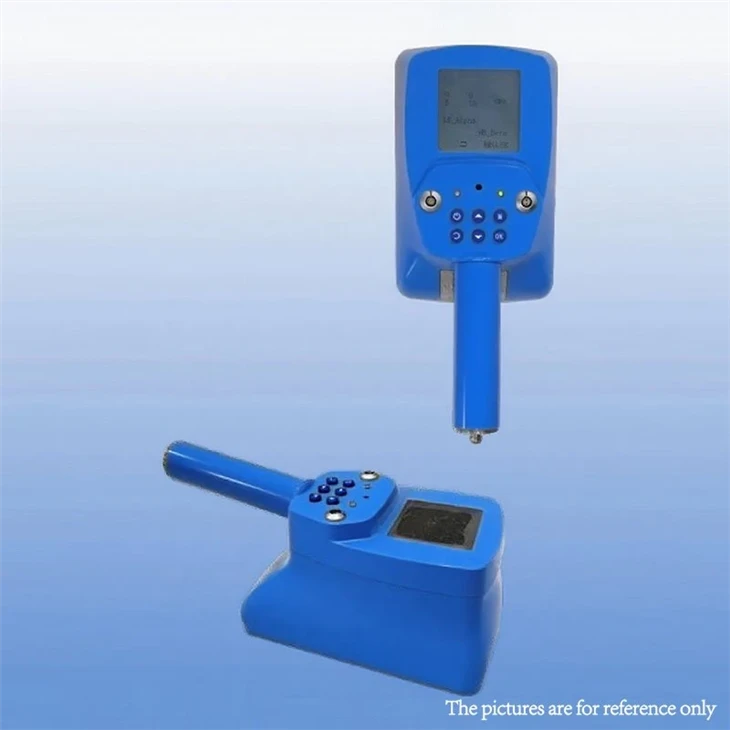
As a supplier of Surface Radiation Contamination Monitors, I've witnessed firsthand the critical role these devices play in ensuring safety across various industries. In my experience, these monitors are not just pieces of equipment; they are guardians of human health and environmental protection. However, their performance is influenced by a multitude of factors that need to be carefully considered.

Physical Factors
Detector Sensitivity
The heart of a Surface Radiation Contamination Monitor is its detector. The sensitivity of the detector determines how well it can detect low - level radiation. High - sensitivity detectors are more likely to pick up even the slightest traces of radiation, which is crucial in environments where early detection is essential. For example, in nuclear power plants, a highly sensitive detector can identify the slightest increase in surface radiation, potentially preventing a major incident. On the other hand, a detector with low sensitivity may miss these early warning signs, putting workers and the environment at risk.
Detector Size
The size of the detector also has a significant impact on the monitor's performance. A larger detector can cover a greater surface area, which means it can detect contamination over a wider range more quickly. This is especially useful in large industrial facilities or areas where there is a high risk of widespread contamination. For instance, in a decommissioning nuclear site, a large - sized detector can help in rapidly assessing the extent of surface radiation contamination across vast areas. However, larger detectors may also be more cumbersome and expensive.
Energy Resolution
Energy resolution refers to the ability of the detector to distinguish between different types of radiation based on their energy levels. A monitor with good energy resolution can accurately identify the specific radionuclides present on the surface. This is important because different radionuclides have different levels of toxicity and require different handling procedures. For example, in a medical research laboratory, accurate identification of radionuclides is essential for ensuring proper disposal and safety protocols. A monitor with poor energy resolution may misidentify the radionuclides, leading to inappropriate safety measures.
Environmental Factors
Temperature
Temperature can have a profound effect on the performance of a Surface Radiation Contamination Monitor. Extreme temperatures can cause the detector materials to expand or contract, which may alter their electrical properties and thus affect the accuracy of the measurements. In a hot environment, the electronic components of the monitor may overheat, leading to inaccurate readings or even device failure. Conversely, in cold temperatures, the chemicals used in some detectors may become less reactive, reducing the detector's sensitivity. For example, in an outdoor nuclear waste storage facility, where temperatures can vary widely, it is necessary to choose a monitor that is designed to withstand such temperature fluctuations.
Humidity
Humidity is another environmental factor that can impact the monitor's performance. High humidity can cause moisture to accumulate on the detector and other electronic components, leading to corrosion and short - circuits. This can not only affect the accuracy of the readings but also shorten the lifespan of the monitor. In a coastal nuclear power plant where the humidity is constantly high, it is crucial to use a monitor with proper moisture - resistant features.
Background Radiation
Background radiation is the radiation that is naturally present in the environment. It can come from sources such as cosmic rays, radon gas, and radioactive materials in the soil and rocks. High levels of background radiation can interfere with the detection of surface contamination, as the monitor may mistake the background radiation for the contamination it is trying to detect. For example, in areas with high natural uranium deposits, the background radiation levels may be relatively high, making it more challenging to accurately measure surface contamination. It is important to calibrate the monitor properly to account for the background radiation in the specific location where it will be used.
Operational Factors
Calibration
Calibration is a crucial step in ensuring the accurate performance of a Surface Radiation Contamination Monitor. Regular calibration ensures that the monitor is providing accurate and reliable readings. Without proper calibration, the readings may be off by a significant margin, leading to incorrect assessments of the radiation levels. For example, if a monitor is not calibrated for a long time, it may underestimate or overestimate the radiation levels, which can have serious consequences for worker safety and environmental protection. Calibration should be done according to the manufacturer's instructions and industry standards.
Operator Training
The training of the operators using the Surface Radiation Contamination Monitor is also an important factor. A well - trained operator knows how to properly use the monitor, interpret the readings, and take appropriate actions based on the results. They are also familiar with the safety procedures and can handle the monitor in a way that minimizes the risk of damage. On the other hand, an untrained operator may misuse the monitor, leading to inaccurate readings or even damage to the device. For example, if an operator does not know how to properly position the monitor on the surface to be tested, it may lead to false - negative or false - positive results.
Maintenance
Regular maintenance of the monitor is essential for its long - term performance. This includes cleaning the detector, checking the battery levels, and inspecting the overall condition of the device. A poorly maintained monitor may experience malfunctions, leading to inaccurate readings or complete failure. For example, if the detector is not cleaned regularly, dust and debris may accumulate on it, reducing its sensitivity.
Additional Context and Related Products
When choosing a Surface Radiation Contamination Monitor, it's also important to consider related products that can enhance safety and performance. Our company offers a range of radiation dosimeters, which are essential for personal radiation protection. For example, the Radiation Dosimeter With Alarm can alert workers when they are exposed to dangerous levels of radiation.
If you are unsure about the type of dosimeter that suits your needs, you can refer to our article on Electronic Dosimeter Vs Passive Dosimeter, which provides detailed comparisons between these two types of dosimeters.
For more advanced radiation protection, our Advanced Personal Neutron & Gamma Dosimeter is a great option, especially for workers in high - risk environments.
In addition, if you are in the oil & gas industry, our Radiation Dosimeter For Oil & Gas Industry is specifically designed to meet the unique radiation monitoring needs of this sector. And for pipeline inspection, our Radiation Monitoring For Pipeline Inspection product can be a valuable tool.
Conclusion
In conclusion, the performance of a Surface Radiation Contamination Monitor is affected by a wide range of factors, including physical, environmental, and operational aspects. As a supplier, we understand the importance of these factors and strive to provide high - quality monitors that can perform reliably in various conditions. We also offer a comprehensive range of related products to enhance radiation safety.
If you are interested in purchasing our Surface Radiation Contamination Monitors or any of our related products, and would like to have a detailed discussion about your specific requirements, we would be more than happy to engage in a conversation with you. We are committed to providing you with the best solutions for your radiation monitoring needs.
References
- Knoll, Glenn F. Radiation Detection and Measurement. Wiley, 2010.
- Tsoulfanidis, Nicholas. Measurement and Detection of Radiation. CRC Press, 2014.


