


Alright, let’s talk about the unsung hero at nuclear power plants these days: the inspection robotic dog. If you’ve ever wondered how these four-legged machines actually move around a facility that’s full of radiation, tight spaces, and super heavy machinery, you’re in the right place. I’m from a company that supplies these bad boys, so I’ve spent tons of time learning the ins and outs of their movement (and fixing the few times they get stuck in a weird corner of a plant). Let’s break it down like we’re chatting over coffee, no fancy jargon overload—promise.
First off, nuclear power plants are not your average warehouse. They’re like 10 million square feet of complex pipes, concrete walls, narrow corridors, and those giant reactor buildings that make you feel tiny. Plus, radiation levels mean humans can’t just wander around with a clipboard all day (we do send them in sometimes for close checks, but mostly we let the robots do the dirty work). So the robotic dog’s movement has to be built specifically for this chaotic, high-stakes environment—not just the smooth sidewalks or open fields you see on some YouTube videos of these robots.
Let’s start with the basics: most of our nuclear inspection robotic dogs are quadrupedal, not wheeled (though we do have some wheeled-legged hybrid models for really flat areas—you can check those out here: Smart Wheeled-Legged Inspection Robot For Industrial Inspection). Wait, why quadruped? Four legs give way way more stability than wheels or two legs, especially on uneven concrete, slippery floors, or when they have to climb over a small obstacle like a dropped tool or a bent pipe. Nuclear plants have tons of those random obstacles that humans barely notice, but a wheeled robot would get stuck on in two seconds. Our quadrupeds are built to adjust their gait on the fly, which is key when moving from a wide hallway to a narrow utility tunnel.
Now, how do they actually move without a human controlling them 24/7? Autonomy is huge here. Unlike the robotic dogs you might see at a mall being remote-controlled, our nuclear models have LiDAR (that’s light detection and ranging—think a super precise laser that maps their surroundings) and cameras that work even in low light, because a lot of the plant’s secondary areas are not brightly lit. They also have SLAM, which stands for Simultaneous Localization and Mapping. Basically, that means as they move, they’re building a map of where they are and updating it in real time—so they don’t get lost in the maze of pipes and walls. For example, if they’re inspecting a pipe corridor that looks identical to another one they already did, SLAM helps them tell the difference by noting small details like a scratch on the concrete or a unique valve handle. And if you want to see how this works for other industrial inspection settings, check out this: Autonomous Quadruped Robot for Oil & Gas Pipeline Inspection. A lot of the movement tech translates, but we tweak it for radiation.
Wait, radiation is a big one. It messes with electronics, right? So we don’t use off-the-shelf parts for these robots. Every component is hardened to withstand gamma and neutron radiation, so their sensors don’t glitch when they’re near the reactor containment. That also means their movement algorithms can’t rely on things that would break down in high radiation—like certain types of GPS, which actually don’t work well inside nuclear plants anyway. We use ultra-wideband (UWB) beacons placed throughout the facility to give them a secondary position fix, just in case LiDAR or SLAM gets a little wonky. That’s a fail-safe we’ve spent years perfecting because one time a test robot lost its LiDAR signal near a spent fuel pool and we had to jog its path manually—lesson learned.
What about those tight spaces? Nuclear plants have tons of access hatches that are only 2 feet wide, or corridors that are barely enough for a human to squeeze through. Our robotic dogs are compact, but their legs can tuck in a little, and their movement system lets them adjust their stride length super quickly. If they need to turn in a tiny spot, they can do a pivot turn where two legs stay in place and the other two move, instead of the big wide turns you see on some consumer robots. That’s been a game-changer for inspecting the auxiliary building, where every square foot matters. Oh, and for security and industrial inspection setups that also need to navigate tight spots, this is worth a look: Intelligent Inspection Quadruped Robot For Security & Industrial Inspection. We borrowed some of their compact movement tweaks and made them radiation-proof.
Another thing: rough surfaces. A nuclear plant’s floors aren’t like a polished office floor. They have cracks, uneven patches, and sometimes even wet areas from cooling system leaks. Our robotic dogs have spring-loaded legs that absorb shock, so they don’t slip or stumble when moving over these spots. Each leg has force sensors that tell the robot how much pressure it’s putting on the ground—so if one leg steps on a slightly raised piece of concrete, it adjusts immediately instead of tipping over. We tested this last year during a plant outage, and a standard quadruped we used for an oil rig (you remember that Autonomous Quadruped Robot for Oil & Gas Pipeline Inspection I mentioned earlier) slipped on a wet floor, but our nuclear model adjusted its leg pressure and kept moving. That’s the customization you get when you work with a supplier that focuses specifically on nuclear needs.
What about when they have to go up stairs? Wait, a lot of nuclear plants have stairs in the non-contaminated areas, but some have small ramps too, like leading to reactor auxiliary rooms. Our robots can handle small stairs (up to 15 degrees) because their legs can lift higher than standard industrial robots. We programmed them to adjust their stride height based on what their LiDAR sees—so if it spots a stair step, it calculates exactly how high to lift its leg without bumping into the next step. No more robotic dogs face-planting into concrete, which is both embarrassing and bad for the inspection data.
And here’s the big one for nuclear inspection: they can move anywhere without exposing humans. A lot of the inspection points are in high-radiation zones, like near the reactor vessel or the spent fuel pool. Our robotic dogs can move through these areas for hours (even days, on a single charge) without needing to come back for a break. Their movement is so precise that they can stop exactly at a valve or a pipe joint to take a radiation reading, a photo, or a temperature measurement—no overshooting by an inch and having to reposition. That saves human workers from getting unnecessary radiation exposure, which is the whole point of using these robots in the first place.

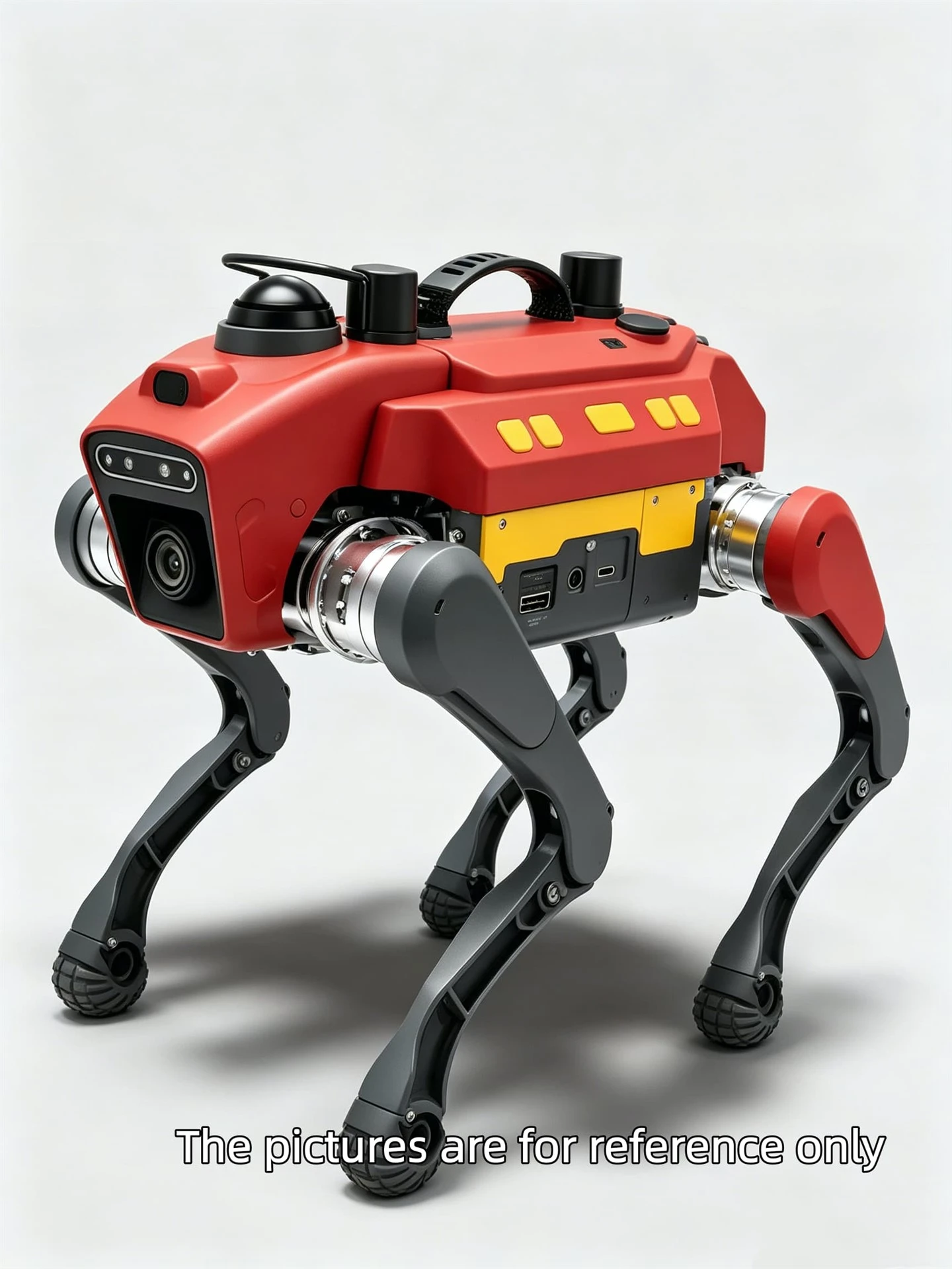
Wait, do they ever get stuck? Yeah, occasionally. Like, if a tool is left out in a corridor that’s not supposed to be there, or if a pipe is sticking out a little more than the blueprints said. But their movement system is smart enough to recognize when they can’t get past an obstacle, and they send a signal back to the control room saying, “Hey, there’s something here I can’t navigate—send a human or re-route me.” We’ve added a little “detour” feature where they can scan the surrounding area to see if there’s a alternate path, which we learned from the Oil & Gas inspection robots (they deal with random pipe valves all the time). And if you want to see exactly how our nuclear-specific model works (including its navigation), check this out: Autonomous Robotic Dog for Nuclear Facility Inspection. That’s the one we supply to plants across the country, so it’s tailored for this exact environment.
Let me give you a quick real example. Last month, we deployed three of our nuclear robotic dogs at a power plant during their scheduled refueling outage. The plant was full of workers, equipment, and temporary barriers—so navigating was tricky. The robotic dogs used their LiDAR and SLAM to map out a path from the control room to the reactor auxiliary building, avoiding temporary barriers and random tool carts. They moved at a steady pace (not too fast, so they didn’t miss any inspection points) and stopped exactly at 47 different checkpoints, taking radiation, temperature, and vibration data. The whole time, they didn’t need a human to guide them—just a weekly check-in to make sure their battery was good. That’s the kind of movement tech that makes these robots so valuable.
So to wrap this up, the movement of a nuclear power plant inspection robotic dog isn’t just “four legs moving forward.” It’s a combination of rugged, radiation-hardened hardware, smart autonomy (LiDAR, SLAM, force sensors), customization for the tight, uneven, high-radiation nuclear environment, and fail-safes to keep them moving when things go a little wrong. It’s way different from the robots you see on TikTok, because it’s built for a place where every move matters—safety, precision, and reliability are non-negotiable.
If you’re a plant manager or someone looking to upgrade your inspection setup, these robots are a game-changer for safety and efficiency. We’ve spent years refining their movement specifically for nuclear facilities, so you don’t have to settle for a one-size-fits-all industrial robot. If you want to learn more about how these robots can fit your plant’s needs, reach out to us for a chat. No pushy sales stuff, just actual info about how we design and build these things to move where humans can’t, safely.
References
- Autonomous Quadruped Robot for Oil & Gas Pipeline Inspection
- Intelligent Inspection Quadruped Robot For Security & Industrial Inspection
- Autonomous Robotic Dog for Patrol & Inspection
- Autonomous Robotic Dog for Nuclear Facility Inspection
- Smart Wheeled-Legged Inspection Robot For Industrial Inspection


