


Hey there! I'm a supplier of Passenger Aircraft Cabin Placards, and today I want to dig into a question that often pops up: Do Passenger Aircraft Cabin Placards have a specific size requirement?
First off, let's understand why size might matter in the world of aircraft cabin placards. These little signs are super important. They give passengers crucial info about safety, like how to use emergency exits, where the life vests are, and what to do in case of an emergency. They also provide practical details, such as no-smoking rules and seatbelt instructions.
So, do they have a specific size? The short answer is yes, but it's a bit more complicated than just a one - size - fits - all deal.
The aviation industry is highly regulated, and for good reason. Safety is the number one priority, and placards play a big part in ensuring that passengers can quickly and easily understand important information. Regulatory bodies like the Federal Aviation Administration (FAA) in the United States and the European Union Aviation Safety Agency (EASA) have set guidelines regarding the size of cabin placards.
These guidelines are based on a few key factors. One of the most important is visibility. Placards need to be big enough to be seen clearly from a reasonable distance. For example, a placard near an emergency exit should be visible from anywhere in the vicinity of that exit. If it's too small, passengers might not be able to read it in a stressful situation, which could put their lives at risk.
Another factor is legibility. The text and symbols on the placards need to be large enough to be read easily. This means that not only the overall size of the placard matters but also the size of the individual characters. Regulatory standards specify minimum font sizes to ensure that people with normal eyesight can read the placards without straining.
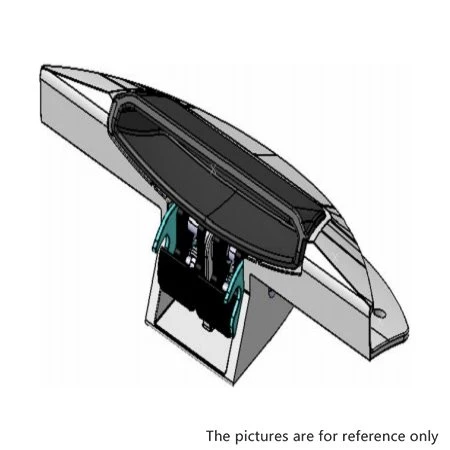
Let's take a look at some specific examples. For a placard that shows the location of a Cabin Overhead Stowage Compartment Door Lock, it needs to be placed in a visible spot near the compartment. The size of this placard will depend on how far away passengers are likely to be when they need to see it. If it's in a narrow aisle, a smaller placard might be sufficient, but if it's in a larger cabin area, it will need to be bigger.
Similarly, placards related to Airliner Ceiling and Cockpit Interiors Components also have size requirements. These placards are often used for maintenance and safety information. Mechanics need to be able to read them clearly when working on the components, so they need to be large enough to be legible up close and from different angles.
The Air Conditioning Duct Strap placards are another example. These placards might provide information about the proper installation or maintenance of the duct straps. They need to be sized appropriately so that technicians can quickly understand the instructions.
As a supplier of Passenger Aircraft Cabin Placards, I have to make sure that all the products I offer meet these regulatory requirements. This means doing a lot of research and testing. We work closely with experts in the aviation industry to ensure that our placards are the right size and meet all the necessary standards.
We also have to take into account the different types of aircraft. Different planes have different cabin layouts and dimensions. A small regional jet will have a different cabin environment compared to a large international airliner. So, the size of the placards might need to be adjusted accordingly. For example, in a smaller aircraft, the available space for placards might be limited, but we still have to make sure they are visible and legible.
In addition to regulatory requirements, there are also practical considerations. Airlines want to make their cabins look aesthetically pleasing, and placards need to fit in with the overall design. We work with airlines to create placards that not only meet the size and safety requirements but also look good in the cabin. This might involve using modern materials and designs that blend in with the interior decor.
Now, you might be wondering how we determine the exact size of a placard for a specific application. We start by looking at the regulatory guidelines. Then, we consider the location of the placard in the cabin, the distance from which it needs to be visible, and the amount of information that needs to be conveyed. We use computer - aided design (CAD) software to create mock - ups and test different sizes and layouts. We also conduct real - world tests in aircraft cabins to make sure that the placards work as intended.
As a supplier, I'm always looking for ways to improve our products. We stay up - to - date with the latest regulatory changes and industry trends. We invest in new technologies to make our placards more durable, easier to read, and more visually appealing.
If you're an airline or an aviation maintenance company looking for high - quality Passenger Aircraft Cabin Placards, we'd love to talk to you. We have a wide range of products that meet all the regulatory requirements and can be customized to fit your specific needs. Whether you need placards for a small regional aircraft or a large international airliner, we've got you covered. Contact us to start a conversation about your requirements and how we can help you ensure the safety and comfort of your passengers.

References
- Federal Aviation Administration (FAA) regulations
- European Union Aviation Safety Agency (EASA) guidelines
- Industry research on aircraft cabin safety and visibility


