

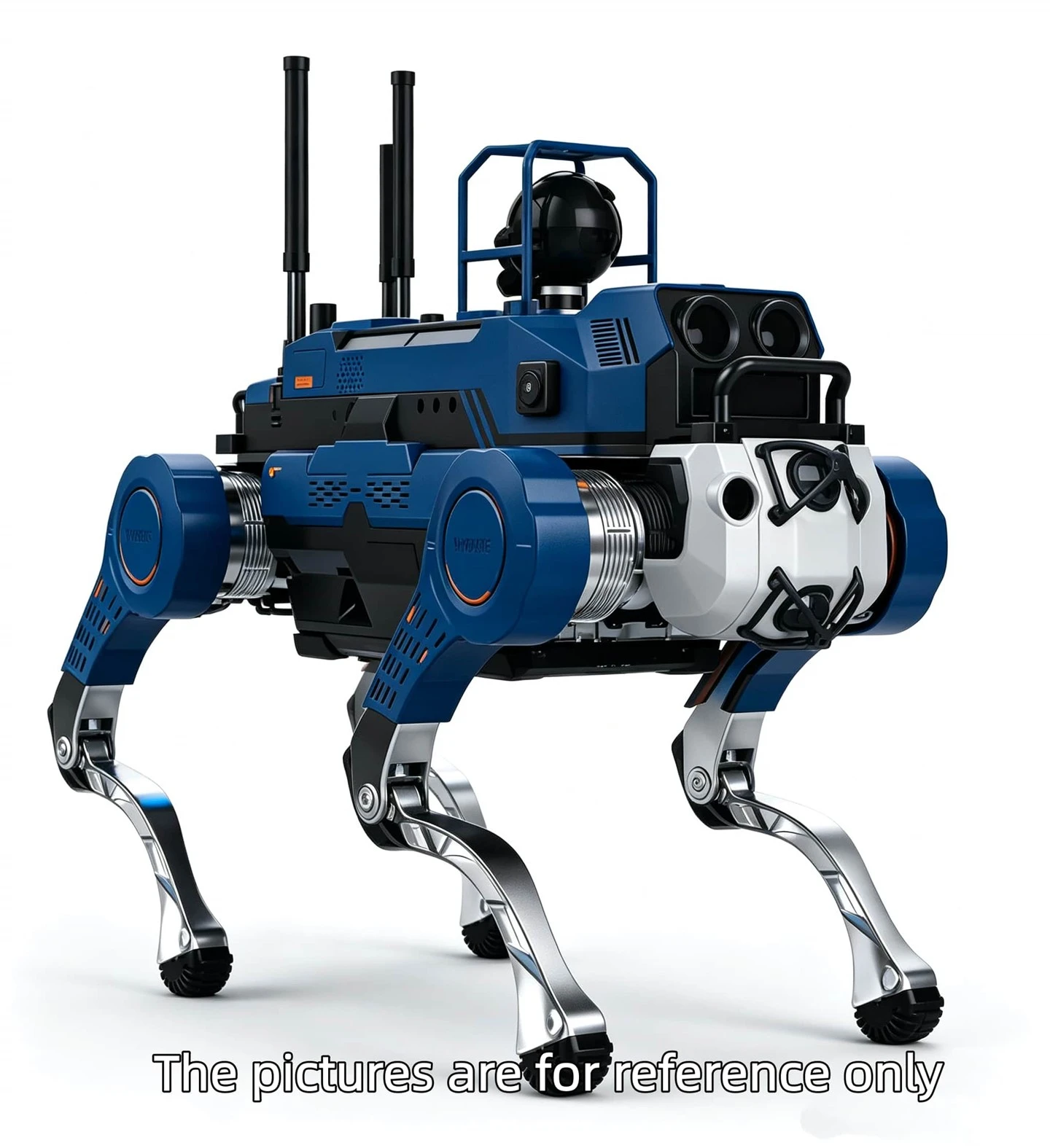
Intelligent Quadruped Robot for Complex Rescue Environments
The A31 Pioneer is an intelligent rescue quadruped robot designed to support emergency teams in environments that are difficult, unstable, or potentially dangerous for personnel.
Combining quadruped mobility with 3D LiDAR, panoramic vision, thermal imaging, infrared sensing, gas detection, and AI-powered perception, the robot can collect information from complex environments while reducing the need for rescuers to enter hazardous areas immediately.
Its modular design also allows the platform to be configured for different emergency scenarios, including earthquake response, chemical incidents, wildfire support, tunnel rescue, and urban disaster operations.
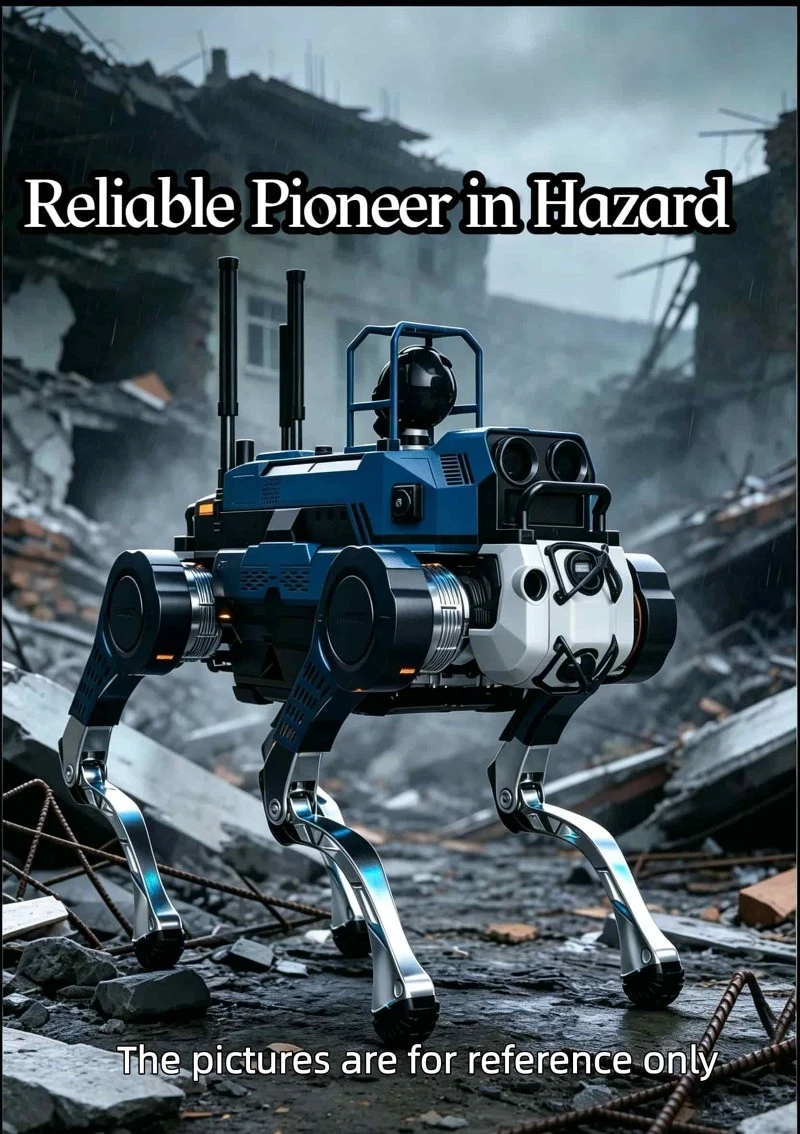
Key Features
Multi-Dimensional Perception and Intelligent Life Detection
The A31 Pioneer integrates multiple sensing technologies to provide a broader view of the surrounding environment.
Its perception system can combine:
3D LiDAR
Panoramic vision
Visible-light imaging
Thermal imaging
Infrared sensing
Gas detection
Temperature and humidity sensing
This multi-dimensional sensing capability helps emergency teams obtain environmental information and identify potential hazards before entering a difficult area.
AI-Powered Recognition and Multi-Target Tracking
AI-based perception supports the recognition and tracking of relevant objects and targets in the robot's operating environment.
This can help rescue teams monitor changing conditions and improve situational awareness during emergency operations.
Intelligent Following and Obstacle Avoidance
The quadruped platform is designed to follow personnel while navigating around dynamic obstacles.
This capability can support coordinated operations between rescue personnel and the robot, allowing the platform to accompany teams while carrying out sensing, monitoring, and information-gathering tasks.
Modular Design for Different Missions
Rescue environments vary considerably from one incident to another.
The A31 Pioneer uses a modular approach so that different payloads or mission equipment can be configured according to operational requirements.
This makes the platform adaptable to different emergency response scenarios rather than limiting it to a single type of rescue operation.

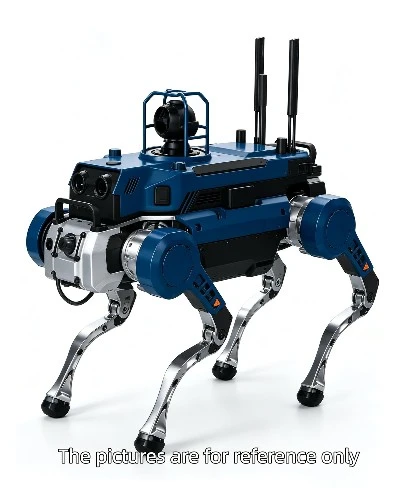


Product Parameters
Mechanical Parameters
Dimensions (Standing): 1000mm(L)*470mm(M)*865mm(H) Weight: 65Kg
Battery & Endurance
Operating Time: ≥1.5h
Capacity Battery: 22.4Ah
Auto Charging: Supported
Performance Parameters
Max Speed: Up to 3.5 m/s
Max Speed Angle: ≥30° Stair
Climbing Height: ≥16cm
Protection Rating: IP65
Terrain Adaptability: Suitable for stairs, grass, mud, rubble, gravel, and more
Communication Range: ≥ 500 m (line-of-sight); extendable via communication relay
Sensor Configuration
Computing Module: High-performance computing module
Audio Module: Speaker and microphone
Communication Module: 4G / 5G / Wi-Fi / radio Sensors: 3D LiDAR, triple-spectrum gimbal (visible light + infrared + thermal), gas sensors, temperature & humidity sensors, panoramic cameras
Function List
Video Acquisition: Equipped with an electro-optical gimbal supporting visible light and infrared imaging; enables stable video capture and real-time transmission
Target Recognition: Supports AI-based object recognition and multi-target tracking; capable of identifying specific targets such as humans and vehicles
Gas Detection: Detects ≥ 6 types of gases (e.g., O₂, CO, H₂S, combustible gases; customizable)
Temperature & Humidity Detection: Temperature response time ≤ 30 s (at 1 m/s airflow); humidity response time ≤ 10 s (at 1 m/s airflow) Voice Interaction: Supports remote two-way communication
Auxiliary Lighting: Provides illumination in low-light or dark environments
Audio-Visual Alarm: Emits sound and light warning signals during operation
Anti-Collision: Supports 360° obstacle avoidance and bypass in remote control mode; provides collision risk alerts
Autonomous Following: Capable of following designated personnel; maintains stable tracking even with temporary occlusion; supports obstacle avoidance during following
Autonomous Obstacle Avoidance: Supported
Controller
Controller Spec: 329 mm (L) × 223 mm (W) × 102 mm (H); 10.1-inch display; resolution 1920 × 1200
Others
Others: Equipped with high-quality industrial-grade components such as switches, indicators, and potentiometers to ensure environmental adaptability and durability; internal wiring uses high-temperature-resistant cables
Customization is feasible according to your requests!

Typical Rescue Tasks
The A31 Pioneer can support emergency teams with tasks such as:
Environmental condition monitoring
Thermal and visual inspection
Potential life detection
Gas and hazardous-environment detection
Structural condition observation
Remote reconnaissance
Multi-target tracking
Information collection in inaccessible areas
Support for rescue teams operating in complex terrain
The robot is intended to act as an information and operational support platform rather than replace professional rescue personnel.
Application Scenarios
Earthquake Disaster Response
Collapsed buildings and rubble can create unstable surfaces and difficult access conditions. The quadruped robot can enter rubble-covered areas to collect visual, thermal, LiDAR, and environmental information before or alongside human intervention.
Chemical Hazard Environments
Chemical accident sites may involve toxic, hazardous, flammable, or otherwise unsafe conditions. With environmental sensing capabilities and remote operation, the robot can help teams investigate conditions while reducing unnecessary personnel exposure.
Wildfire Support Operations
Rugged terrain, smoke, heat, and limited visibility can make wildfire response difficult. Thermal and visual sensing can provide additional information for monitoring the surrounding environment and supporting emergency teams.
Urban Complex Rescue
Shopping centers, residential buildings, and other urban structures can contain smoke, debris, narrow passages, and multiple obstacles. The robot can assist with remote reconnaissance and environmental assessment in complicated indoor environments.
Tunnel and Underground Rescue
Tunnels, mine shafts, and other underground environments may contain narrow passages, poor visibility, gas hazards, and difficult terrain. The A31 Pioneer can provide remote sensing and reconnaissance support before personnel move deeper into the area.


Why Use a Rescue Quadruped Robot?
Traditional rescue operations often require personnel to enter an unknown environment before sufficient information is available. This can increase operational risk and make it difficult to understand conditions beyond the immediate working area.
A quadruped robot provides an additional layer between rescue teams and hazardous environments.
With its combination of mobility, multi-sensor perception, AI-assisted recognition, and modular payload configuration, the A31 Pioneer can help teams:
Gather information before entering hazardous areas
Monitor difficult-to-access locations
Detect environmental changes
Improve situational awareness
Reduce unnecessary exposure to hazardous conditions
Adapt the same robotic platform to different emergency missions
FAQ
What is the A31 Pioneer rescue quadruped robot?
The A31 Pioneer is an intelligent quadruped robot designed for emergency response and rescue support. It combines all-terrain quadruped mobility with multi-dimensional sensing and modular mission capabilities.
What sensors can the A31 Pioneer use?
The platform is designed to integrate 3D LiDAR, panoramic vision, visible-light imaging, thermal imaging, infrared sensing, gas detection, and temperature and humidity sensing.
Can the robot detect people?
The A31 Pioneer supports intelligent life detection and AI-powered recognition capabilities. Its visual and sensing systems can assist rescue teams in identifying potential targets in complex environments.
Can it operate in hazardous environments?
The robot is designed to support operations in challenging environments such as chemical incident areas, disaster zones, tunnels, and wildfire-related scenarios. Actual deployment conditions should be evaluated according to the specific robot configuration and site requirements.
Can the robot follow rescue personnel?
Yes. Intelligent following and dynamic obstacle avoidance are among the platform's designed capabilities, supporting coordinated operations between the robot and rescue personnel.
Can the A31 Pioneer be customized for different rescue missions?
The platform uses a modular design that allows mission-specific equipment and payloads to be configured for different applications, such as earthquake response, chemical incidents, wildfire support, and underground rescue.
Is the A31 Pioneer intended to replace rescue personnel?
No. The robot is designed as a support platform for emergency teams. Its primary role is to provide remote perception, reconnaissance, monitoring, and operational assistance in environments where direct human access may be difficult or hazardous.
Check Related Robotic Solutions!
Fire Monitor Quadruped Robot Emergency Support Quadruped Robot
Tracked Robots for CBRN Disaster Response Intelligent Inspection Quadruped Robot
Request a Quote
Looking for a quadruped robot for disaster response, hazardous-environment reconnaissance, or emergency rescue support?
Astral Route can provide product information and help match the appropriate robotic platform and sensor configuration to your application.
Contact us to discuss your rescue robot requirements!
Hot Tags: a31 pioneer rescue quadruped robot, China a31 pioneer rescue quadruped robot manufacturers, suppliers, factory, Robotic Dog for Avalanche Rescue, Robotic Dog for Collapsed Building Rescue, Robotic Dog for Emergency Rescue, Robotic Dog for Firefighting, Robotic Dog for NBC Scenarios Detection, robotic dog for search and rescue


