Radiation safety is often associated with measuring dose rates and monitoring worker exposure. In many industrial and nuclear environments, however, there is another risk that can be less visible and just as important: radioactive contamination.
A work area may have relatively low external radiation levels while radioactive material is present on tools, equipment, floors, protective clothing, or workers' hands.
This creates a different type of safety challenge.
Instead of asking only, "How much radiation is present here?", radiation protection teams also need to ask, "Where is radioactive material present, and is it spreading?"
That is where surface contamination monitoring becomes essential.
For nuclear facilities, radioactive material handling operations, laboratories, decommissioning projects, and certain industrial maintenance activities, contamination monitoring provides a practical way to identify radioactive material before it moves beyond controlled areas.
What Is Surface Contamination?
Surface contamination occurs when radioactive material is deposited on the surface of an object, piece of equipment, clothing, skin, or working area.
It may result from:
Maintenance of radioactive systems
Leakage or spills
Handling of contaminated components
Decontamination activities
Radioactive waste operations
Nuclear facility outages
Accidental transfer between work areas
Contamination can be fixed or loose.
Fixed contamination remains attached to a surface, while loose contamination can be transferred through physical contact.
Loose contamination presents a particular concern because it can move from one location to another.
A contaminated tool can transfer material to another work area. Contaminated gloves can spread radioactive material to equipment or personal belongings.
Without effective monitoring, these transfers may go unnoticed.
Surface Contamination Is Different From External Radiation Exposure
One of the most important concepts in radiation protection is the distinction between external exposure and radioactive contamination.
A worker standing near a radiation source may receive external radiation without becoming contaminated.
Contamination is different.
If radioactive material enters the body through:
Inhalation
Ingestion
Absorption through wounds
the worker may experience internal exposure.
This is why surface contamination control is an important complement to personal dosimetry.
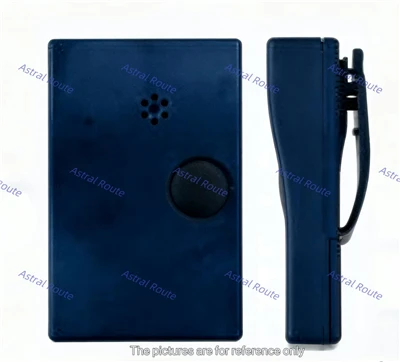
An electronic personal dosimeter can show how much external radiation a worker has received.
It cannot, by itself, determine whether radioactive material has been transferred onto the worker's clothing, hands, equipment, or working area.
Different risks require different monitoring methods.
Why Contamination Can Spread Quickly During Maintenance
Maintenance and shutdown activities can create particularly challenging contamination-control conditions.
During nuclear facility outages, for example, workers may remove components, open systems, replace piping, or perform repairs in areas where radioactive material may be present.
The work environment changes continuously.
Tools and personnel move between locations. Temporary work areas are established. Large numbers of contractors may enter controlled zones.
Even when radiation levels are well controlled, radioactive contamination can potentially spread through routine movement.
Regular surface contamination surveys help identify these problems early.
Contamination Monitoring During Nuclear Outages
Nuclear maintenance outages are a particularly important application.
During an outage, activities may include:
Equipment inspection
Component replacement
Piping maintenance
Decontamination
Waste handling
Reactor auxiliary system maintenance
Radiation protection teams need to know whether radioactive material is present on surfaces before equipment or personnel leave controlled areas.
Contamination monitoring may be used around:
Work areas
Equipment surfaces
Tools
Protective clothing
Exit points
Temporary storage locations
Early detection helps prevent contaminated materials from being transferred into cleaner areas.
Preventing Cross-Contamination
One of the primary objectives of surface contamination monitoring is to prevent cross-contamination.
Imagine a maintenance worker using a tool inside a controlled area.
The tool may become contaminated during the task. If it is removed from the area without proper monitoring, radioactive material could potentially be transferred elsewhere.
The same principle applies to protective clothing, containers, equipment, and other materials.
A well-designed monitoring program creates checkpoints where contamination can be identified before materials or personnel move into uncontrolled areas.
This simple concept can prevent much more complicated cleanup operations later.
Why Surface Contamination Monitoring Matters for Workers
Worker protection is not limited to measuring external dose.
When loose radioactive material is present, workers may potentially carry contamination on:
Gloves
Footwear
Protective clothing
Tools
Equipment
If contamination is not detected, it may eventually reach the skin or become airborne.
Monitoring helps radiation protection personnel determine whether additional controls are needed, such as:
Decontamination
Changes in protective clothing
Restricted access
Additional respiratory protection
Work-area cleanup
The earlier contamination is identified, the easier it is usually to control.
Contamination Monitoring and Regulatory Compliance
Radiation protection programs are expected to demonstrate effective control of radioactive materials.
Depending on the facility and applicable regulations, organizations may need documented procedures covering:
Contamination surveys
Personnel monitoring
Equipment monitoring
Decontamination
Radioactive waste handling
Controlled-area access
Reliable contamination monitoring equipment supports these procedures by providing measurable evidence of conditions in the workplace.
For nuclear operators and contractors, this documentation can become particularly important during inspections and audits.
Why General Radiation Survey Meters May Not Be Enough
A common misconception is that one radiation detector can handle every radiation safety task.
That is rarely the case.
Radiation survey meters are primarily designed to measure radiation fields or dose rates.
Surface contamination monitors are designed for a different purpose: identifying radioactive material deposited on surfaces.
The detector configuration, sensitivity, measurement geometry, and operating method may therefore differ significantly.
Choosing equipment according to the actual radiation protection task is essential.
A facility dealing with contamination risks should not assume that a general-purpose dose-rate meter provides sufficient contamination monitoring capability.
Alpha, Beta, and Gamma Contamination
Surface contamination may involve different types of radioactive emissions.
Alpha contamination is particularly challenging because alpha particles have very short ranges and can be stopped easily by air or common materials.
Beta contamination can travel farther but is still relatively limited compared with gamma radiation.
Gamma-emitting contamination can often be detected from greater distances.
For this reason, contamination monitoring equipment needs to be selected according to the radionuclides and radiation types expected in the facility.
The right detector depends on the application rather than simply the maximum measurement range.
The Role of Monitoring at Controlled-Area Exit Points
Exit monitoring is one of the most recognizable applications of contamination detection.
Before workers leave a controlled area, monitoring can help determine whether radioactive material has been transferred onto:
Hands
Feet
Clothing
Personal equipment
Depending on the facility, personnel may be required to undergo specific contamination checks before entering unrestricted areas.
These controls create a barrier between potentially contaminated work environments and the rest of the facility.
They also provide an opportunity to identify contamination before it spreads.
Surface Contamination Monitoring in Decommissioning
Decommissioning projects create another major demand for contamination monitoring.
As old nuclear facilities are dismantled, workers may encounter radioactive materials in areas that have been inaccessible for many years.
Conditions can vary significantly from one location to another.
Surface surveys help teams identify contaminated materials and determine appropriate handling procedures.
Monitoring may continue throughout:
Equipment dismantling
Material sorting
Decontamination
Waste packaging
Site clearance
For long-term decommissioning projects, reliable contamination monitoring can become an essential part of the overall radiation protection program.
Portable Monitoring Provides Greater Flexibility
Fixed monitoring systems have an important role in controlled facilities, but portable contamination monitors provide additional flexibility.
Radiation protection personnel can move portable instruments directly to:
Temporary work areas
Maintenance locations
Equipment storage zones
Waste handling areas
Decontamination stations
This is particularly useful when contamination conditions change frequently.
Instead of bringing every item back to a laboratory or permanent monitoring station, field personnel can perform preliminary checks directly where the work is taking place.
That can save time and help identify problems earlier.
Old Monitoring Equipment Can Create Additional Risks
As with other radiation detection equipment, contamination monitors require regular maintenance, performance verification, and calibration.
Older equipment may experience:
Detector sensitivity degradation
Battery problems
Display failures
Alarm problems
Difficulties obtaining spare parts
Outdated data-recording capabilities
A device that still powers on is not necessarily a device that provides reliable contamination measurements.
Radiation protection teams should evaluate instrument performance regularly rather than relying solely on equipment age or appearance.
Building a Layered Radiation Protection Program
Surface contamination monitoring should not replace personal dosimetry or area radiation monitoring.
The strongest radiation protection programs use multiple layers.
These may include:
Personal monitoring
Electronic personal dosimeters and other dosimetry systems track worker exposure.
Area monitoring
Survey meters and fixed radiation monitors identify radiation fields and changing dose rates.
Contamination monitoring
Surface contamination monitors identify radioactive material deposited on surfaces or personnel.
Specialized monitoring
Dedicated instruments may be required for neutron radiation, tritium, or other specific hazards.
Each layer addresses a different question.
Together, they provide a more complete picture of the radiation environment.
The Growing Need for Specialized Contamination Monitoring
As nuclear power generation expands and more facilities enter maintenance, modernization, and decommissioning phases, the need for practical contamination monitoring is unlikely to disappear.
At the same time, new applications-including advanced nuclear technologies and fusion-related research-are creating increasingly specialized radiation protection requirements.
For facility operators, the challenge is not simply acquiring more instruments.
It is selecting monitoring equipment that matches the actual hazards, work processes, and regulatory requirements of each application.
Astral Route provides radiation monitoring solutions for industrial and nuclear applications, including surface contamination monitors, electronic personal dosimeters, neutron dosimeters, portable radiation monitoring equipment, and tritium monitoring solutions.
The objective is to help radiation protection teams detect hazards earlier, maintain better control of contaminated areas, and support safer day-to-day operations.
See customized solutions for you at https://www.astralroutetech.com/radiation-dosimeter/radiation-dosimeter-for-radioactive-materials/
FAQ: Surface Contamination Monitoring
What is surface contamination monitoring?
Surface contamination monitoring is the process of detecting and measuring radioactive material deposited on surfaces, equipment, clothing, or other objects.
Why is contamination monitoring different from dose-rate monitoring?
Dose-rate monitoring measures the radiation field at a location, while contamination monitoring focuses on radioactive material deposited on a surface or object.
Can a personal dosimeter detect radioactive contamination?
A personal dosimeter primarily measures an individual's radiation exposure. It is not a substitute for dedicated surface or personnel contamination monitoring.
Where are surface contamination monitors commonly used?
They are commonly used in nuclear facilities, radioactive material laboratories, decommissioning projects, maintenance areas, waste handling operations, and controlled-area exit points.
Why is loose contamination a concern?
Loose radioactive material can be transferred from one surface to another and may potentially enter the body through inhalation, ingestion, or other pathways.
How often should contamination surveys be performed?
The appropriate frequency depends on the facility, radionuclides, work activities, regulatory requirements, and potential contamination pathways. Higher-risk operations generally require more frequent monitoring.
Final Thoughts
Radiation safety is not only about measuring how much radiation is present.
It is also about controlling where radioactive material goes.
A facility can have effective dose monitoring and still face contamination risks if radioactive material is allowed to spread through tools, equipment, clothing, or personnel.
Surface contamination monitoring provides an important layer of protection by identifying radioactive material before it moves beyond controlled areas.
For nuclear maintenance, decommissioning, radioactive material handling, and other specialized industrial applications, reliable contamination monitoring can help reduce worker risk, limit cross-contamination, support regulatory compliance, and prevent small contamination events from becoming larger operational problems.