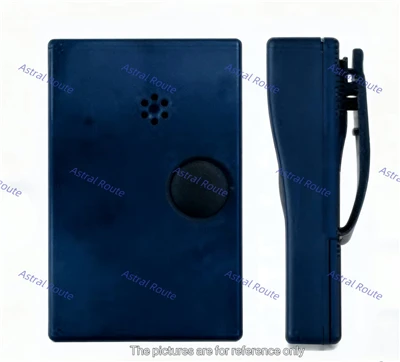
Across the Commonwealth of Independent States (CIS), radiation safety remains an important concern for nuclear facilities, uranium-related industries, oil and gas operations, and industrial inspection contractors. These sectors rely on radiation-based technologies, radioactive materials, and non-destructive testing (NDT) to maintain equipment integrity and operational reliability.
Yet many organizations face a persistent challenge: how can they maintain reliable radiation protection while managing aging equipment, demanding maintenance schedules, and increasingly rigorous documentation requirements?
For buyers, the issue goes beyond purchasing a radiation detector. They need monitoring equipment that fits their applications, supports established safety procedures, and remains practical to operate in demanding industrial environments.
Why Radiation Safety Matters Across CIS Industries
The region's industrial landscape is diverse. Kazakhstan has significant uranium mining and nuclear-sector expertise, Belarus and Russia operate established nuclear infrastructure, and countries such as Uzbekistan are developing their nuclear safety capabilities. Other regional industries also rely on radiation monitoring for medical, research, and industrial applications.
These activities create several practical requirements:
Monitoring occupational radiation exposure
Detecting elevated radiation levels during maintenance
Controlling radioactive contamination
Supporting emergency preparedness
Maintaining calibration and inspection records
Regional cooperation on radiation safety is also receiving attention. In 2025, representatives of CIS member states met in Tashkent to discuss the peaceful use of atomic energy and nuclear safety cooperation.
For equipment buyers, this highlights the importance of reliable instruments that can support established radiation protection programs.
Challenge 1: Aging Monitoring Equipment and Uncertain Performance
Some industrial facilities continue to use radiation detection instruments purchased many years ago. Although an older device may still power on, its condition, calibration status, alarm performance, and availability of spare parts all deserve careful evaluation.
An unreliable survey meter can complicate radiation boundary checks. A personal dosimeter without real-time alarms provides less immediate feedback to workers. Missing calibration records can also delay equipment approval for a project.
Before replacing equipment, buyers should assess:
Whether the instrument meets current application requirements
Calibration and maintenance history
Detector condition and measurement performance
Battery life and alarm functionality
Availability of technical support and replacement parts
For contractors working across multiple industrial sites, standardizing equipment can simplify training, maintenance, and inventory management.
Challenge 2: Radiation Risks During Industrial Radiography
Industrial radiography remains important for examining welds, pipelines, pressure vessels, and other critical components. In oil and gas facilities, refineries, and pipeline projects, RT inspections may need to fit within tight maintenance windows.
The challenge is that radiation work often takes place near other ongoing activities. Poor communication, inadequate boundary control, or incorrect survey readings can expose personnel who are not involved in the inspection.
A practical radiation monitoring program may include electronic personal dosimeters for individual exposure monitoring and portable radiation survey meters for checking dose rates around controlled areas.
Electronic dosimeters with configurable alarms can alert workers when preset dose or dose-rate thresholds are reached. However, they do not replace source-control procedures, appropriate shielding, radiation surveys, or trained radiation safety personnel.
For NDT contractors, selecting suitable monitoring equipment helps strengthen day-to-day exposure management without adding unnecessary complexity to field operations.
Challenge 3: Nuclear Maintenance Requires More Than Dose Measurement
Nuclear facilities need different monitoring capabilities for different radiation hazards.
A personal dosimeter is used to assess an individual's external radiation exposure. A survey meter measures radiation fields. A surface contamination monitor checks for radioactive material on surfaces or equipment. Specialized neutron instruments are required where neutron radiation presents a relevant exposure hazard.
Using one instrument for every task is not an effective approach.
Before procurement, nuclear maintenance teams should identify the radiation types involved, required measurement ranges, environmental conditions, calibration arrangements, and reporting requirements.
For facilities handling tritium, specialized tritium monitoring equipment may also be necessary. Buyers should verify that the instrument is suitable for the specific form of tritium and the intended measurement method, rather than assuming that a general-purpose radiation detector can perform every monitoring task.
Challenge 4: Compliance and Calibration Delays
A monitoring instrument is useful only when its performance is suitable for the intended task.
Out-of-date calibration, incomplete documentation, or equipment that fails pre-use checks can delay site mobilization and create uncertainty during audits.
These problems are particularly disruptive during refinery shutdowns, nuclear maintenance campaigns, and large industrial inspection projects.
Procurement teams should confirm calibration requirements with the relevant national regulator, facility operator, and project specification.
Requirements can differ between countries and applications, so a single regional rule should not be assumed to apply everywhere.
It is also worth considering the total cost of ownership. A lower purchase price may not offer good value if the instrument is difficult to calibrate, maintain, or repair.
Choosing the Right Radiation Monitoring Equipment
A useful purchasing decision starts with the actual hazard, not simply the product category.
Electronic personal dosimeters are suitable for monitoring individual external exposure, with real-time readings and alarms available on applicable models.
Portable radiation survey meters help radiation protection teams assess dose rates and verify controlled-area conditions.
Neutron dosimeters support personal monitoring where neutron exposure is relevant, such as certain nuclear and specialized radiation environments.
Surface contamination monitors help identify radioactive material on personnel, tools, and working surfaces.
Portable tritium monitors serve applications requiring specific tritium measurement capabilities.
Area radiation monitors provide fixed or continuous monitoring where the application and installation requirements call for them.
Buyers should compare measurement ranges, detector types, alarm settings, operating temperature, battery performance, calibration arrangements, and documentation. They should also confirm whether the equipment can meet the project's local certification and import requirements.
How Astral Route Supports Radiation Monitoring Needs
Astral Route supplies radiation detection equipment for industrial and nuclear-related applications. Its product range includes electronic personal radiation dosimeters, neutron dosimeters, surface contamination monitors, portable tritium monitors, and other radiation monitoring solutions.
For buyers in CIS markets, the first step is to match the equipment to the intended application. An NDT contractor may prioritize portable instruments and personal dose alarms, while a research facility or nuclear operator may require specialized contamination or neutron monitoring.
Astral Route can help prospective buyers review their application requirements and identify suitable equipment options. Final selection should be based on the required technical specifications, local regulatory acceptance, calibration arrangements, and operating conditions.
For distributors and procurement teams, providing these details at the quotation stage can help avoid unsuitable configurations and unnecessary delays.
See customized solutions here https://www.astralroutetech.com/radiation-dosimeter/
FAQ
What radiation monitoring equipment do industrial NDT contractors need?
Requirements depend on the work and local regulations. Common equipment includes personal dosimeters and portable survey meters, supported by appropriate source-control procedures and radiation safety training.
Are electronic personal dosimeters better than passive badges?
They serve different purposes. Electronic dosimeters provide immediate dose information and may offer alarms. Passive dosimeters provide cumulative dose records after processing. Some radiation protection programs use both.
When is a neutron dosimeter necessary?
Neutron dosimetry is relevant when workers may be exposed to neutron radiation. The need depends on the facility, radiation sources, and workplace assessment.
Can one radiation detector measure gamma rays, neutrons, and tritium?
Not necessarily. Different radiation types and measurement objectives may require different detectors and measurement methods. Buyers should confirm the instrument's stated capabilities before ordering.
What should CIS buyers check before purchasing radiation monitoring equipment?
Confirm the application, required measurement range, calibration and documentation requirements, environmental conditions, local regulatory acceptance, delivery arrangements, and after-sales support.
Final Thoughts
Radiation safety across CIS industries depends on more than meeting a checklist. It requires dependable instruments, appropriate monitoring methods, and a clear understanding of the hazards present in each workplace.
For nuclear operators, industrial inspection contractors, research organizations, and equipment distributors, reviewing aging monitoring systems and choosing application-specific instruments can improve operational readiness and support worker protection.
If your organization is sourcing radiation detection equipment for nuclear maintenance, industrial radiography, contamination control, or specialized monitoring, Astral Route welcomes inquiries about your application and technical requirements.