

Nuclear medicine departments face a radiation safety challenge that is easy to underestimate.
Unlike conventional diagnostic imaging, nuclear medicine involves the use of radioactive materials that can be administered to patients or handled directly by medical staff. This means workers may face not only external radiation exposure, but also the risk of radioactive contamination and, in some situations, internal exposure.
The working environment can become particularly demanding when patient volumes are high. Radiopharmaceuticals must be prepared, measured, transported, administered, and sometimes handled again during patient care. A small spill, damaged vial, incorrect handling procedure, or equipment malfunction can create a radiation safety problem within seconds.
For hospitals, the consequences extend beyond worker exposure. A contamination event may interrupt clinical operations, require decontamination, trigger an investigation, and create additional regulatory pressure.
This is why radiation monitoring in nuclear medicine needs to be treated as an operational safety function-not simply a compliance exercise.
Nuclear Medicine Involves More Than External Radiation
A personal dosimeter is essential for monitoring occupational exposure, but it does not tell the whole story.
Nuclear medicine departments work with unsealed radioactive sources. Depending on the procedure, radioactive material may be present in:
Vials and syringes
Radiopharmaceutical preparation areas
Injection rooms
Patient rooms
Waste containers
Contaminated clothing or gloves
Work surfaces and equipment
The International Atomic Energy Agency recommends that workplace monitoring in nuclear medicine address both external exposure and contamination. It also identifies the need for systematic monitoring of work surfaces, tools, equipment, protective clothing, shoes, and other relevant areas.
That distinction matters.
A worker can have a relatively low external dose while still becoming contaminated by radioactive material.
Where Do the Biggest Radiation Risks Occur?
The highest-risk situations are not necessarily the most dramatic ones.
Routine activities can create repeated exposure opportunities.
Radiopharmaceutical Preparation
Technologists and pharmacists may spend considerable time preparing and dispensing radioactive materials.
The main concerns include:
Repeated handling of radioactive vials
Syringe preparation
Accidental spills
Splashing
Contaminated gloves
Increased extremity exposure
Good shielding, distance, appropriate tools, and efficient workflow all help reduce exposure.
Personal dosimetry provides another layer of protection by documenting the worker's external dose.
Radiopharmaceutical Administration
During injection, staff may work close to radioactive material and patients.
Even when the procedure is routine, unexpected events can occur-a leaking syringe, dropped vial, incorrect connection, or patient movement can rapidly change the exposure situation.
Real-time electronic dosimeters can provide immediate dose and dose-rate information, giving workers an additional warning mechanism during hands-on procedures.
Patient Care After Administration
Patients who have received radiopharmaceuticals can themselves become radiation sources.
This is particularly relevant in therapeutic nuclear medicine.
Staff may need to provide assistance while maintaining appropriate time, distance, and shielding practices. The radiation protection program therefore has to consider not only radioactive materials in the preparation area but also radioactive patients and associated waste.
Contamination Is a Different Problem
One of the most common misunderstandings in radiation protection is treating contamination and external exposure as the same issue.
They are not.
External radiation can often be controlled through time, distance, and shielding.
Contamination requires a different strategy.
Radioactive material can be transferred through:
Hands
Gloves
Shoes
Protective clothing
Medical equipment
Work surfaces
Patient belongings
Waste containers
Once contamination leaves the controlled area, the problem can become considerably harder to manage.
This is why contamination monitoring should be incorporated into routine workplace controls.
Why Surface Contamination Monitoring Matters?
A surface contamination monitor helps radiation protection personnel determine whether radioactive material is present on a surface or item.
It can be used for checking:
Workbenches
Floors
Equipment
Tools
Protective clothing
Shoes
Waste areas
Exit points from controlled areas
The objective is not simply to detect contamination after an incident.
Routine monitoring helps identify small contamination events before they become larger ones.
For example, finding contamination on a glove is manageable. Finding the same contamination later on a door handle, computer keyboard, trolley, or shared piece of equipment creates a much wider decontamination problem.
I-131 Creates an Additional Challenge
Radioiodine deserves particular attention in nuclear medicine. Iodine-131 is widely used for therapeutic applications, including treatment involving thyroid disease.
Because radioiodine can present an internal exposure risk when volatile forms are handled, appropriate monitoring strategies may be required for workers who routinely handle significant activities.
The IAEA has highlighted the potential for occupational internal exposure from radioiodine and the role of workplace and individual monitoring in managing that risk.
Thailand provides a useful regional example. Research presented through the IAEA has examined occupational exposure to I-131 among nuclear medicine personnel in Thailand, including internal dosimetry approaches such as thyroid measurements and aerosol sampling.
This illustrates an important point: radiation monitoring in nuclear medicine cannot always stop at an external personal dosimeter.
The appropriate monitoring program should be based on the radionuclides used, quantities handled, work procedures, and assessed exposure pathways.
A Recent Incident Shows Why Procedures Matter
The issue is not theoretical.
In 2026, a nuclear medicine department in France reported an incident involving contamination of a radiographer during preparation for a PET examination.
A malfunction during radioactive dose preparation resulted in radioactive solution splashing onto the worker's forehead and glasses. The worker did not immediately initiate decontamination or notify the radiation protection officer.
The subsequent assessment found a localized skin dose exceeding the statutory annual skin exposure limit. Corrective actions included strengthening radiation protection procedures and emphasizing appropriate PPE and contamination response.
The lesson is important for hospitals everywhere.
Advanced equipment can reduce risk, but it cannot replace proper procedures.
Monitoring, training, PPE, equipment maintenance, and a clear response plan have to work together.
Aging Radiation Monitoring Equipment Can Become a Weak Point
Many hospitals continue using radiation detection equipment purchased years ago.
An older instrument may still turn on and display a reading, but that does not automatically mean it remains suitable for current operations.
Potential problems include:
Calibration delays
Detector aging
Battery deterioration
Unreliable alarms
Difficult-to-source spare parts
Outdated data interfaces
Limited documentation capabilities
For a nuclear medicine department, an unreliable survey meter can create uncertainty precisely when radiation information is needed most.
Regular calibration and performance verification should therefore be treated as part of the radiation safety program.
The IAEA specifically notes that survey meters and contamination monitors should be appropriately calibrated, with workplace monitoring documented as part of the nuclear medicine facility's radiation protection program.
Real-Time Monitoring Adds Another Layer of Protection
Passive dosimeters remain valuable for recording occupational dose, but they provide retrospective information.
Electronic Personal Dosimeters offer a different capability.
During active work, they can provide:
Real-time dose readings
Dose-rate information
Audible alarms
Visual warnings
Vibration alerts
Immediate exposure awareness
This can be particularly useful when workers are handling radiopharmaceuticals or working close to radioactive patients.
The purpose is not to encourage staff to rely on alarms instead of safe working procedures. The alarm is an additional safeguard when actual conditions differ from expectations.
Building a Layered Monitoring Program
A strong nuclear medicine radiation protection program rarely depends on one instrument.
Different devices answer different questions.
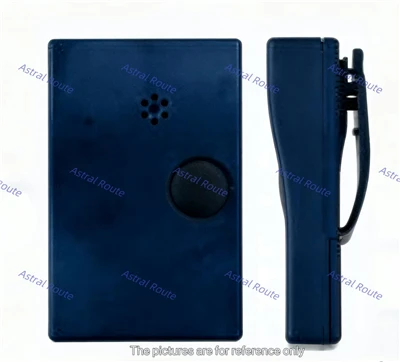
Electronic personal dosimeter:
How much external radiation is this worker receiving?
Portable radiation survey meter:
What is the radiation level in this location?
Surface contamination monitor:
Is radioactive material present on this person, surface, or item?
Specialized radionuclide monitoring:
Is there a potential internal exposure pathway that requires additional assessment?
This layered approach provides much better situational awareness.
What Hospitals Should Consider When Selecting Equipment
When evaluating radiation monitoring equipment for a nuclear medicine department, purchasing teams should look beyond price.
Important considerations include:
Detector type
Radiation sensitivity
Measurement range
Alarm functions
Portability
Battery life
Ease of cleaning and decontamination
Environmental durability
Calibration requirements
Data recording capability
Local service and technical support
The right equipment depends heavily on the hospital's specific radioactive materials and procedures.
A device designed for general gamma surveys may not address contamination monitoring or specialized radionuclide requirements.
Supporting Modern Nuclear Medicine Radiation Safety
Astral Route provides a range of radiation monitoring equipment for applications involving radioactive materials and occupational radiation protection.
The product range includes electronic personal radiation dosimeters, personal neutron dosimeters, surface contamination monitors, portable tritium monitors, and other radiation detection solutions.
For nuclear medicine departments, these technologies can support different layers of a radiation safety program-from individual dose monitoring to workplace contamination checks and specialized radioactive material monitoring.
The important consideration is not simply adding more instruments. It is matching each monitoring function to the actual radiation risks present in the department.
See customized solutions for you at
https://www.astralroutetech.com/radiation-dosimeter/radiation-dosimeter-for-radioactive-materials/
FAQ
Why is radiation monitoring important in nuclear medicine?
Nuclear medicine involves radioactive materials that can create both external radiation exposure and contamination risks. Monitoring helps identify and control these hazards.
Is a personal dosimeter enough for nuclear medicine workers?
Not always. Personal dosimeters monitor individual external exposure, while contamination monitors and other specialized systems may be required to address contamination or internal exposure risks.
Where should contamination monitoring be performed?
Depending on the facility's radiation protection program, monitoring may cover work surfaces, equipment, protective clothing, shoes, waste areas, and controlled-area exit points.
Why is I-131 a special concern?
I-131 can create both external exposure and internal contamination risks, particularly when significant quantities or potentially volatile forms are handled. Monitoring requirements should be determined through a facility-specific radiation protection assessment.
Do electronic dosimeters replace passive dosimeters?
Not necessarily. Electronic and passive dosimeters can serve complementary purposes. Electronic devices provide immediate exposure information and alarms, while passive systems can provide cumulative dose records through established dosimetry programs.
How often should radiation monitoring equipment be calibrated?
Calibration intervals depend on the equipment, applicable regulations, manufacturer requirements, and facility procedures. Monitoring instruments should remain within their required calibration status before being relied upon for radiation protection decisions.
Final Thoughts
Radiation safety in nuclear medicine is more complicated than simply measuring worker dose.
Radioactive materials are handled directly. Patients may become radiation sources after administration. Contamination can occur through spills, equipment, clothing, and routine handling. Some radionuclides, such as I-131, can also introduce internal exposure pathways that require specialized consideration.
The most effective approach is therefore layered: personal dosimetry, workplace radiation surveys, contamination monitoring, appropriate PPE, calibration control, training, and clear response procedures should work together.
For hospitals expanding nuclear medicine services or upgrading aging radiation monitoring infrastructure, the question is not simply whether existing equipment still works. The more important question is whether it provides the information staff need to manage today's radiation risks safely and confidently.