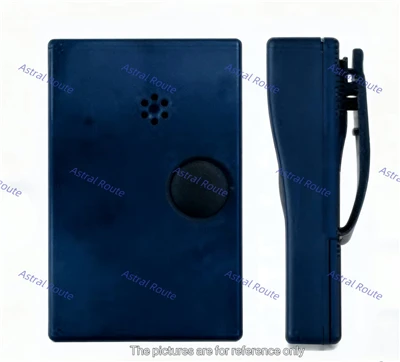
Choosing the wrong radiation dosimeter can create a safety gap that is difficult to identify during routine operations. A device may display readings, pass basic function checks, and appear suitable for field use, yet still fail to provide the information needed to assess a worker's actual radiation exposure.
This is a practical concern for NDT contractors, nuclear facility operators, radiation safety officers, and industrial procurement teams. Different workplaces present different radiation hazards, and a dosimeter designed primarily for gamma radiation may not adequately assess neutron exposure.
Understanding the difference between a neutron dosimeter and a gamma dosimeter is therefore essential before purchasing radiation monitoring equipment.
What Is the Difference Between a Neutron Dosimeter and a Gamma Dosimeter?
The main difference lies in the type of radiation each instrument is designed to measure.
A gamma dosimeter measures personal exposure to gamma radiation, a form of high-energy electromagnetic radiation. Depending on its design, a suitable device may also measure X-rays or other photon radiation.
A neutron dosimeter is designed to assess exposure to neutron radiation. Neutrons interact with matter differently from photons, so neutron dosimetry requires specialized detector designs and calibration methods.
The two instruments are not automatically interchangeable.
For buyers, the important question is not simply which dosimeter is more advanced. It is which device is appropriate for the radiation field encountered by their workers.
Why Gamma Dosimeters Are Common in Industrial Radiography
Gamma radiography is widely used to inspect welds, pipelines, pressure vessels, and other critical industrial components.
During these operations, workers may use radioactive sources such as Iridium-192 or Selenium-75 to produce radiographic images.
Gamma dosimeters, including electronic personal dosimeters (EPDs) designed for the relevant photon energies, help monitor occupational exposure during these activities.
Depending on the model, electronic devices may provide:
Real-time cumulative dose readings
Dose-rate displays
Audible or visual alarms
Vibration alerts
Recorded exposure data
These features help RT operators recognize changing radiation conditions and respond according to established safety procedures.
For contractors working on refinery shutdowns, pipeline construction, and offshore maintenance, reliable personal dosimetry is an important part of radiation protection.
However, gamma monitoring alone is not sufficient when workers may also receive significant neutron exposure.
Why Neutron Dosimetry Requires a Different Approach
Neutron radiation presents a more technically demanding measurement challenge.
Unlike gamma photons, neutrons have no electric charge and interact with materials through nuclear reactions and other processes. Their biological effectiveness and detector response depend on factors including neutron energy.
A neutron dosimeter must therefore be suitable for the relevant neutron energy range and workplace conditions.
This matters in environments such as:
Nuclear reactors and associated maintenance facilities
Research laboratories using neutron sources
Certain nuclear material handling operations
Neutron-producing accelerators
Specialized industrial applications involving neutron sources
Neutron dosimeters may use technologies such as track detectors, albedo detectors, bubble detectors, or electronic neutron detection systems.
Each approach has limitations. A device's sensitivity, energy response, calibration conditions, and suitability for the intended application should be reviewed before procurement.
For nuclear facilities and specialist radiation contractors, selecting a neutron dosimeter based only on price or general specifications can leave important measurement requirements unresolved.
Can a Gamma Dosimeter Measure Neutron Radiation?
In general, a gamma-only dosimeter should not be relied upon to measure neutron dose.
Some instruments are designed to measure multiple radiation types, but buyers must verify that neutron measurement is explicitly supported and that the instrument is suitable for the expected radiation field.
This distinction becomes especially important in mixed radiation environments.
Neutrons and gamma rays may be present simultaneously, but their contributions to a worker's dose can vary substantially. A gamma reading cannot reliably be used as a substitute for a neutron dose measurement.
Where both types of radiation are relevant, the radiation protection program may require separate neutron and photon dosimetry or a validated multi-radiation system.
The final selection should be based on a qualified radiation protection assessment, not assumptions about detector compatibility.
Which Dosimeter Is Right for Your Industry?
Oil and Gas NDT Contractors
For conventional gamma radiography of pipeline welds and pressure equipment, an appropriately specified gamma electronic personal dosimeter is often relevant to routine operational monitoring.
Procurement teams should also consider portable radiation survey meters for checking dose rates and verifying controlled-area boundaries.
Neutron dosimetry is not automatically necessary for every RT project. It should be selected when the radiation assessment identifies a neutron exposure hazard.
Nuclear Power and Maintenance Facilities
Nuclear environments can involve more complex radiation fields, particularly around reactor systems and certain specialized operations.
Depending on the task, workers may require both neutron and photon dose assessment.
Procurement teams should consult the facility's radiation protection requirements before selecting personal monitoring equipment.
Research and Accelerator Facilities
Facilities using neutron sources or operating particle accelerators may require specialized neutron dosimeters.
The expected neutron energy spectrum, dose range, and measurement uncertainty should be considered alongside usability and data-recording requirements.
Five Questions to Ask Before Purchasing
Before comparing quotations, buyers should establish the actual monitoring requirements.
1. What radiation types are present?
Confirm whether the workplace involves gamma rays, X-rays, neutrons, or mixed radiation fields.
2. What dose and dose-rate ranges are expected?
The selected instrument must cover the anticipated operating conditions.
3. Is real-time alarming required?
Electronic dosimeters can provide immediate warnings when configured thresholds are exceeded, helping workers respond to abnormal conditions.
4. What calibration and compliance documentation is needed?
Confirm calibration requirements, traceability, applicable approvals, and acceptance criteria for the intended country and application.
5. Does the supplier support the actual application?
Ask for detector specifications, energy-response information, calibration details, and confirmation of the radiation types measured. Do not assume that a device supports neutron measurement simply because it is described as a radiation dosimeter.
How Astral Route Supports Radiation Monitoring Procurement
For international buyers, sourcing the right instrument involves more than comparing prices. The equipment must match the application, measurement requirements, and documentation expected by the end user.
Astral Route supplies radiation detection equipment for industrial and specialist applications, including electronic personal radiation dosimeters, neutron dosimeters, surface contamination monitors, and portable tritium monitors.
Buyers can explore the available product range at Astral Route Radiation Detection Equipment.
When requesting a quotation, provide details about the intended application, radiation types, required measurement range, alarm functions, and destination market. This information helps narrow down suitable options and reduces the risk of purchasing equipment that does not meet the project's needs.
FAQ
Is a neutron dosimeter better than a gamma dosimeter?
Neither is universally better. Each is designed for a different radiation measurement requirement. The appropriate choice depends on the radiation field and the worker's exposure risks.
Can one electronic dosimeter measure both neutron and gamma radiation?
Some specialized instruments or monitoring systems support both, but this capability must be confirmed from the manufacturer's specifications and validated for the intended application.
Do NDT contractors always need neutron dosimeters?
No. Conventional industrial gamma radiography does not automatically require neutron dosimetry. Additional monitoring should be based on the radiation hazards identified for the specific work.
Why is neutron dosimetry more complicated?
Neutron detector response depends strongly on neutron energy and other workplace conditions. Accurate dose assessment may require specialized instruments and application-specific evaluation.
What should buyers prioritize when comparing dosimeter prices?
Prioritize radiation type, measurement range, accuracy, energy response, alarm functions, calibration documentation, required approvals, and after-sales support. The lowest-priced device is not necessarily the most suitable choice.
Final Thoughts
The difference between a neutron dosimeter and a gamma dosimeter is not a minor technical detail. It directly affects whether a radiation monitoring program measures the hazards that workers may actually encounter.
For NDT contractors, gamma dosimeters are important tools for conventional radiographic testing. For nuclear facilities and other workplaces with neutron exposure, specialized neutron dosimetry may be necessary. Where both radiation types are present, the monitoring strategy must address both appropriately.
Before purchasing, confirm the radiation hazards, verify the instrument specifications, and make sure the selected equipment meets the site's safety and regulatory requirements.