Industrial inspection is essential to keeping pipelines, refineries, petrochemical plants, and offshore facilities operating safely. Across Southeast Asia, non-destructive testing (NDT) contractors face growing pressure to complete inspections on schedule while meeting demanding safety and quality requirements.
Radiographic testing (RT) presents a particular challenge. Gamma rays and X-rays can reveal internal weld defects that cannot be identified through visual inspection alone, but ionizing radiation also creates risks for workers and anyone who enters a controlled area unintentionally.
For contractors in Malaysia, Indonesia, Thailand, Vietnam, Singapore, and the Philippines, the challenge is not simply obtaining a radiation detector. It is choosing equipment that supports reliable field measurements, effective exposure management, and the documentation required by clients and relevant authorities.
Why Radiation Monitoring Matters in Southeast Asian NDT Projects
NDT teams often work under conditions that leave little room for mistakes. A refinery turnaround may require inspections across several units within a limited outage window. Pipeline radiography may take place far from permanent facilities. Offshore contractors must coordinate inspections around production activities and restricted workspaces.
These environments create several recurring challenges.
1. Radiation Risks in Busy Industrial Work Areas
During pipeline radiography or refinery maintenance, RT crews may work near welders, mechanical contractors, maintenance personnel, and other inspection teams.
If communication fails or radiation exclusion zones are not properly controlled, personnel may enter areas where radiographic exposures are taking place.
Radiation cannot be detected by human senses. Teams therefore need suitable survey instruments, effective barriers, clear warning systems, and established procedures to verify that work areas remain controlled.
2. Downtime Makes Equipment Reliability a Commercial Issue
During shutdown projects, an equipment failure can affect more than the inspection team. Delayed weld acceptance may hold up repairs, pressure testing, or the return of equipment to service.
An aging survey meter with calibration problems, a dosimeter with a failing battery, or an unreliable alarm can create uncertainty at precisely the moment when dependable measurements matter most.
Contractors should verify calibration status, conduct functional checks before deployment, and maintain suitable backup equipment. Replacing unreliable instruments before a major project can be more practical than dealing with avoidable interruptions on site.
3. Compliance Documentation Can Delay Mobilization
Industrial clients may request radiation safety procedures, personnel dosimetry records, calibration certificates, and equipment inventories before allowing contractors to begin work.
Requirements differ by country, facility, and contract. A system accepted for one project should not automatically be assumed to satisfy another client's requirements.
For procurement teams, confirming documentation requirements before ordering equipment helps prevent problems during site qualification and mobilization.
Which Radiation Monitoring Equipment Do NDT Contractors Need?
The right equipment depends on the radiation hazards involved. A single detector cannot reliably address every radiation protection requirement.
Electronic Personal Dosimeters for RT Operators
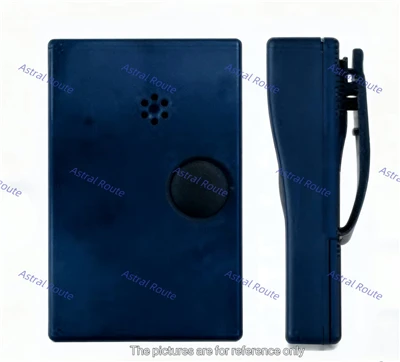
Electronic personal dosimeters provide immediate information about an individual's accumulated dose and, depending on the model, dose rate. Configurable audible, visual, or vibration alarms can alert workers when preset thresholds are reached.
They are particularly useful during pipeline radiography, refinery shutdowns, offshore inspections, and night-shift operations, where workers need timely feedback while performing their duties.
Electronic dosimeters should be selected according to the radiation types present, required measurement range, alarm settings, calibration requirements, and applicable site procedures. They can complement passive dosimeters used for official occupational dose records; they do not automatically replace them.
Portable Radiation Survey Meters for Field Control
Portable survey meters help radiation safety personnel measure dose rates around work areas, assess exclusion-zone boundaries, and conduct surveys following radiographic exposures.
For contractors operating across multiple sites, portability, battery performance, readability, measurement range, and ease of operation are important purchasing considerations.
Most importantly, instruments must be appropriate for the radiation type and measurement task. A personal dosimeter and a survey meter serve different purposes and should not be treated as interchangeable.
Neutron Dosimeters for Specialized Applications
Most conventional industrial gamma radiography work does not automatically require neutron monitoring. However, neutron dosimeters are important in facilities where neutron exposure is a credible hazard, including certain nuclear and research environments.
Buyers should assess the actual radiation field before selecting a neutron-capable instrument rather than paying for capabilities that their application does not require.
Contamination and Tritium Monitoring
Some radiation-related operations also require specialized monitoring beyond external dose measurement.
Surface contamination monitors can help identify radioactive material on tools, equipment, clothing, and work surfaces. Portable tritium monitors are intended for applications involving tritium, including assessment of airborne tritium where relevant.
These instruments address different hazards from routine gamma dose-rate surveys. Their inclusion should be based on the materials handled and the facility's radiation protection assessment.
What Southeast Asian Buyers Should Check Before Purchasing
Price matters, especially when contractors need to equip multiple crews. But the lowest purchase price does not necessarily mean the lowest operating cost.
Before requesting a quotation, procurement managers and radiation safety officers should confirm:
Radiation type: Does the application involve gamma, X-ray, neutron, contamination, or tritium monitoring?
Measurement performance: Are the measurement range, sensitivity, accuracy, and response characteristics suitable for the task?
Alarm functions: Can users configure the necessary dose or dose-rate thresholds?
Calibration and documentation: Can the supplier provide the required technical documents and calibration information?
Field conditions: Is the instrument suitable for the site's temperature, humidity, dust, and handling conditions?
Maintenance and support: Are spare parts, servicing arrangements, and technical assistance available?
Project requirements: Does the equipment meet the end user's specifications and applicable local requirements?
For buyers managing projects across several Southeast Asian countries, it is also worth confirming local import requirements and whether the equipment documentation will be accepted by the relevant client or authority.
How Astral Route Supports Radiation Monitoring Requirements
Astral Route supplies radiation detection equipment for industrial and specialized radiation safety applications. Its product range includes electronic personal radiation dosimeters, personal neutron dosimeters, surface contamination monitors, and portable tritium monitoring equipment.
These solutions can support different monitoring needs across industrial inspection, radioactive material handling, nuclear-related applications, and other environments where appropriate radiation detection is required.
For NDT contractors, the most effective purchasing approach starts with the actual job: the radiation source, inspection environment, required measurements, and client's safety procedures. From there, equipment can be selected to match the application rather than relying on a generic package.
Explore the range at Astral Route Radiation Detection Equipment: https://www.astralroutetech.com/radiation-dosimeter/.
FAQ
What radiation monitoring equipment is commonly used in industrial radiography?
Typical equipment includes personal dosimeters for individual exposure monitoring and portable radiation survey meters for assessing radiation levels around work areas. Additional instruments depend on the hazards present.
Are electronic personal dosimeters enough for RT operations?
Not by themselves. Electronic dosimeters monitor the wearer's exposure, while survey meters are used for area measurements and operational radiation surveys. Both must be supported by appropriate procedures, training, and other required controls.
Why is calibration important for NDT radiation monitoring equipment?
Calibration helps verify that instruments measure radiation within specified performance tolerances. Overdue or unsuitable instruments can undermine safety decisions and create compliance problems.
Do all NDT contractors need neutron dosimeters?
No. Neutron monitoring is necessary when the work environment presents a credible neutron radiation hazard. Conventional gamma radiography alone does not automatically create this requirement.
What should Southeast Asian buyers prioritize when selecting a supplier?
Buyers should evaluate technical suitability, calibration documentation, reliability, delivery arrangements, maintenance support, and compatibility with local project requirements-not price alone.
Make Radiation Monitoring Part of Project Planning
For Southeast Asian NDT contractors, radiation monitoring is both a worker-protection priority and an important part of project readiness.
Poor equipment selection, overdue calibration, and unreliable alarms can introduce avoidable uncertainty into inspections that already operate under tight schedules.
Choosing suitable dosimeters and survey instruments, checking documentation before mobilization, and maintaining equipment properly can help contractors strengthen radiation safety without creating unnecessary operational complexity.
If your team is preparing for pipeline radiography, a refinery turnaround, offshore inspection, or another radiation-related project, visit Astral Route's radiation monitoring equipment range to review the available options and discuss your application requirements.