In industrial environments where radiation is part of daily operations, a delayed warning can be just as dangerous as having no warning at all.
Radiographic testing teams, nuclear maintenance workers, and personnel handling radioactive materials often operate under strict safety procedures. Yet many organizations still depend heavily on passive dosimetry systems that only reveal accumulated radiation exposure after a monitoring period has ended.
This creates a practical problem: workers may receive unnecessary radiation exposure without knowing it until much later.
For companies operating refineries, offshore platforms, pipeline projects, and nuclear facilities, real-time radiation dosimetry offers a more proactive approach. It gives workers immediate information about their exposure and helps safety managers make better decisions before minor problems develop into serious incidents.
Why Traditional Radiation Monitoring Is Not Always Enough
Passive dosimeters, including film badges and TLD or OSL badges, remain important tools for occupational dose assessment. They provide cumulative exposure records and support long-term radiation protection programs.
However, they have one major limitation: they do not normally provide immediate feedback during work.
Consider an RT operator performing gamma radiography during a refinery shutdown. The inspection schedule is tight, several maintenance teams are working nearby, and the radiation-controlled area changes as inspection locations move.
If the operator receives an unexpected increase in exposure, a passive badge cannot provide an immediate warning.
By the time the dose report becomes available, the exposure has already occurred.
This is where electronic personal dosimeters provide an important operational advantage.
How Real-Time Radiation Dosimetry Works
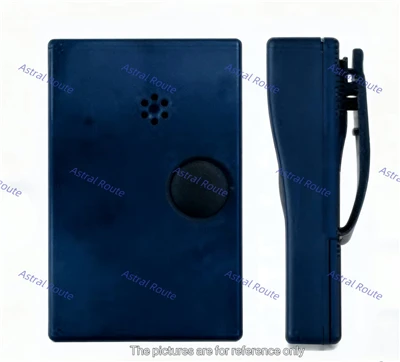
Electronic Personal Dosimeters (EPDs) use radiation-sensitive detectors and electronic processing systems to measure an individual's radiation exposure during operation.
Depending on the instrument, key functions may include:
Real-time cumulative dose display
Instantaneous dose-rate measurement
Configurable dose alarms
Dose-rate alarms
Audible, visual, or vibration alerts
Stored exposure records
When a predefined alarm threshold is reached, the device alerts the wearer.
Workers can then follow established radiation protection procedures, such as moving away from the radiation field, stopping the task, or notifying the Radiation Safety Officer (RSO).
The main benefit is timely information. Instead of relying exclusively on exposure records collected after a shift, workers have access to immediate feedback while performing their duties.
Reducing Radiation Exposure During Industrial Radiography
Industrial radiography is one of the clearest applications for real-time personal dosimetry.
RT contractors routinely inspect pipeline welds, pressure vessels, storage tanks, and process piping using X-ray or gamma-ray sources.
These operations create several challenges:
Workers must maintain safe distances from radiation sources.
Exclusion zones must be properly established and controlled.
Other contractors may be working nearby.
Inspection locations can change throughout a shift.
Unexpected equipment or communication problems may occur.
An electronic dosimeter with dose and dose-rate alarms provides an additional warning layer for RT personnel.
For example, during pipeline radiography, an operator may need to move between inspection positions or conduct radiation surveys around a temporary work area. Real-time dose information helps the operator remain aware of changing exposure conditions.
It does not replace survey meters, controlled-area procedures, or source-handling protocols. Instead, it complements them.
Preventing Costly Disruptions During Shutdown Projects
For refinery operators and NDT contractors, radiation safety problems can quickly become commercial problems.
Shutdown projects operate under compressed schedules. Delays in inspection can affect welding repairs, equipment acceptance, maintenance handovers, and the overall restart schedule.
A radiation incident may trigger:
Immediate suspension of affected work
Internal safety investigations
Regulatory reporting
Additional personnel assessments
Corrective actions and compliance reviews
Real-time dosimetry helps identify unusual exposure conditions earlier, allowing workers and supervisors to respond according to established procedures.
It also provides useful exposure information for planning work rotations and reviewing high-exposure tasks.
For contractors managing multiple RT crews, this can improve workforce dose management and reduce uncertainty during demanding projects.
Improving Night-Shift and Remote-Site Safety
Night-shift operations create additional challenges for radiation protection.
Fatigue, reduced visibility, smaller supervision teams, and communication difficulties can all affect worker awareness.
Remote pipeline inspection and offshore maintenance introduce further complications because access to replacement equipment and technical support may be limited.
An electronic personal dosimeter with reliable alarm functions gives workers an additional source of immediate feedback, even when direct supervision is less frequent.
For buyers evaluating equipment for these applications, battery endurance, display readability, alarm visibility, durability, and ease of operation deserve particular attention.
Supporting Radiation Compliance and Safety Documentation
Real-time dosimetry also helps organizations strengthen their radiation safety management.
Modern electronic instruments can retain exposure information for subsequent review, depending on their configuration and data-management capabilities.
This can support:
Individual dose tracking
Internal safety reviews
Exposure trend analysis
Investigation of abnormal events
Radiation protection documentation
However, electronic dosimeters should not automatically be treated as replacements for legally required passive dose monitoring. Regulatory requirements vary between countries and industries.
Many organizations use electronic dosimeters for operational monitoring alongside approved passive dosimetry services for official dose assessment.
Maintaining both functions provides a more complete approach to occupational radiation protection.
How to Choose the Right Electronic Dosimeter
Not every electronic dosimeter is suitable for every industrial application.
Before purchasing, buyers should evaluate several factors:
1. Radiation type and measurement range
Confirm whether the instrument is designed for the radiation types encountered in the workplace, such as X-rays and gamma rays. Neutron exposure requires appropriately designed neutron monitoring equipment.
2. Dose and dose-rate alarms
Check whether the device supports configurable alarm thresholds and whether audible, visual, and vibration alerts are available.
3. Measurement performance
Review the specified measurement range, energy response, accuracy, and relevant technical documentation.
4. Operating conditions
For offshore, pipeline, and refinery applications, battery life, portability, environmental protection, and resistance to everyday field conditions are important.
5. Calibration and compliance
Check calibration requirements, traceability, applicable certifications, and the availability of technical support.
A lower purchase price may not represent better value if the instrument cannot meet the project's monitoring and documentation requirements.
Radiation Monitoring Solutions for Industrial Buyers
For organizations upgrading their radiation protection programs, selecting equipment should start with actual workplace risks rather than simply comparing product specifications.
Astral Route supplies a range of radiation detection equipment for industrial and nuclear applications, including electronic personal radiation dosimeters, neutron dosimeters, portable radiation survey meters, surface contamination monitors, and portable tritium monitors.
Buyers can explore the available product range on the Astral Route Radiation Dosimeter and Monitoring Equipment page.
Whether the requirement involves industrial radiography, nuclear maintenance, radioactive material handling, or specialized contamination monitoring, matching the instrument to the application is essential for reliable radiation protection.
FAQ
What is real-time radiation dosimetry?
Real-time radiation dosimetry uses electronic personal dosimeters to measure and display an individual's radiation dose and, where supported, dose rate during work.
How does an electronic dosimeter reduce workplace risks?
It provides immediate exposure information and alarms when configured thresholds are exceeded, allowing workers to respond before unnecessary additional exposure occurs.
Can electronic dosimeters replace passive radiation badges?
Not necessarily. Electronic dosimeters provide operational feedback, while passive badges are commonly used for official cumulative dose assessment. Many radiation protection programs use both.
Which industries benefit most from real-time dosimetry?
Industrial radiography, oil and gas, petrochemical maintenance, nuclear power, offshore inspection, and radioactive material handling operations can all benefit.
What is the difference between a personal dosimeter and a radiation survey meter?
A personal dosimeter monitors an individual's radiation exposure. A survey meter measures radiation levels in the surrounding environment, helping assess radiation fields and establish controlled areas.
What should buyers check before purchasing electronic personal dosimeters?
Important considerations include radiation type, dose and dose-rate measurement ranges, alarm functions, accuracy, calibration requirements, battery life, and suitability for the working environment.
Final Thoughts
Radiation safety management should not depend entirely on information collected after work has been completed.
In industrial radiography and other radiation-related operations, real-time dosimetry provides workers with immediate exposure awareness, supports faster responses to abnormal conditions, and helps safety managers improve operational control.
For NDT contractors, refinery operators, and nuclear facility procurement teams, investing in suitable electronic personal dosimeters is a practical step toward reducing workplace risks and strengthening radiation protection programs.
As industrial projects become more demanding, the ability to monitor exposure as it happens is becoming an increasingly important part of responsible radiation safety management.