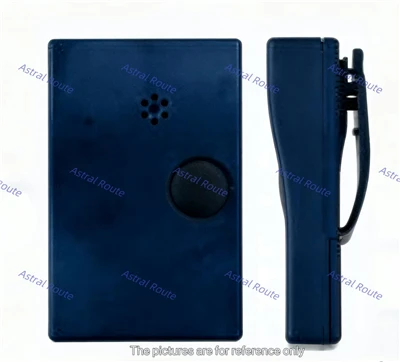
For radiation safety managers in Southeast Asia, buying radiation detection equipment is rarely just a matter of choosing the instrument with the highest sensitivity.
The real challenge is finding equipment that works reliably in tropical environments, fits local operating procedures, supports regulatory requirements, and can be deployed quickly across multiple sites.
This matters because radiation-related operations in Southeast Asia are becoming increasingly diverse. Industrial radiography is widely used in oil & gas, petrochemical, shipbuilding, power generation, and pipeline inspection.
At the same time, nuclear research, medical isotope applications, laboratories, and radioactive material handling require increasingly sophisticated radiation protection programs.
One area that deserves more attention is radioactive contamination monitoring.
Many organizations are familiar with personal dosimeters and portable radiation survey meters. Fewer give the same level of attention to surface contamination monitoring. Yet when radioactive material is transferred onto gloves, clothing, tools, equipment, or work surfaces, a conventional personal dosimeter may not detect the problem.
For buyers, this raises an important question:
Does your radiation monitoring program measure only radiation exposure, or can it also identify radioactive contamination before it spreads?
Why Southeast Asian Buyers Are Looking Beyond Basic Radiation Detection?
Radiation protection requirements vary between countries, but industrial buyers across Southeast Asia face several common challenges.
Projects often involve international EPC contractors, multinational clients, local NDT companies, and government regulators working within the same supply chain.
That creates pressure to demonstrate robust safety practices.
A contractor working on a refinery project in Malaysia, for example, may need to satisfy both local regulatory requirements and the HSE expectations of an international oil & gas operator.
Similarly, an equipment supplier supporting a nuclear research facility or medical isotope operation may need to demonstrate reliable calibration, documentation, detector performance, and after-sales support.
As a result, buyers are increasingly looking beyond the question of:
"Does this instrument detect radiation?"
They are asking:
"Can this instrument support our entire radiation safety workflow?"
Surface Contamination Is a Different Safety Problem
External radiation and radioactive contamination should not be treated as the same risk.
- A radiation survey meter measures radiation fields around a source.
- A personal dosimeter measures an individual's external radiation exposure.
- A surface contamination monitor looks for radioactive material deposited on a person, object, or surface.
This distinction is particularly important during maintenance and radioactive material handling.
A worker may receive a relatively low external dose but still have radioactive material on their gloves or protective clothing.
If that contamination is not detected before the worker leaves the controlled area, it can potentially be transferred to vehicles, offices, accommodation areas, tools, or other workers.
For safety managers, contamination monitoring closes an important gap.
What Southeast Asia Buyers Should Consider Before Purchasing
Equipment selection should start with the application rather than the product name.
Before purchasing a contamination monitor, buyers should define:
Which radionuclides need to be detected?
What types of surfaces will be monitored?
Will personnel be checked?
Will the instrument be used indoors or outdoors?
How frequently will it be transported?
What environmental conditions will it encounter?
Is portability important?
What calibration requirements apply?
What documentation will clients or regulators require?
A laboratory environment may prioritize detector sensitivity and measurement stability.
An offshore or industrial maintenance contractor may prioritize portability, battery life, durability, and simple field operation.
The best instrument is the one that matches the actual working environment.
Humidity and Heat Matter in Southeast Asia
One of the biggest practical differences between Southeast Asia and many temperate markets is the operating environment.
Countries such as Singapore, Malaysia, Indonesia, Thailand, Vietnam, and the Philippines experience high humidity and elevated temperatures for much of the year.
Industrial sites can add another layer of environmental stress through:
Dust
Oil and chemical exposure
Vibration
Salt air
Heavy rainfall
Frequent transportation between sites
For buyers, environmental specifications should therefore be part of the procurement process.
An instrument may perform well in a controlled laboratory but face very different conditions when transported between a coastal shipyard and a remote industrial site.
Durability is not a secondary feature for field users. It can directly affect equipment availability and project continuity.
Portability Is Critical for NDT Contractors
Many Southeast Asian NDT companies operate across multiple client locations.
A contractor may perform radiographic inspection at a refinery one week, move to a petrochemical facility the next, and then support a pipeline or shipyard project.
This makes portable monitoring equipment particularly valuable.
A practical field instrument should be:
Easy to carry
Quick to deploy
Simple to operate
Clearly readable
Suitable for repeated measurements
Capable of operating for an appropriate shift duration
For contractors, mobility can be just as important as laboratory-level measurement performance.
Refinery and Petrochemical Maintenance
Refineries and petrochemical facilities represent an important market for radiation monitoring in Southeast Asia.
During maintenance and turnaround projects, contractors may work around:
Process piping
Pressure vessels
Storage systems
Radiography areas
Radioactive sources
Contaminated components
Multiple contractors may operate simultaneously within a relatively small area.
Radiation monitoring therefore needs to support both worker protection and site coordination.
Contamination monitoring can be particularly useful when equipment, protective clothing, or tools move between controlled and uncontrolled areas.
Early detection can prevent a localized contamination event from becoming a much larger cleanup problem.
Shipyards and Offshore Projects
Southeast Asia is also a major shipbuilding and offshore engineering region.
Shipyards in countries such as Singapore, Vietnam, Indonesia, and the Philippines support complex fabrication and inspection activities.
Industrial radiography is commonly associated with weld inspection, while radiation safety management becomes increasingly important when multiple work teams operate simultaneously.
Offshore and marine environments introduce additional challenges.
Equipment may be exposed to:
Saltwater
High humidity
Mechanical vibration
Restricted working areas
Limited storage space
For buyers serving marine customers, portable and robust radiation monitoring equipment can provide significant operational advantages.
Nuclear Research and Medical Applications
The Southeast Asian market is not limited to industrial NDT.
Radiation detection is also relevant to:
Nuclear research centers
Universities
Medical isotope facilities
Nuclear medicine departments
Research laboratories
Radioactive waste management
These environments may have very different monitoring requirements from an industrial radiography contractor.
For example, personnel contamination checks may be important at controlled-area exits, while surface contamination monitoring may be required around laboratories or radioactive material handling areas.
Buyers should therefore evaluate equipment based on the specific radionuclides, surfaces, and workflows involved.
Total Cost of Ownership Matters More Than Purchase Price
For many Southeast Asian buyers, the lowest initial purchase price is attractive-but it should not be the only consideration.
The total cost of ownership can include:
Calibration
Preventive maintenance
Battery replacement
Spare parts
Repairs
Training
Shipping
Downtime
Technical support
A cheaper instrument that requires frequent servicing may ultimately cost more than a reliable system with better lifecycle support.
This is especially important for contractors whose monitoring equipment is used across multiple projects.
A failed instrument in the middle of an inspection campaign can create much greater costs than the original price difference between two devices.
Calibration and Documentation Should Be Part of the Buying Decision
Calibration is often treated as a post-purchase issue.
It should not be.
Before selecting equipment, buyers should understand:
How calibration is performed
Recommended calibration intervals
Required calibration standards
Availability of calibration services
Documentation provided with the instrument
Availability of technical support
For contractors working for major international clients, documentation can be just as important as measurement performance.
A well-maintained instrument with traceable records is much easier to include in an audited radiation safety program.
Buyers Should Think in Terms of a Complete Monitoring System
A contamination monitor should rarely be viewed in isolation.
Depending on the application, a Southeast Asian facility may need a combination of:
Electronic Personal Dosimeters
For real-time individual external dose monitoring.
Portable Radiation Survey Meters
For measuring radiation dose rates around work areas and sources.
Surface Contamination Monitors
For detecting radioactive material on personnel, equipment, and surfaces.
Neutron Dosimeters
For environments where neutron radiation may be present.
Tritium Monitoring Equipment
For applications involving tritium.
Area Radiation Monitors
For continuous monitoring of designated areas.
The combination depends on the radiation hazards present at the facility.
The objective is to create a monitoring program in which different instruments address different risks.
What International Project Owners Expect From Local Contractors
This is becoming increasingly important for Southeast Asian NDT companies.
Local contractors are often competing for projects managed by international EPC companies, refinery operators, energy companies, and engineering groups.
These clients may assess contractors on more than price and inspection capability.
They may also examine:
Radiation safety procedures
Personnel monitoring
Equipment calibration
Emergency response
Equipment condition
Documentation
HSE performance
For local contractors, investing in modern radiation monitoring equipment can therefore support both safety and commercial competitiveness.
It demonstrates that the company is prepared to work within the expectations of demanding international projects.
Why Local Support Can Be a Major Purchasing Factor?
For Southeast Asian buyers, product specifications are only one part of the equation.
After-sales support can become particularly important when equipment is deployed across several countries.
Buyers should consider whether the supplier can provide:
Technical consultation
Operating guidance
Calibration support
Spare parts
Troubleshooting
Product documentation
Response to field problems
The ability to obtain timely support can make a substantial difference during shutdowns, offshore campaigns, and other schedule-sensitive projects.
How Astral Route Fits Into the Regional Market?
Astral Route provides radiation detection solutions covering a range of industrial and nuclear applications.
Its product portfolio includes electronic personal dosimeters, neutron dosimeters, surface contamination monitors, portable tritium monitors, and other radiation detection equipment.
For Southeast Asian buyers, this broader product range can be useful when building a radiation monitoring program rather than purchasing individual instruments for isolated tasks.
Whether the application involves industrial radiography, refinery maintenance, nuclear research, radioactive material handling, or specialized monitoring, equipment selection can be matched to the specific radiation hazard and operating environment.
See customized solutions for you at https://www.astralroutetech.com/radiation-dosimeter/
FAQ: Radiation Contamination Monitoring in Southeast Asia
Is a contamination monitor necessary if workers already wear dosimeters?
A personal dosimeter and contamination monitor serve different purposes. Dosimeters primarily measure external radiation exposure, while contamination monitors identify radioactive material deposited on people, equipment, or surfaces.
Which Southeast Asian industries may need contamination monitoring?
Potential applications include nuclear research, medical isotope facilities, laboratories, radioactive material handling, industrial maintenance, oil & gas, petrochemical operations, and specialized NDT activities.
What should Malaysian or Indonesian buyers consider when choosing a contamination monitor?
In addition to detector performance, buyers should evaluate portability, environmental durability, battery life, calibration, documentation, technical support, and suitability for the radionuclides involved.
Is contamination monitoring useful during refinery shutdowns?
It can be useful where radioactive materials, contaminated components, or controlled radiation areas are involved. It can help identify contamination before it is transferred to clean areas.
Does Southeast Asia's climate affect radiation detection equipment?
High humidity, heat, rainfall, and coastal conditions can affect field equipment. Buyers should review the instrument's environmental specifications and intended operating conditions before procurement.
Should NDT contractors invest in multiple types of radiation detectors?
That depends on their applications. A contractor working exclusively with gamma radiography may have different requirements from a nuclear facility or organization handling radioactive materials. A risk-based assessment should determine which instruments are necessary.
A Practical Buying Perspective
For Southeast Asian organizations, radiation monitoring equipment should be viewed as part of the site's overall safety infrastructure-not simply another item on the procurement list.
The right system should answer three practical questions:
Can it detect the radiation hazard relevant to our operation?
Can our workers use it reliably in real working conditions?
Can we support its calibration, documentation, and maintenance over its service life?
If the answer to all three is yes, the equipment is much more likely to deliver value beyond the initial purchase.
As radiation-related industries continue to expand across Southeast Asia, buyers are likely to place greater emphasis on reliable, portable, and application-specific monitoring solutions.
For organizations reviewing their current radiation protection equipment, it may be worth looking beyond basic dose measurement and asking whether contamination monitoring should be part of the next equipment upgrade.