

Industrial inspection often takes place where precision and safety have to work together. In non-destructive testing (NDT), X-ray and gamma radiography allow inspectors to examine welds, pipelines, pressure vessels, castings, and other critical assets without damaging them.
At the same time, these applications can expose workers to ionizing radiation if work is not carefully planned and controlled. The IAEA notes that industrial radiography can involve difficult working conditions and that incidents have resulted in significant worker exposures.
AI, robotics, and connected radiation monitoring technologies are now creating new ways to manage this risk. Instead of relying only on workers to perform measurements and inspections manually, industrial operators can increasingly combine electronic dosimeters, radiation detectors, autonomous robots, cameras, and data analytics into a more connected radiation safety system.
Why Radiation Safety Is Still a Major Challenge in Industrial Inspection
Industrial radiography can take place in refineries, pipelines, shipyards, fabrication facilities, power plants, and construction sites. These environments can change rapidly, and inspection teams may need to work around complex structures, temporary exclusion zones, heavy equipment, and difficult access points.
Radiation safety therefore depends on more than simply having a detector available.
A practical radiation protection program may involve:
Personal radiation monitoring
Area radiation surveys
Dose-rate measurements
Controlled and restricted areas
Radiation alarms
Source control procedures
Worker training
Exposure records
Emergency response procedures
The IAEA's guidance for industrial radiography emphasizes the importance of a radiation protection program and clearly defined responsibilities for management, radiation protection officers, qualified experts, and workers.
Technology does not replace these fundamentals. Instead, AI and robotics can strengthen them by providing additional information and reducing the need for personnel to enter potentially hazardous areas.
Electronic Dosimeters Provide Real-Time Worker Feedback
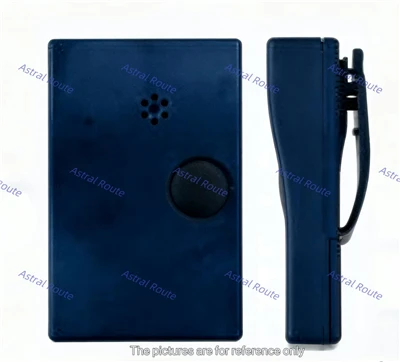
One of the most practical technologies in modern radiation safety is the electronic personal dosimeter.
Unlike passive dosimetry systems that generally require later processing, an electronic personal dosimeter can provide immediate information about dose and dose rate. Depending on the model, it can also provide audible, visual, or vibration alarms when predefined thresholds are reached.
This can be particularly valuable during industrial radiography. An operator may enter an inspection area expecting a certain radiation environment, but conditions can change because of source position, shielding configuration, equipment layout, or unexpected circumstances.
A real-time alarm gives the worker an immediate warning rather than relying entirely on a later review of accumulated exposure.
The importance of this capability has been demonstrated by real-world incidents.
In one IAEA-reported event involving X-ray radiography at Sellafield, electronic personal dosimeters went into alarm when radiographers entered an area with unexpectedly high dose rates. The workers retreated, and the investigation identified shortcomings in the safety arrangements.
Robotics Can Move Radiation Detection Away From People
The biggest contribution of robotics to radiation safety is not simply automation. It is distance.
When a radiation survey needs to be performed in a potentially hazardous area, sending a robotic platform instead of a person can reduce unnecessary exposure.
The concept has already been explored in nuclear and radiological applications. The IAEA has highlighted robotics as a way to limit radiation exposure to inspectors and reduce repetitive manual inspection tasks.
A mobile robot equipped with an appropriate radiation detector can potentially enter an area, collect measurements, transmit data, and return without requiring an operator to physically enter the same location.
Depending on the application, platforms may carry:
Gamma radiation detectors
X-ray detectors
Neutron detectors
Radiation spectrometers
Dosimeters
HD cameras
Thermal cameras
LiDAR sensors
This creates an important combination: radiation measurement plus environmental context.
AI Makes Radiation Data More Useful
Collecting radiation measurements is only the first step.
A modern industrial facility may generate large quantities of sensor data. The challenge is turning those measurements into useful information.
AI can help analyze patterns across radiation readings, location data, images, equipment status, and historical measurements.
For example, an intelligent monitoring system could help identify:
Unexpected increases in dose rate
Changes in radiation patterns
Locations requiring additional investigation
Repeated abnormal readings
Correlations between equipment operation and radiation levels This does not mean AI should independently make radiation protection decisions. Radiation safety remains subject to applicable regulations, procedures, qualified personnel, and professional judgment.
The value of AI is primarily in helping people process information faster and identify situations that deserve attention.
Robotic Inspection Can Improve Access to Difficult Areas
Industrial facilities often contain spaces that are difficult to inspect manually.
Examples include:
Confined process areas
Storage zones
Pipe corridors
Nuclear facility areas
Large industrial tanks
Damaged structures
Remote equipment areas
Robotics can provide access without immediately placing an inspector in the same environment. Research presented through the IAEA has explored robotic systems equipped with LiDAR, cameras, radiation dosimeters, and spectrometers for inspection applications. Such systems can associate radiation measurements with spatial information, creating a more detailed map of the inspected environment.
This is an important development because knowing that radiation exists somewhere is less useful than knowing exactly where elevated readings occur.
Quadruped Robots Are Expanding the Options
Traditional tracked and wheeled robots have long been used for hazardous-area inspection. More recently, quadruped robots are creating additional possibilities.
A robotic dog can navigate stairs, uneven surfaces, industrial walkways, and areas where wheeled platforms may have difficulty maintaining mobility.
With the right payload configuration, an industrial robotic dog can potentially combine:
Radiation monitoring
Visual inspection
Thermal imaging
LiDAR mapping
Remote communication
This makes the robot more than a radiation detector on wheels or legs. It becomes a mobile inspection platform capable of gathering multiple types of information during one mission.
However, radiation tolerance must be considered carefully. Not every commercial robotic dog is designed to operate in high-radiation environments. Electronic components can experience degradation under radiation exposure, a challenge also recognized in robotics research for nuclear applications.
AI and Robotics Support the ALARA Principle
Radiation protection is commonly guided by the principle of keeping exposures as low as reasonably achievable, or ALARA.
Robotics can support this principle by reducing the amount of time workers need to spend in radiation areas and increasing the distance between personnel and potential sources.
The technology can be particularly useful for preliminary surveys.
Instead of sending an inspector directly into an unfamiliar area, a robot could first collect visual and radiation information. Qualified personnel can then use those results to plan the next stage of the inspection.
This creates a layered approach to safety:
Remote assessment
Radiation measurement
Data analysis
Human review
Controlled inspection
Such an approach can be valuable when working conditions are uncertain.
Connected Radiation Monitoring Is the Next Step
The future of industrial radiation safety is unlikely to depend on a single device.
Instead, facilities are moving toward connected systems in which personal dosimeters, area monitors, mobile robots, inspection equipment, and centralized software work together.
The IAEA emphasizes that radiation monitoring involves not just measurement, but also interpretation, investigation, and reporting that can lead to corrective actions.
That is where connected technologies can make a real difference. A radiation safety manager could potentially see worker dose information, area measurements, robot inspection data, and historical trends from one monitoring environment.
See customized solutions for you at
https://www.astralroutetech.com/radiation-dosimeter/
https://www.astralroutetech.com/robotic-dog/
FAQ
How can AI improve radiation safety?
AI can help analyze large volumes of radiation and inspection data, identify unusual patterns, prioritize areas for investigation, and support faster decision-making by radiation safety professionals.
Can robots replace radiation safety personnel?
No. Robots are tools for reducing exposure and improving information collection. Radiation protection decisions still require qualified personnel, appropriate procedures, and compliance with applicable regulations.
Can a robotic dog detect radiation?
A robotic dog can carry a suitable radiation detector or spectrometer if the platform supports the required payload. The detector and robot must be selected according to the radiation type, measurement range, environment, and mission requirements.
Are robotic dogs suitable for high-radiation environments?
Not necessarily. Standard commercial robotic dogs may not be designed for high radiation fields. Radiation effects on electronics and other components must be evaluated before deployment.
What role do electronic personal dosimeters play?
Electronic personal dosimeters provide workers with real-time dose and dose-rate information and can provide alarms when configured thresholds are exceeded. They remain an important part of radiation protection in many industrial applications. (Nucleus)
Conclusion
AI and robotics are changing radiation safety by making industrial inspection more connected, measurable, and increasingly remote.
Electronic dosimeters can provide immediate information to workers. Mobile radiation detectors can survey areas without requiring personnel to enter them immediately. AI can help interpret large amounts of monitoring data, while robotic platforms can combine radiation measurements with visual and spatial information.
The goal is not to replace established radiation protection programs. It is to strengthen them.
For NDT contractors, energy companies, nuclear facilities, and other organizations working with radiation, the combination of real-time radiation monitoring, AI analytics, and robotic inspection offers a practical path toward reducing unnecessary exposure while improving inspection efficiency.
As industrial robotics and sensor technologies continue to develop, radiation safety is likely to become increasingly integrated with the broader digital inspection ecosystem.
The future industrial inspection team may not consist only of radiographers and safety officers-it may also include intelligent machines that can go first, measure the environment, and provide the information people need before entering potentially hazardous areas.