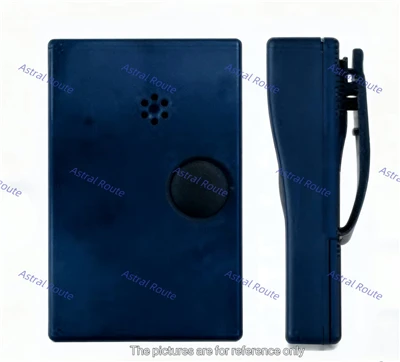
When radiation monitoring equipment fails to meet the demands of an industrial site, the consequences extend beyond a faulty reading. Inspection work may be delayed, safety teams may struggle to verify radiation boundaries, and facility managers may face difficulties demonstrating compliance during an audit.
This is a practical concern for NDT contractors, refinery operators, nuclear facilities, and companies handling radioactive materials. A portable radiation survey meter may be available for routine checks, but does that mean it can replace an area radiation monitor?
Not necessarily.
Both instruments play important roles in radiation protection, but they serve different operational purposes. Understanding the difference helps buyers select equipment that addresses actual site risks instead of investing in a system that leaves critical monitoring gaps.
What Is a Portable Radiation Survey Meter?
A portable radiation survey meter is a handheld instrument used to measure radiation levels at specific locations. Depending on its detector and configuration, it may also be designed to detect radioactive contamination on surfaces.
Its main advantage is mobility. Radiation protection personnel can carry the instrument around a facility, investigate suspected radiation hazards, and take measurements wherever needed.
Typical applications include:
Industrial radiography and pipeline weld inspection
Refinery shutdowns and maintenance work
Radiation surveys around radioactive sources
Nuclear facility inspections
Radiation checks before controlled-area access or re-entry
For example, after a gamma radiography exposure, trained personnel may use a suitable survey meter to verify radiation conditions and confirm that the source has returned to its shielded position.
The correct instrument must be selected for the radiation type, energy range, dose-rate range, and measurement task involved.
What Is an Area Radiation Monitor?
An area radiation monitor is designed to monitor radiation conditions at a designated location. Many systems are installed permanently and operate continuously, displaying radiation levels and triggering alarms when configured thresholds are exceeded.
Unlike a handheld survey meter, a fixed area monitor does not depend on an operator being physically present to take each measurement.
Typical applications include:
Radiation-controlled rooms
Nuclear facility work areas
Radioactive material handling zones
Industrial irradiation facilities
Locations requiring continuous radiation surveillance
If radiation levels change unexpectedly, a properly configured area monitor can alert personnel so that established safety procedures can be followed.
Some area monitoring systems are portable or temporarily deployed. Buyers should therefore distinguish between fixed continuous monitoring systems and transportable area monitors when evaluating equipment.
Portable Survey Meter vs Area Radiation Monitor: Key Differences
The most important difference is how each instrument fits into the site's radiation safety procedures.
Portable survey meters are suited to targeted measurements, mobile inspections, and investigating specific locations.
Area radiation monitors are suited to continuous or sustained monitoring of designated locations, particularly where radiation conditions must remain under observation throughout an operation.
A portable instrument offers flexibility, while a fixed monitor can provide ongoing surveillance without requiring an operator to repeat measurements manually.
Neither automatically replaces the other. Many facilities benefit from using both.
Why Relying on Portable Checks Alone Can Create Problems
Consider a refinery shutdown involving several RT teams working across different units.
Radiation protection personnel may conduct surveys before work begins and repeat them at defined stages. However, radiation conditions and worksite access can change as activities progress.
If the safety plan requires continuous monitoring in a particular location, periodic handheld measurements alone may not provide the same level of coverage.
The issue is not that portable survey meters are inadequate. It is that their measurements represent particular locations and times.
Where continuous monitoring is required by the risk assessment or applicable rules, an appropriate area monitoring system may provide an additional layer of protection.
Why Area Monitoring Alone Is Not Enough
Fixed monitors also have limitations.
A monitor installed in one location cannot automatically describe radiation conditions throughout an entire facility. Radiation levels may differ between rooms, work zones, equipment locations, and distances from a source.
During pipeline radiography or maintenance work, personnel may need to check multiple points around a temporary controlled area.
A portable survey meter allows trained personnel to investigate those locations directly.
For this reason, area monitoring should not eliminate the need for appropriate portable surveys, particularly during changing work conditions or when verifying radiation boundaries.
Five Factors Buyers Should Consider Before Purchasing
1. What radiation needs to be measured?
Confirm whether the application involves gamma rays, X-rays, neutrons, or radioactive surface contamination. Not every instrument can measure every radiation type.
2. Is spot checking or continuous monitoring required?
If personnel need to conduct measurements at different locations, portability is important. If a designated area needs ongoing surveillance, consider an area monitoring system with suitable alarm functions.
3. What dose-rate range is expected?
The instrument must cover the anticipated radiation levels and provide suitable performance across the required range. Detector type and energy response also matter.
4. What alarms and records are needed?
Consider audible and visual alarms, data logging, remote notification, and integration with existing safety procedures. These features vary by model and should be confirmed before ordering.
5. Can the equipment be maintained and calibrated locally?
For international buyers, calibration arrangements, technical documentation, spare parts, and service support can be just as important as the initial purchase price.
A lower-cost instrument may become an expensive choice if it cannot be maintained or used for the required application.
How Astral Route Can Support Your Radiation Monitoring Requirements
Astral Route supplies radiation detection equipment for industrial and radiation safety applications. Its product range includes solutions such as portable radiation monitoring instruments, electronic personal dosimeters, neutron dosimeters, surface contamination monitors, and portable tritium monitors.
For NDT contractors, oil and gas operators, and nuclear-related organizations, the right equipment combination depends on the site's actual monitoring requirements.
A portable survey meter may be appropriate for field surveys, while a fixed or transportable area radiation monitor may be needed for sustained monitoring of a designated location. Electronic personal dosimeters serve another purpose by tracking individual exposure.
Before requesting a quotation, buyers should identify the radiation types, expected measurement range, installation requirements, alarm functions, and applicable compliance standards.
Providing these details helps Astral Route identify suitable options for your project rather than recommending equipment based on product names alone.
Check detailed solutions for you https://www.astralroutetech.com/radiation-dosimeter/
FAQ
Can a portable survey meter replace an area radiation monitor?
Not in every application. A survey meter provides measurements at selected locations, while an area monitor can provide ongoing surveillance at a designated location. The required level of monitoring depends on the risk assessment and applicable regulations.
Does an area radiation monitor need to be permanently installed?
No. Some area monitoring systems are fixed, while others are designed for temporary or portable deployment. Buyers should confirm the installation and operating requirements of the specific model.
Which instrument is better for industrial radiography?
Portable survey meters are important for field surveys and checking radiation conditions around radiographic work. Area monitors may provide additional continuous monitoring where required. Electronic personal dosimeters help track individual worker exposure.
Do all radiation survey meters detect contamination?
No. Contamination detection requires an instrument with a suitable detector and configuration. A dose-rate survey meter should not automatically be assumed suitable for surface contamination measurements.
What should I send a supplier when requesting a quotation?
Specify the intended application, radiation type, measurement range, portable or fixed installation preference, alarm requirements, calibration expectations, and delivery destination. These details help establish whether the proposed equipment is suitable.
Final Thoughts
Choosing between a portable survey meter and an area radiation monitor is not simply a comparison of features or prices. It is a decision about how radiation hazards will be detected, assessed, and monitored throughout daily operations.
Portable survey meters provide flexibility for field measurements and targeted inspections. Area radiation monitors provide ongoing visibility at designated locations. Used together where appropriate, they can support a more complete radiation protection strategy.
If your organization is upgrading radiation monitoring equipment or preparing for an upcoming NDT, refinery, or nuclear maintenance project, review your monitoring requirements before purchasing. Astral Route's radiation detection equipment range provides a starting point for discussing the instruments best suited to your application.