
In industrial radiography, radiation protection is built around a simple objective: keeping worker exposure as low as reasonably achievable while completing inspections safely and efficiently.
For decades, radiation workers relied primarily on passive dosimetry systems to track exposure. These systems provided valuable dose records, but they shared one major limitation: they could only tell workers how much radiation they had received after the work was already completed.
Today's industrial environments are far more demanding. Refinery shutdowns, pipeline construction projects, offshore inspections, and nuclear maintenance activities often involve multiple work teams operating simultaneously under tight schedules. In these conditions, waiting until the end of a shift to discover an exposure issue is simply not acceptable.
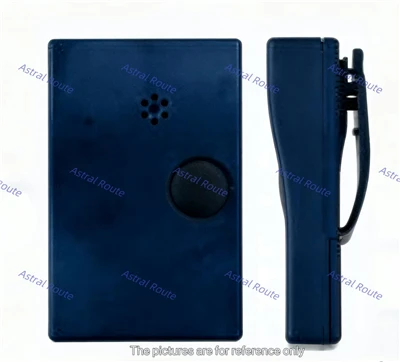
This is one reason Electronic Personal Dosimeters (EPDs) equipped with real-time dose alarms have become increasingly common across the NDT industry. Rather than recording exposure history alone, these devices actively help workers avoid unnecessary exposure before it becomes a problem.
The Difference Between Recording Exposure and Preventing Exposure
Traditional dosimetry systems are primarily designed to document radiation exposure.
They provide important information for:
Regulatory compliance
Occupational dose tracking
Long-term exposure records
Health monitoring programs
However, they do not actively protect workers during an ongoing radiography operation.
A real-time dose alarm changes this approach.
Instead of simply recording accumulated dose, the device continuously monitors radiation conditions and alerts the wearer when predefined thresholds are exceeded.
This transforms radiation monitoring from a passive reporting tool into an active safety system.
How Real-Time Dose Alarms Work
Electronic personal dosimeters continuously measure both:
Cumulative radiation dose
Instantaneous dose rate
Users can configure alarm thresholds based on operational requirements.
When radiation levels exceed those limits, the device may activate:
Audible alarms
Visual indicators
Vibration alerts
Combined warning modes
The alert immediately informs the worker that action may be required.
Depending on the situation, this may involve:
Increasing distance from the source
Leaving the area
Verifying source position
Confirming boundary controls
Reporting abnormal conditions
The key advantage is timing.
Workers receive information while exposure is occurring, not hours or days later.
Immediate Feedback Changes Worker Behavior
One of the most important benefits of real-time alarms is their effect on human behavior.
People naturally respond more effectively to immediate feedback than delayed information.
Consider a radiographer conducting pipeline inspections. Without a real-time dosimeter, the worker may unknowingly spend extra time near a radiation source while positioning equipment or performing surveys.
With an active alarm system, elevated dose rates become immediately obvious.
The worker can then:
Reposition more efficiently
Increase distance from the source
Reduce unnecessary exposure time
Adjust work practices in real time
Small behavioral adjustments often produce significant reductions in cumulative dose over the course of a project.
Supporting the ALARA Principle
Radiation protection programs worldwide are based on the ALARA principle:
As Low As Reasonably Achievable.
Real-time dose alarms directly support this objective.
The three primary methods of reducing exposure remain:
Minimize time
Maximize distance
Utilize shielding
Real-time monitoring helps workers apply all three principles more effectively.
When workers can immediately see how their actions affect exposure levels, they are more likely to optimize their behavior accordingly.
This practical feedback loop is difficult to achieve with traditional passive monitoring systems.
Why Shutdown Projects Benefit Most
Refinery turnarounds and shutdown projects often present some of the highest exposure risks in industrial radiography.
Several factors contribute:
Large numbers of inspections
Congested work environments
Multiple contractors
Extended working hours
Compressed schedules
Radiography crews frequently operate near active maintenance activities.
Work zones may change rapidly throughout the day. In these environments, radiation conditions are rarely static.
Real-time alarms provide an additional layer of protection by alerting personnel whenever conditions deviate from expectations.
Many safety managers now view electronic dosimeters as essential tools during major shutdown campaigns.
Preventing Boundary Control Failures
Controlled areas are designed to prevent unauthorized personnel from entering radiation zones.
However, boundaries are not always perfect.
Workers may accidentally approach exclusion zones due to:
Poor visibility
Miscommunication
Complex facility layouts
Simultaneous work activities
Real-time dose alarms provide an important secondary safeguard.
If an individual approaches an area with elevated radiation levels, the alarm can provide immediate warning before significant exposure occurs.
This extra protection is particularly valuable during:
Night-shift operations
Offshore projects
Large refinery sites
Temporary work areas
Improving Safety During Night Shift RT Operations
Night-shift radiography introduces several unique challenges.
Operators may face:
Reduced visibility
Fatigue
Smaller supervision teams
Limited personnel movement
Under these conditions, situational awareness becomes even more important.
Electronic dosimeters with alarm functions help compensate for some of these challenges by providing immediate alerts whenever radiation conditions change unexpectedly.
Rather than relying entirely on visual observations or periodic surveys, workers receive continuous exposure feedback throughout the shift.
This additional awareness can significantly improve safety performance during overnight operations.
Faster Response to Abnormal Events
Although rare, abnormal radiation situations can occur during RT operations.
Examples include:
Source retrieval difficulties
Equipment malfunctions
Unexpected source positioning
Boundary breaches
Human error during setup
In such cases, rapid detection is critical.
A real-time alarm can alert personnel within seconds, allowing immediate corrective action.
The sooner workers recognize a problem, the lower the potential exposure consequences.
This capability is one of the strongest arguments for replacing older dosimetry systems with modern electronic solutions.
Better Exposure Management for Safety Managers
The benefits of real-time dose alarms extend beyond individual workers.
Radiation safety officers and project managers also gain advantages.
Modern electronic dosimeters often support:
Dose trend analysis
Exposure history review
Alarm event records
Digital reporting
Workforce dose management
This data helps organizations identify:
High-exposure activities
Inefficient work practices
Training opportunities
Potential compliance risks
The result is a more proactive approach to radiation protection.
Industry Shift Toward Active Radiation Protection
Across the NDT sector, there is a clear movement away from exposure recording alone and toward active exposure prevention.
Clients, regulators, and contractors increasingly recognize that real-time monitoring provides a higher level of protection than traditional passive systems.
This trend is particularly visible in:
Oil & gas facilities
Nuclear power plants
Offshore platforms
Pipeline construction projects
Industrial radiography contractors
Real-time dose alarms are becoming standard equipment rather than optional upgrades.
Supporting Safer RT Operations
Companies such as Astral Route provide electronic personal dosimeters and radiation monitoring solutions designed for demanding industrial environments.
These systems help radiation workers:
Monitor exposure in real time
Receive immediate alarm notifications
Improve situational awareness
Support regulatory compliance
Reduce unnecessary radiation exposure
As industrial radiography projects become increasingly complex, real-time monitoring technologies are playing a larger role in modern radiation protection programs.
FAQ
What is a real-time dose alarm?
A real-time dose alarm is a feature in electronic personal dosimeters that alerts users when radiation dose or dose-rate thresholds are exceeded.
How does a dose alarm reduce exposure?
It provides immediate warning during radiation work, allowing workers to take corrective action before significant exposure occurs.
Are dose alarms required by regulations?
Requirements vary by country and industry. However, many organizations use them as part of best-practice radiation protection programs.
Why are electronic dosimeters replacing passive badges?
Electronic dosimeters provide live exposure information and alarm functions, while passive badges only provide exposure data after processing.
Which industries benefit most from real-time dose monitoring?
Oil & gas, nuclear power, industrial radiography, pipeline construction, petrochemical maintenance, and offshore inspection operations all benefit from real-time exposure awareness.
Final Thoughts
Radiation protection is most effective when workers can respond to hazards as they occur rather than after exposure has already taken place.
Real-time dose alarms provide immediate awareness of changing radiation conditions, helping RT operators make safer decisions in the field.
By improving situational awareness, supporting ALARA principles, and enabling faster responses to abnormal events, these systems have become a valuable tool in modern industrial radiography.
As NDT projects continue to grow in complexity, real-time dose monitoring is increasingly viewed as a practical and effective way to reduce occupational radiation exposure while strengthening overall safety performance.