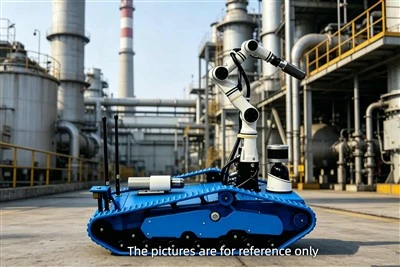
When Entering the Scene Could Cost Lives
In emergency response situations-fires, explosions, chemical leaks, or structural collapses-first responders face one fundamental challenge:
They must make critical decisions without full visibility, often in extremely dangerous environments.
Entering too early can result in injury or loss of life.
Waiting too long can worsen the situation. This is the dilemma that defines modern emergency response.
The Reality: Limited Visibility in High-Risk Environments
Emergency scenarios often involve:
Dense smoke or darkness
Toxic gas presence
Structural instability
Extreme heat
Typical response tasks include:
Assessing damage
Locating victims
Identifying hazards
Planning intervention
However, these tasks are constrained by:
1. High Risk to First Responders
Entering unstable or toxic environments exposes responders to:
Collapse risks
Poisonous gases
Heat and fire
2. Lack of Real-Time Information
Decision-making is often based on incomplete data, increasing risk and uncertainty.
3. Delayed Situational Awareness
Time is critical, but safe entry is often delayed, slowing response efforts.
Astral Route: Extending Human Capability into Dangerous Zones
Astral Route robotic dogs provide a critical advantage:
They go where humans cannot safely go.
Designed for Emergency Environments
They operate in:
Fire and Smoke Conditions
Low visibility
High temperature environments
Disaster Zones
Collapsed structures
Debris-filled environments
Hazardous Industrial Sites
Chemical leaks
Toxic environments
Their mobility allows them to:
Navigate debris
Climb obstacles
Maintain stability in unstable terrain
Core Capabilities in Emergency Scenarios
Autonomous Navigation + Remote Control
Robots can:
Explore unknown environments
Be remotely controlled for targeted inspection
Thermal Imaging
Critical for:
Detecting heat sources
Locating trapped individuals
Identifying fire hotspots
Gas Detection
Helps identify:
Toxic gases
Oxygen-deficient areas
Real-Time Video Transmission
Provides command centers with:
Immediate situational awareness
Better decision-making capability
Low-Light Operation
Robots function effectively in:
Darkness
Smoke-filled environments
Operational Impact
Emergency teams using robotic systems achieve:
60%+ reduction in responder risk
Faster situational assessment (up to 50%)
Improved rescue success rates
Use Case 1: Industrial Fire Response
After a fire in an industrial facility, robotic dogs were deployed to assess damage.
Result:
No human exposure
Real-time data collection
Faster recovery planning
Use Case 2: Disaster Site Exploration
In a collapsed structure scenario, robotic dogs entered unstable areas.
Result:
Identified safe entry paths
Located hazards
Improved rescue efficiency
Conclusion: Safer Decisions Start with Better Information
In emergency response, information saves lives.
Astral Route robotic dogs provide:
Faster insight
Safer operations
Better outcomes
They allow teams to act with confidence-even in the most uncertain conditions.
Equip your emergency teams with the ability to see before they act.
👉 Book a Live Demo with Astral Route
👉 Request an Emergency Deployment Plan