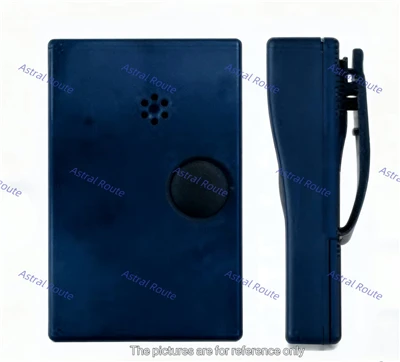

Radiation monitoring is a fundamental part of any industrial radiography or radioactive material handling program. Whether the work takes place in a refinery, pipeline construction project, nuclear facility, research laboratory, or industrial manufacturing plant, selecting the right radiation monitoring equipment is essential for protecting personnel and maintaining regulatory compliance.
Among the most commonly used instruments are gamma survey meters and area radiation monitors. While both detect gamma radiation, they are designed for different purposes and are often used together rather than as alternatives.
Understanding the differences between these two types of equipment helps safety managers, NDT contractors, and radiation protection officers build a more effective radiation safety program.
Why Radiation Monitoring Requires More Than One Device?
No single radiation detector can meet every operational requirement.
During an industrial radiography project, for example, workers need to answer several different questions:
Is the radiation source safely retracted?
Is the exclusion zone large enough?
Has anyone entered a controlled area?
What is the current radiation level in this location?
Are workers approaching their dose limits?
Some of these questions require portable instruments carried by technicians, while others require continuous monitoring of a fixed location.
This is why both gamma survey meters and area radiation monitors play important roles.
What Is a Gamma Survey Meter?
A gamma survey meter is a portable radiation detector designed for measuring radiation levels at specific locations.
It is carried by radiation workers or inspectors and used whenever immediate field measurements are required.
Typical applications include:
Measuring dose rates around a gamma source
Establishing radiation exclusion zones
Verifying source return after exposure
Checking transport containers
Performing routine radiation surveys
Supporting emergency response
Because survey meters are portable, they allow technicians to move throughout the work area and obtain measurements wherever needed.
This flexibility makes them one of the most widely used radiation protection tools in industrial radiography.
What Is an Area Radiation Monitor?
An area radiation monitor is a fixed or semi-permanent monitoring system installed to continuously observe radiation levels within a designated location.
Instead of being carried by workers, it monitors one specific area around the clock.
Common installation locations include:
Industrial radiography exposure rooms
Nuclear facilities
Radioactive source storage rooms
Waste processing facilities
Laboratory entrances
Controlled access points
Accelerator facilities
Area monitors continuously measure radiation levels and automatically trigger alarms if predefined thresholds are exceeded.
Their primary purpose is to protect everyone working within or entering the monitored area.
Portability vs. Continuous Monitoring
The most obvious difference between the two systems is mobility.
Gamma Survey Meter
Portable
Handheld
Used by individual workers
Performs spot measurements
Suitable for temporary work locations
Area Radiation Monitor
Fixed installation
Continuous operation
Monitors one location 24/7
Automatically records radiation conditions
Ideal for permanent facilities
For field projects such as pipeline radiography, survey meters are essential.
For facilities where radioactive materials are routinely present, area monitors provide continuous protection.
How They Are Used During Industrial Radiography?
During a refinery shutdown, an RT crew may use both systems.
The gamma survey meter is used to:
Measure radiation around the exposure area
Confirm boundary distances
Verify source retraction
Check surrounding work areas before allowing re-entry
Meanwhile, an area radiation monitor may be installed at:
The entrance to a radiography bunker
A radioactive source storage room
A permanent inspection cell
A controlled access corridor
Together, they provide both operational flexibility and continuous oversight.
Alarm Functions
Both devices can include alarm capabilities, but they serve different purposes.
Survey Meter Alarms
Portable survey meters typically alert the operator when radiation exceeds preset levels.
This helps technicians respond immediately during field measurements.
Area Monitor Alarms
Area radiation monitors notify everyone nearby-not just one individual.
Depending on the installation, alarms may include:
Audible sirens
Flashing warning lights
Remote control room notifications
Automatic access restrictions
Integration with facility safety systems
These features help prevent unauthorized access to hazardous areas.
Data Recording Capabilities
Modern radiation safety programs increasingly rely on digital records.
Many newer gamma survey meters provide:
Measurement history
Time-stamped survey results
Data download functions
Calibration records
Area radiation monitors often go even further.
They may continuously record:
Dose-rate history
Alarm events
Radiation trends
System status
Maintenance records
This information is valuable during regulatory audits and long-term safety reviews.
Typical Industries That Use Both Systems
Gamma survey meters and area radiation monitors are commonly found in:
Oil and gas facilities
Pipeline construction projects
Petrochemical plants
Nuclear power stations
Fuel fabrication facilities
Radioactive waste management sites
Industrial radiography companies
Universities and research laboratories
The choice depends on operational needs rather than industry alone.
Which One Is Better?
Neither system replaces the other.
Instead, each addresses a different aspect of radiation protection.
A survey meter is best when:
Radiation work is mobile
Measurements are needed at multiple locations
Temporary inspections are performed
Operators need immediate field information
An area radiation monitor is best when:
Radiation sources remain in fixed locations
Continuous monitoring is required
Access control is important
Permanent facilities must be protected
Most comprehensive radiation safety programs include both.
Building a Complete Radiation Monitoring System
An effective radiation protection program typically combines several types of monitoring equipment.
These may include:
Electronic personal dosimeters
Gamma survey meters
Area radiation monitors
Surface contamination monitors
Neutron dosimeters
Tritium monitoring systems
Each device contributes different information, creating multiple layers of protection for workers and facilities.
This layered approach is especially valuable in environments where radiation work is performed regularly.
Supporting Industrial Radiation Safety
Companies such as Astral Route provide a comprehensive range of radiation monitoring solutions for industrial, nuclear, research, and NDT applications.
These include:
Portable gamma survey meters for field inspections
Area radiation monitors for continuous facility monitoring
Electronic personal dosimeters
Neutron dosimeters
Surface contamination monitors
Portable tritium monitoring systems
By combining portable and fixed monitoring technologies, organizations can improve radiation awareness, strengthen compliance, and enhance worker protection across a wide variety of industrial environments.
FAQ
Can a gamma survey meter replace an area radiation monitor?
No. A survey meter performs portable spot measurements, while an area monitor continuously observes a fixed location. Most facilities benefit from using both.
Which device is required for industrial radiography?
Portable gamma survey meters are essential for radiography operations. Area radiation monitors are commonly used in permanent radiography rooms or radioactive source storage areas.
Are area radiation monitors always operating?
Yes. They are designed for continuous monitoring and typically operate 24 hours a day.
Do both instruments require calibration?
Yes. Regular calibration is necessary to ensure measurement accuracy and maintain compliance with radiation safety regulations.
Can both devices be integrated into a radiation safety system?
Yes. Modern radiation protection programs often combine portable survey meters, area radiation monitors, electronic dosimeters, and centralized data management systems.
Final Thoughts
Although gamma survey meters and area radiation monitors detect the same type of radiation, they serve different operational purposes. Survey meters provide the flexibility needed for field inspections, source verification, and temporary radiation surveys, while area radiation monitors deliver continuous protection for fixed facilities and controlled areas.
Rather than choosing one over the other, organizations should view these instruments as complementary components of a comprehensive radiation protection strategy. By combining portable measurements with continuous area monitoring, facilities can improve safety, support regulatory compliance, and respond more effectively to changing radiation conditions.