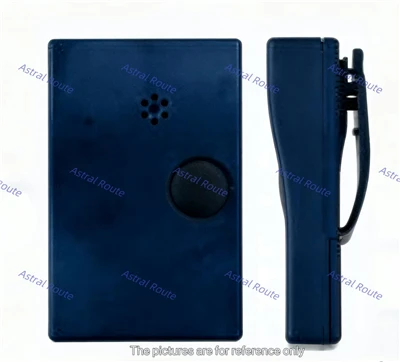


Surface radiation contamination monitors play a crucial role in various industries, including nuclear power plants, research laboratories, and environmental monitoring. As a supplier of these monitors, I often receive inquiries about their working range. In this blog post, I will delve into the concept of the working range of a surface radiation contamination monitor, its significance, and how it impacts different applications.
Understanding the Working Range
The working range of a surface radiation contamination monitor refers to the span of radiation levels that the device can accurately measure. It is typically expressed in terms of radiation dose rate or activity concentration. This range is determined by several factors, including the type of detector used, the sensitivity of the instrument, and the design of the monitor.
Most surface radiation contamination monitors are designed to detect and measure a wide range of radiation types, including alpha, beta, and gamma radiation. Each type of radiation has different properties and requires a specific detector to measure it effectively. For example, alpha particles are heavily ionizing and have a short range in air, so they require a detector that is sensitive to low-energy particles. Beta particles are less ionizing than alpha particles and have a longer range in air, so they require a detector that can measure higher-energy particles. Gamma rays are highly penetrating and require a detector that can measure a wide range of energies.
The sensitivity of a surface radiation contamination monitor is another important factor that determines its working range. Sensitivity refers to the ability of the instrument to detect and measure low levels of radiation. A more sensitive monitor can detect lower levels of radiation, which is important in applications where even small amounts of contamination can be a concern. However, a more sensitive monitor may also be more prone to false alarms, so it is important to balance sensitivity with reliability.
Significance of the Working Range
The working range of a surface radiation contamination monitor is significant for several reasons. First, it determines the types of applications for which the monitor can be used. For example, a monitor with a narrow working range may be suitable for detecting low levels of contamination in a laboratory setting, while a monitor with a wider working range may be required for monitoring radiation levels in a nuclear power plant or a radioactive waste disposal site.


Second, the working range of a surface radiation contamination monitor affects the accuracy of the measurements. If the radiation levels exceed the working range of the monitor, the measurements may be inaccurate or unreliable. This can lead to false alarms or missed detections, which can have serious consequences in applications where radiation safety is a concern.
Finally, the working range of a surface radiation contamination monitor can impact the cost of the instrument. Monitors with a wider working range typically require more advanced detectors and electronics, which can increase the cost of the instrument. Therefore, it is important to choose a monitor with a working range that is appropriate for the specific application and budget.
Factors Affecting the Working Range
Several factors can affect the working range of a surface radiation contamination monitor. These include:
- Detector Type: Different types of detectors have different sensitivities and working ranges. For example, a Geiger-Muller detector is commonly used for detecting beta and gamma radiation, but it has a limited working range and is not suitable for detecting low levels of radiation. A scintillation detector, on the other hand, is more sensitive and can detect a wider range of radiation types and levels.
- Energy Response: The energy response of a detector refers to its ability to measure radiation of different energies. A detector with a flat energy response can measure radiation of all energies equally well, while a detector with a non-flat energy response may be more sensitive to certain energies than others. The energy response of a detector can affect the accuracy of the measurements and the working range of the monitor.
- Background Radiation: Background radiation is the natural radiation that is present in the environment. It can vary depending on the location and the time of day. The presence of background radiation can affect the sensitivity of the monitor and the accuracy of the measurements. Therefore, it is important to calibrate the monitor regularly to account for the background radiation.
- Measurement Time: The measurement time is the amount of time that the monitor is exposed to the radiation source. A longer measurement time can increase the sensitivity of the monitor and improve the accuracy of the measurements. However, a longer measurement time also increases the risk of false alarms and can make the monitor less suitable for real-time monitoring applications.
Applications of Surface Radiation Contamination Monitors
Surface radiation contamination monitors are used in a variety of applications, including:
- Nuclear Power Plants: Surface radiation contamination monitors are used to detect and measure radiation levels in nuclear power plants. They are used to monitor the radiation levels on the surfaces of equipment, pipes, and buildings, as well as the radiation levels in the air and water.
- Research Laboratories: Surface radiation contamination monitors are used in research laboratories to detect and measure radiation levels in experiments and research projects. They are used to monitor the radiation levels on the surfaces of equipment, samples, and materials, as well as the radiation levels in the air and water.
- Environmental Monitoring: Surface radiation contamination monitors are used in environmental monitoring to detect and measure radiation levels in the environment. They are used to monitor the radiation levels on the surfaces of soil, water, and air, as well as the radiation levels in the food and water supply.
- Medical Facilities: Surface radiation contamination monitors are used in medical facilities to detect and measure radiation levels in medical equipment and supplies. They are used to monitor the radiation levels on the surfaces of X-ray machines, CT scanners, and other medical devices, as well as the radiation levels in the air and water.
Choosing the Right Surface Radiation Contamination Monitor
When choosing a surface radiation contamination monitor, it is important to consider several factors, including:
- Working Range: The working range of the monitor should be appropriate for the specific application. If the radiation levels are expected to be low, a monitor with a narrow working range may be sufficient. If the radiation levels are expected to be high, a monitor with a wider working range may be required.
- Sensitivity: The sensitivity of the monitor should be high enough to detect the lowest levels of radiation that are of concern. However, the sensitivity should also be balanced with reliability to avoid false alarms.
- Accuracy: The accuracy of the monitor should be high enough to provide reliable measurements. The accuracy of the monitor can be affected by several factors, including the detector type, the energy response, and the background radiation.
- Ease of Use: The monitor should be easy to use and operate. It should have a clear display and simple controls, and it should be easy to calibrate and maintain.
- Cost: The cost of the monitor should be within the budget. Monitors with a wider working range and higher sensitivity typically cost more than monitors with a narrow working range and lower sensitivity.
Conclusion
The working range of a surface radiation contamination monitor is an important factor that determines its suitability for different applications. It is determined by several factors, including the type of detector used, the sensitivity of the instrument, and the design of the monitor. When choosing a surface radiation contamination monitor, it is important to consider the working range, sensitivity, accuracy, ease of use, and cost. By choosing the right monitor, you can ensure that you have a reliable and effective tool for detecting and measuring surface radiation contamination.
If you are interested in learning more about our surface radiation contamination monitors or other radiation detection products, such as the Real-Time Tritium Leak & Airborne Contamination Monitor, Real-Time Electronic Personal Radiation Dosimeter, or Radioactive Surface Contamination Detection System, please contact us to discuss your specific needs and requirements. We look forward to the opportunity to work with you.
References
- Knoll, Glenn F. Radiation Detection and Measurement. 4th ed., Wiley, 2010.
- Attix, Frank H. Introduction to Radiological Physics and Radiation Dosimetry. Wiley, 1986.
- Johns, Harold E., and John R. Cunningham. The Physics of Radiology. 4th ed., Charles C Thomas, 1983.