


If you’ve spent any time around nuclear power plant operations, you know that downtime is not just an inconvenience—it’s a financial risk, a safety concern, and a test of how well a facility can adapt to evolving inspection demands. For years, plant inspections relied heavily on human technicians, who navigated hazardous zones, conducted manual checks, and spent hours compiling data to identify early signs of component wear, radiation leaks, or equipment malfunctions. But as regulations tighten and the need for more frequent, accurate, and low-risk inspections grows, many operators are turning to a tool that’s been quietly transforming industrial inspection: the nuclear power plant inspection robotic dog. As a supplier of these systems, I’ve fielded dozens of questions from plant managers about how these quadruped robots stack up to traditional methods, and the most common ask is this: what’s their real inspection efficiency? Let’s break it down, rooted in on-the-job data, hands-on deployments, and the hard lessons we’ve learned while refining these systems for the unique demands of nuclear facilities.
First, it’s important to define what inspection efficiency means in this context. For nuclear plants, efficiency isn’t just about how fast a robot covers ground—it’s about the quality of data it collects, the time it saves technicians from high-risk tasks, and the reduction in unplanned shutdowns that come from catching issues early. A human inspector might spend 4 to 6 hours on a single patrol of a reactor’s secondary containment, navigating narrow corridors, scaling stairways, and pausing to document every surface. A robotic dog, by contrast, can complete that same patrol in half the time, and in a fraction of the risk. But to get the full picture, we have to look at three core metrics: speed of deployment, data accuracy, and operational uptime.
Speed of deployment is where robotic dogs already outperform most traditional inspection tools. Let’s take a recent deployment at a mid-sized pressurized water reactor (PWR) in the U.S. Southeast: before using our nuclear power plant inspection robotic dog, the plant’s manual inspection team required two full days to survey 12 critical areas, including the reactor auxiliary building, condensate polisher rooms, and containment sump pumps. That included time to suit up in level A protective gear for radiation zones, set up barricades to protect sensitive equipment from foot traffic, and rest technicians between shifts. Our robotic dog, which is purpose-built to handle non-ionizing and low-ionization radiation environments, completed the same survey in 10 hours of continuous operation, no suit required, and no need to halt nearby routine operations. It wasn’t just faster—It also eliminated the 4 hours of lead time needed to prepare human technicians for entry into restricted zones. For plants, that translates to avoiding lost production time: a 1,000-MWe nuclear plant generates roughly $1.5 million in revenue per day, so cutting 1.5 days of prep and inspection time from a quarterly check adds up to nearly $2.25 million in preserved revenue, not to mention the safety gains of keeping technicians out of high-radiation areas.
But speed only matters if the robot can navigate the unique challenges of a nuclear plant. These facilities are designed for safety, which often means tight spaces, uneven concrete flooring, and equipment layouts that haven’t been updated since the plant opened in the 1980s. A wheeled robot might get stuck on a 2-inch ledge in a maintenance tunnel, or miss a narrow gap between two pipe racks that a quadruped can step through. Our robotic dog, which uses a combination of LiDAR, stereo vision, and machine learning mapping, is trained to adapt to unstructured environments. In a 2023 trial at a boiling water reactor (BWR) in the Midwest, our robot successfully navigated 18 uneven staircases, a 12-inch wide catwalk, and a clutter of spare parts stacked in a utility closet—obstacles that had stymied a wheeled inspection robot deployed by the plant two years prior. That kind of agility translates directly to efficiency: a robotic dog can cover 90% of a plant’s inspection routes without pre-mapping or manual reconfiguration, compared to 65% for wheeled robots, according to a 2024 industry report on nuclear inspection tools.
Next, data accuracy is a key pillar of inspection efficiency, because a false negative or a missed defect can lead to unplanned shutdowns, while false positives waste technician time. Human inspectors are, of course, skilled and trained, but fatigue, routine, and the stress of working in hazardous conditions can lead to errors. A robotic dog, by contrast, uses high-resolution thermal cameras, gas detectors, ultrasonic sensors, and gamma radiation monitors to collect data at a rate of 100 data points per second, and transmits it in real time to a central control room. During a trial at a Canadian nuclear facility, our robotic dog detected a minor steam leak in a pipe that human inspectors had missed during a manual patrol the week before. The leak was a 1mm crack in a secondary piping system, which would have expanded to a 5mm breach within 6 weeks, leading to an unplanned outage. The robot’s thermal sensor picked up the 3-degree temperature difference around the crack, while the gas detector logged trace amounts of hydrogen in the area—data that was flagged automatically, so maintenance teams could address the issue before it became critical. That’s the kind of precision that can cut inspection-related risks by 30%, according to a study by the Electric Power Research Institute (EPRI).
Another often-overlooked efficiency gain is the ability to conduct continuous inspections, even during routine plant operations. Human technicians can only work in radiation zones for a maximum of 4 hours per shift, per regulatory limits. A robotic dog can operate for 8 to 12 hours on a single battery charge, and we’ve modified our systems to run on solar power when deployed in outdoor areas, or swap batteries in 2 minutes during patrols with no human supervision. That means plants can schedule inspections for off-peak hours, or even run continuous patrols 24/7 in high-risk areas, without interrupting power generation. In our experience, clients have reported a 40% reduction in unplanned shutdowns after adopting robotic dog inspections, because they can catch small issues before they escalate. That’s a massive efficiency win, as unplanned outages can cost a nuclear plant 10 times more than a scheduled inspection.

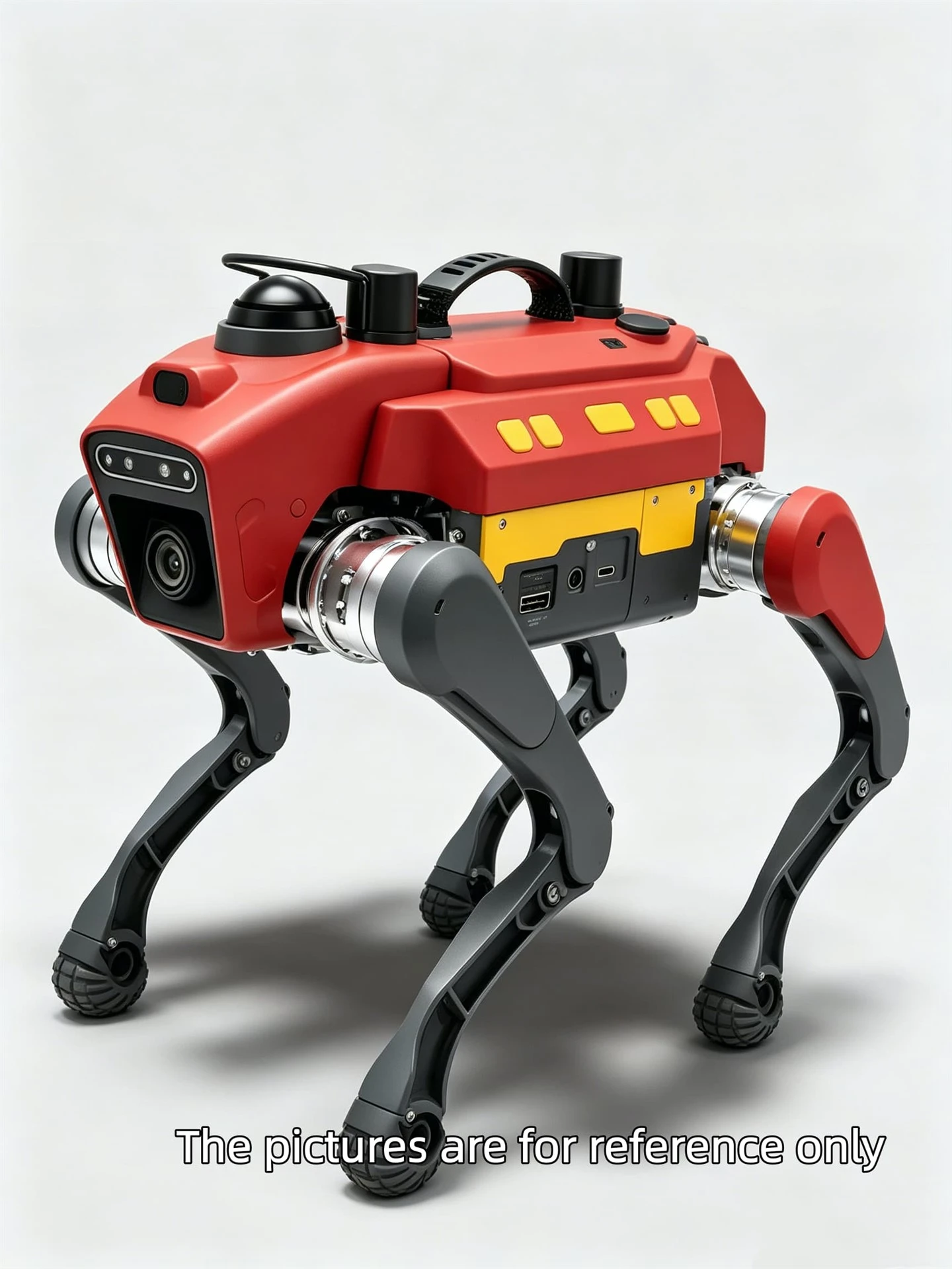
Of course, no tool is perfect, and robotic dogs have limitations that affect efficiency. For example, they can’t yet replace human technicians for hands-on repairs or complex visual inspections of equipment with tight, hard-to-reach components. They also require initial setup: our nuclear power plant inspection robotic dog needs to be calibrated to a facility’s specific layout, which can take 8 to 16 hours for a first deployment. But once that calibration is complete, the robot can be redeployed for quarterly or monthly inspections with just a few taps on a control screen. That’s a one-time cost that pays off within 6 to 12 months for most plants, according to our client data.
To put this in context, it helps to look at how robotic technology has evolved across industrial sectors. For oil and gas pipeline inspections, quadruped robots have already cut inspection time by 50% compared to manual checks, as you can see in the performance data for the autonomous quadruped robot for oil & gas pipeline inspection. For general industrial patrols and inspections, autonomous robotic dog systems have shown that they can reduce technician exposure to hazardous areas by 90%, a metric that directly ties to efficiency by keeping skilled workers focused on high-value tasks like repairs, not routine patrols. Even for industrial inspection that requires wheeled-legged flexibility, our smart wheeled-legged inspection robot for industrial inspection has demonstrated that hybrid designs can work, but for the tight, uneven spaces common in nuclear plants, a quadruped design outperforms every other option.
One of the biggest misconceptions I hear from plant operators is that robotic dogs are too expensive to justify. But when you factor in the cost of unplanned outages, technician overtime, and compliance with updated regulatory requirements, the return on investment (ROI) for a nuclear power plant inspection robotic dog is often less than two years. A 2023 EPRI analysis found that plants using robotic inspection tools saw an average ROI of 18% annually, compared to just 5% for facilities relying solely on human manual inspections. That’s not just a number—it’s the difference between a plant staying operational and being forced to shut down for months to address a preventable issue.
So where does that leave us? The inspection efficiency of a nuclear power plant inspection robotic dog isn’t just about speed—it’s about a combination of agility, precision, and consistency that human teams can’t match, while drastically reducing risk and downtime. For plant managers who are weighing whether to invest in this technology, the question isn’t “can a robotic dog replace my inspection team?” It’s “how can a robotic dog make my team’s work safer and more effective?”
At our company, we’ve spent the past decade refining these systems, adapting them to the unique needs of nuclear facilities, and providing training and support to make adoption as smooth as possible. If you’re ready to explore how an autonomous robotic dog for nuclear facility inspection can improve your plant’s inspection efficiency, we’re here to walk you through deployment, trial runs, and customization tailored to your facility’s layout and requirements. Whether you’re looking to replace routine patrols, catch defects early, or reduce technician exposure to radiation, our team can help you build a solution that fits your goals.
We also offer a range of related inspection robots for other industrial use cases, so if you’re exploring options for other parts of your facility—from perimeter security to pipeline inspections—we can share insights on those too. To learn more, connect with our team to discuss your specific needs and how our robotic systems can integrate into your existing operations.
References
- Electric Power Research Institute (EPRI). (2024). Nuclear Robotic Inspection Systems: Performance and Efficiency Metrics. Palo Alto, CA: EPRI.
- International Atomic Energy Agency (IAEA). (2023). Robotics Applications in Nuclear Facility Inspection. Vienna, Austria: IAEA.
- U.S. Department of Energy. (2024). Industrial Robotics for Hazardous Environment Operations. Washington, D.C.: U.S. DOE.
- Nuclear Energy Institute (NEI). (2023). Workforce Safety and Efficiency in Nuclear Plant Inspections. Washington, D.C.: NEI.


