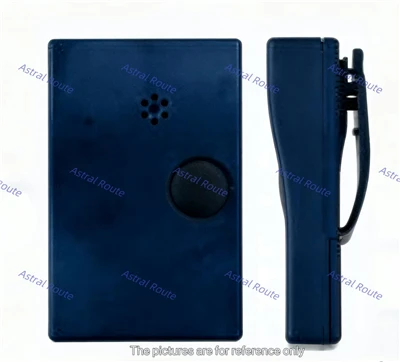
As a supplier of Electronic Personal Radiation Dosimeters (EPRDs), I've had the privilege of delving deep into the technology and its applications. EPRDs are remarkable devices that offer real - time monitoring of radiation exposure, which is crucial in various industries such as nuclear power, radiology, and environmental monitoring. However, like any technology, EPRDs come with their own set of limitations. Understanding these limitations is essential for both users and suppliers to ensure the effective and safe use of these devices.
Sensitivity and Accuracy
One of the primary limitations of EPRDs lies in their sensitivity and accuracy. EPRDs are designed to detect and measure different types of radiation, including alpha, beta, gamma, and neutron radiation. However, their sensitivity can vary significantly depending on the type of radiation and the energy of the radiation particles.


For instance, some EPRDs may have a lower sensitivity to low - energy gamma rays or neutrons. This can lead to inaccurate readings, especially in environments where low - energy radiation is present. In a nuclear power plant, there may be a background of low - energy gamma rays that could be missed by an EPRD with poor sensitivity. This can pose a risk to workers as they may not be aware of their actual radiation exposure.
Accuracy can also be affected by the calibration of the EPRD. Over time, the device may drift from its original calibration, leading to inaccurate readings. Regular calibration is necessary to maintain the accuracy of the EPRD, but this can be time - consuming and costly. Additionally, the calibration process itself may introduce some errors, especially if not performed correctly.
Environmental Factors
EPRDs are often used in harsh environments, and environmental factors can have a significant impact on their performance. Temperature, humidity, and pressure can all affect the operation of the EPRD.
High temperatures can cause the electronic components of the EPRD to overheat, leading to malfunctions or inaccurate readings. In a hot nuclear reactor environment, the EPRD may need to be cooled to ensure its proper operation. Similarly, high humidity can cause corrosion of the electronic components, which can also affect the performance of the device.
Pressure changes can also affect the EPRD. In some industrial applications, such as deep - sea nuclear power plants or high - altitude research facilities, the pressure can vary significantly. This can cause the gas - filled detectors in the EPRD to expand or contract, leading to inaccurate readings.
Energy Response
The energy response of an EPRD refers to its ability to accurately measure radiation of different energies. Most EPRDs are designed to have a flat energy response over a certain range of energies. However, in reality, the energy response can be non - linear, especially at the lower and higher ends of the energy spectrum.
This non - linear energy response can lead to errors in radiation dose calculations. For example, if an EPRD is used to measure high - energy gamma rays, it may overestimate or underestimate the actual radiation dose due to its non - linear energy response. This can be a significant problem in environments where high - energy radiation is present, such as in particle accelerators or nuclear waste storage facilities.
Limited Detection Range
EPRDs have a limited detection range for radiation. They are typically designed to measure radiation doses within a certain range, and if the radiation dose exceeds this range, the EPRD may saturate or provide inaccurate readings.
In a nuclear accident or a high - radiation environment, the radiation dose can be much higher than the normal operating range of the EPRD. In such cases, the EPRD may not be able to provide an accurate measurement of the radiation dose, which can be a serious safety concern for workers.
Interference
EPRDs can be affected by electromagnetic interference (EMI) and radio - frequency interference (RFI). In modern industrial environments, there are many sources of EMI and RFI, such as electrical equipment, wireless communication devices, and power lines.
EMI and RFI can cause the EPRD to produce false readings or malfunctions. For example, a strong electromagnetic field from a nearby electrical transformer can interfere with the operation of the EPRD, leading to inaccurate radiation dose measurements. To mitigate this problem, EPRDs need to be shielded from EMI and RFI, but this can add to the cost and complexity of the device.
Battery Life
Battery life is another limitation of EPRDs. Most EPRDs are powered by batteries, and the battery life can vary depending on the device's features and usage. In some applications, such as long - term environmental monitoring or in remote areas, it may be difficult to replace the batteries regularly.
A short battery life can lead to the EPRD being out of operation when it is needed most. For example, in a nuclear emergency, if the EPRD's battery runs out, it will not be able to provide real - time radiation dose information to the workers. This can pose a significant safety risk.
Compatibility and Integration
In many industries, EPRDs need to be integrated with other systems, such as radiation monitoring networks or safety management systems. However, compatibility issues can arise when trying to integrate EPRDs with other devices.
Different EPRDs may use different communication protocols, data formats, and interfaces, which can make it difficult to integrate them into existing systems. This can lead to inefficiencies in data collection and management, and may also limit the functionality of the overall radiation monitoring system.
Conclusion
Despite these limitations, EPRDs are still an essential tool for radiation monitoring. They provide real - time information about radiation exposure, which is crucial for protecting workers and the environment. At our company, we are constantly working to improve the performance of our EPRDs and overcome these limitations.
We offer a range of high - quality EPRDs, such as the Real - Time Electronic Personal Radiation Dosimeter, which is designed to provide accurate and reliable radiation dose measurements. We also have other related products like the Real - Time Tritium Leak & Airborne Contamination Monitor and the Advanced Personal Neutron & Gamma Dosimeter.
If you are in need of radiation monitoring solutions and are interested in learning more about our products, we encourage you to contact us for a detailed discussion and potential procurement. Our team of experts is ready to assist you in finding the most suitable EPRD for your specific needs.
References
- Knoll, Glenn F. Radiation Detection and Measurement. 4th ed., Wiley, 2010.
- IAEA. Safety Standards Series No. GSR Part 3. Regulations for Protection against Ionizing Radiation and for the Safety of Radiation Sources. International Atomic Energy Agency, 2014.